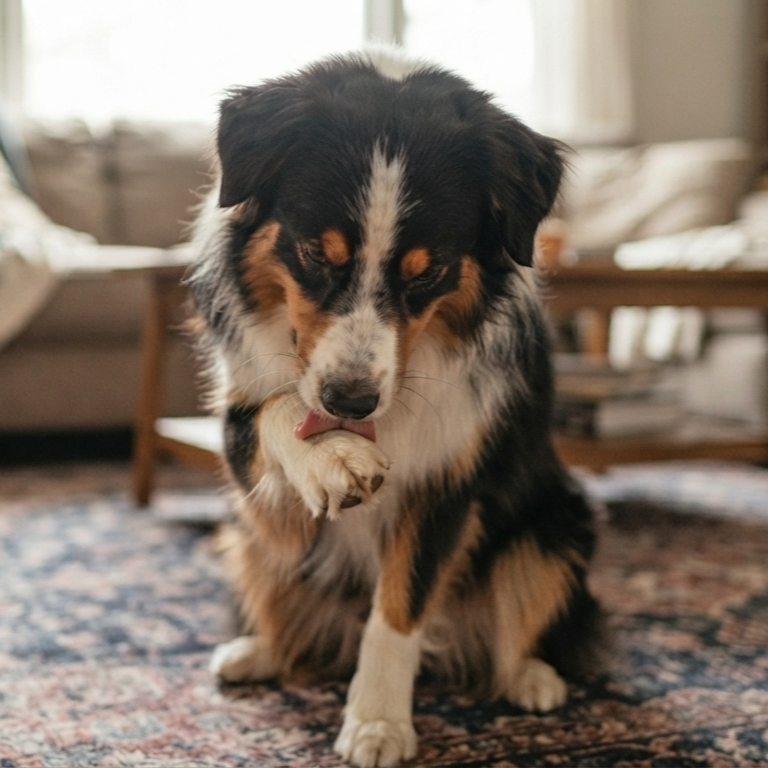

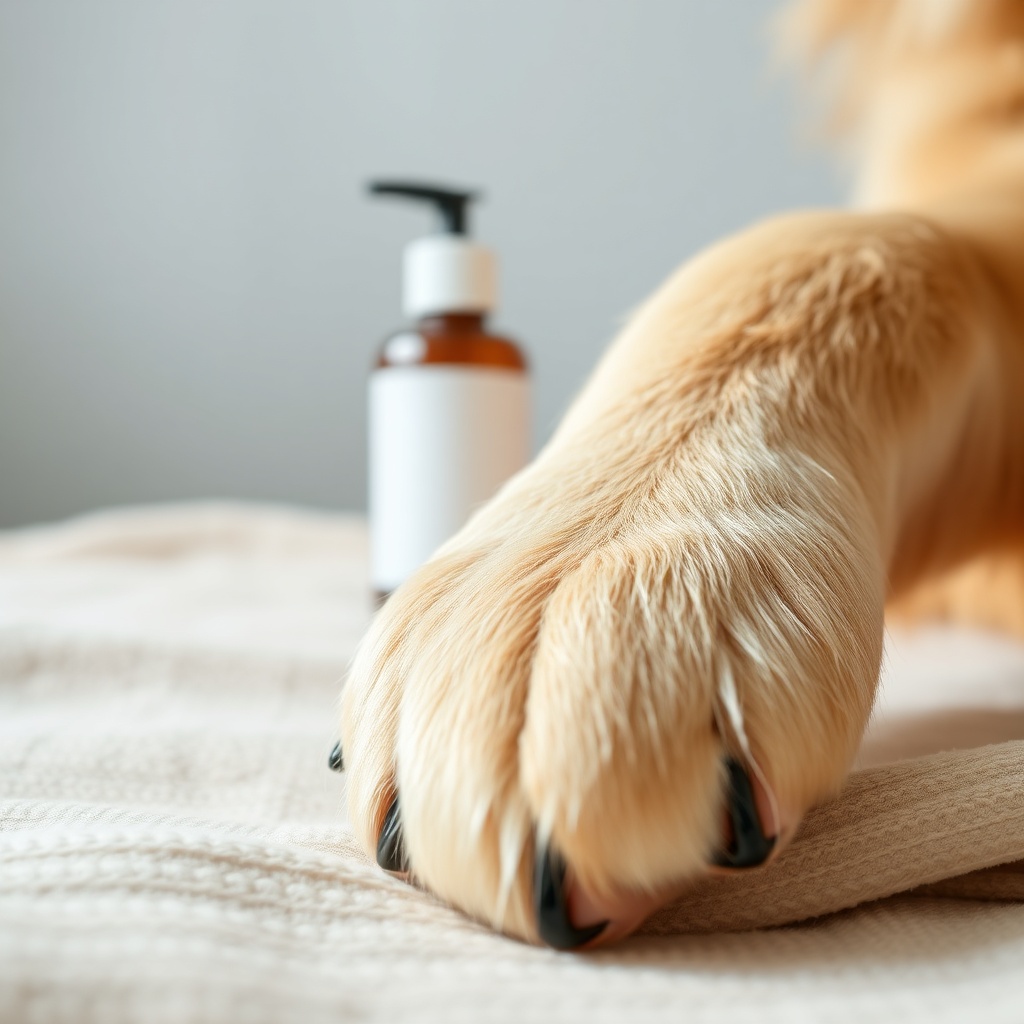
A dog suddenly starts limping, favoring one leg, or licking at its paw with obsessive intensity. When checking between the toes, a red, swollen, and angry-looking nodule appears. These painful bumps are commonly called interdigital cysts, though in veterinary medicine, they are more accurately termed interdigital furuncles.
Interdigital cysts are inflammatory, deep-tissue infections between a dog’s toes, typically triggered by hair follicle rupture, bacterial overgrowth, or embedded foreign objects. Safe home care centers on warm antiseptic soaks and preventing the dog from licking, but veterinary evaluation is necessary to address the underlying cause and prevent recurrence.
Why Do Interdigital Cysts Form?
These painful bumps are rarely a standalone problem. They usually start when a hair follicle becomes blocked, damaged, or forced inward. Short, coarse-coated breeds like English Bulldogs, Great Danes, and Boxers are highly prone because their stiff hairs easily get pushed back into the follicle during walking. Once the follicle ruptures under the skin, it releases keratin, causing intense local inflammation. Bacteria, especially Staphylococcus, quickly take advantage of this weakened tissue.
| Common Trigger | What Happens Beneath the Skin | Breeds Most Affected |
|---|---|---|
| Anatomical Friction | Heavy weight and webbed or splayed paws cause hair follicles to rub and rupture. | Bulldogs, Mastiffs, Labradors |
| Atopic Dermatitis (Allergies) | Itching leads to constant licking, introducing moisture and bacteria into the skin. | French Bulldogs, Golden Retrievers |
| Foreign Bodies | Grass seeds, foxtails, or splinters pierce the thin skin between the toes. | Active hunting or hiking dogs |
| Parasitic Infections | Demodex mites damage the hair follicles, predisposing them to deep infection. | Puppies, immunocompromised dogs |
Immediate Step-by-Step Home Care
If the bump is small, not draining pus, and the dog is otherwise acting normal, temporary home care can help reduce swelling and relieve discomfort. Do not attempt to pop, squeeze, or lance the nodule. Squeezing forces bacteria deeper into the surrounding tissue, turning a localized issue into a widespread cellular infection.
1. Warm Epsom Salt Soaks
Dissolve two tablespoons of Epsom salt in a bowl of warm water. Submerge the affected paw for 10 to 15 minutes, two to three times daily. The warm water draws out toxins, reduces swelling, and helps soothe the pain. If the dog resists soaking in a bowl, press a clean, warm, saturated washcloth firmly against the area instead.
2. Disinfect and Dry
After soaking, pat the paw completely dry with a clean towel. Wet skin between the toes creates a breeding ground for yeast and bacteria. Apply a diluted chlorhexidine solution if recommended by a veterinarian. Avoid applying heavy, greasy ointments or petroleum jelly, which trap moisture and debris.
3. Prevent Licking and Chewing
Saliva contains bacteria and keeps the wound wet. Put an Elizabethan collar or a soft recovery collar on the dog immediately. Protective, breathable dog booties can be worn during walks to keep the area clean, but must be removed indoors to allow the skin to breathe.
When to See a Veterinarian
While home care can soothe mild inflammation, many cases require professional medical treatment. Schedule a veterinary visit immediately if any of the following clinical signs are observed:
- Multiple paws are affected simultaneously, suggesting systemic allergies or mites.
- The dog is limping heavily or refuses to put weight on the paw.
- The cyst is actively draining bloody fluid, yellow pus, or has a foul odor.
- A firm, hard object is felt inside the swelling, which may indicate a trapped foxtail.
- The bump does not show clear signs of shrinking after 48 hours of home care.
The American Animal Hospital Association (AAHA) and the World Small Animal Veterinary Association (WSAVA) emphasize that deep skin infections require targeted therapy. A veterinarian may perform a fine-needle aspiration or a skin scraping to rule out Demodex mites. For chronic cases, a bacterial culture and susceptibility test are essential. This test identifies the specific bacteria present and ensures the correct antibiotic is prescribed, preventing the rise of drug-resistant infections.
Long-Term Management and Prevention
Preventing recurrent interdigital cysts requires addressing the root cause rather than just treating the active lesions. Keep your dog’s paws clean and dry after outdoor walks, especially during high-pollen seasons. Trim the hair between the toes of long-coated dogs to prevent matting and trapped moisture. For heavy-set breeds, keeping the dog at a lean, healthy weight reduces physical pressure on the footpads, minimizing the friction that forces hair follicles to rupture.
Frequently Asked Questions
Can I use human antibiotic ointment on my dog’s paw?
Avoid using human ointments like Neosporin. Dogs will immediately lick them off, which leads to ingestion of potentially harmful ingredients and introduces more bacteria via their saliva. Keep the paw dry and use veterinary-approved topical treatments instead.
Is an interdigital cyst cancerous?
Most interdigital swellings are benign inflammatory reactions. However, other masses like histiocytomas, melanomas, or squamous cell carcinomas can mimic their appearance. If a bump does not heal or continues to grow, a vet must biopsy or aspirate it to rule out neoplasia.
How long does it take for a paw cyst to heal?
With prompt treatment and strict prevention of licking, a mild interdigital cyst can resolve within 7 to 10 days. Deep, chronic infections or cases with underlying allergies may require several weeks of therapy and long-term management.