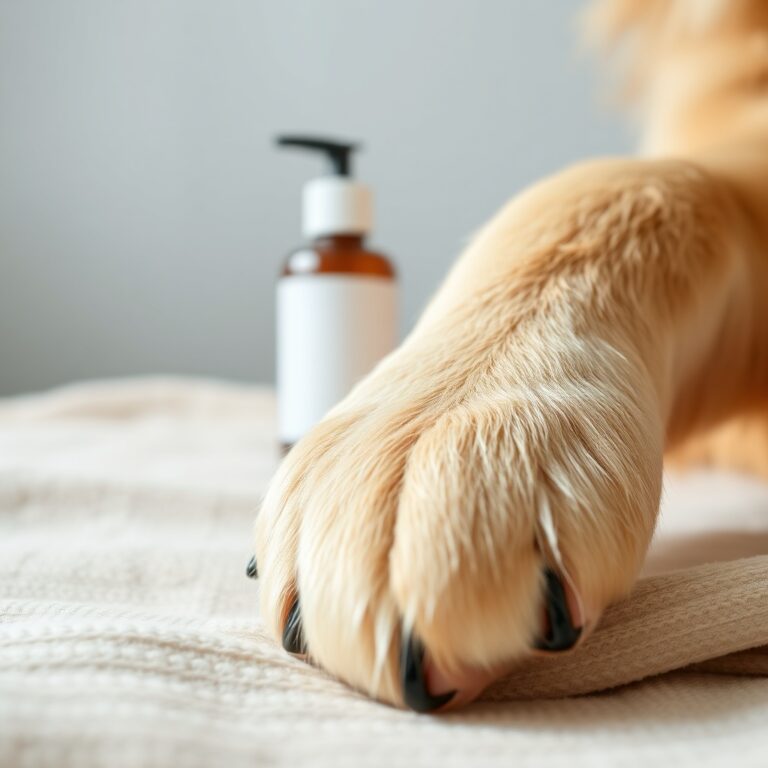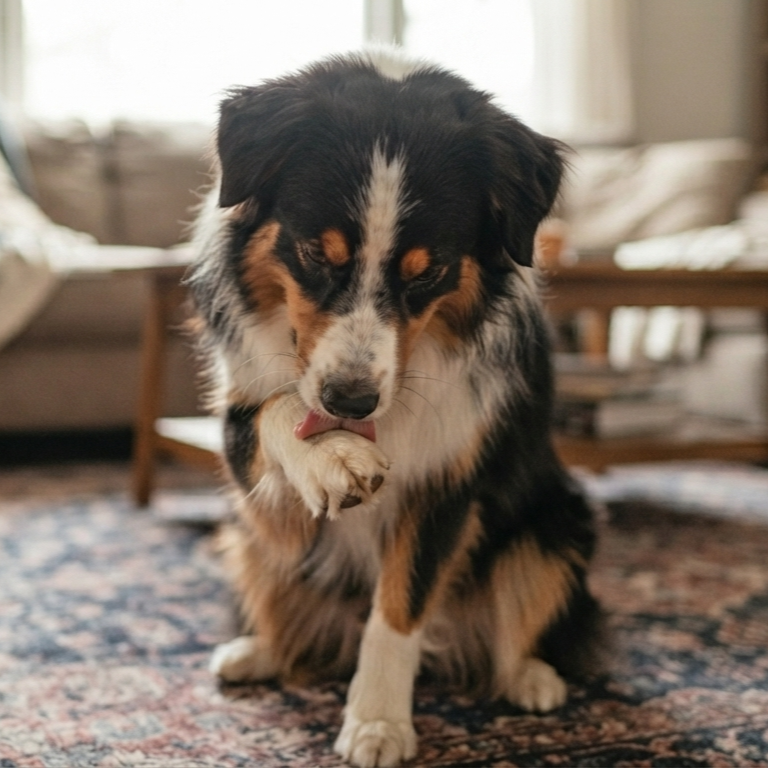

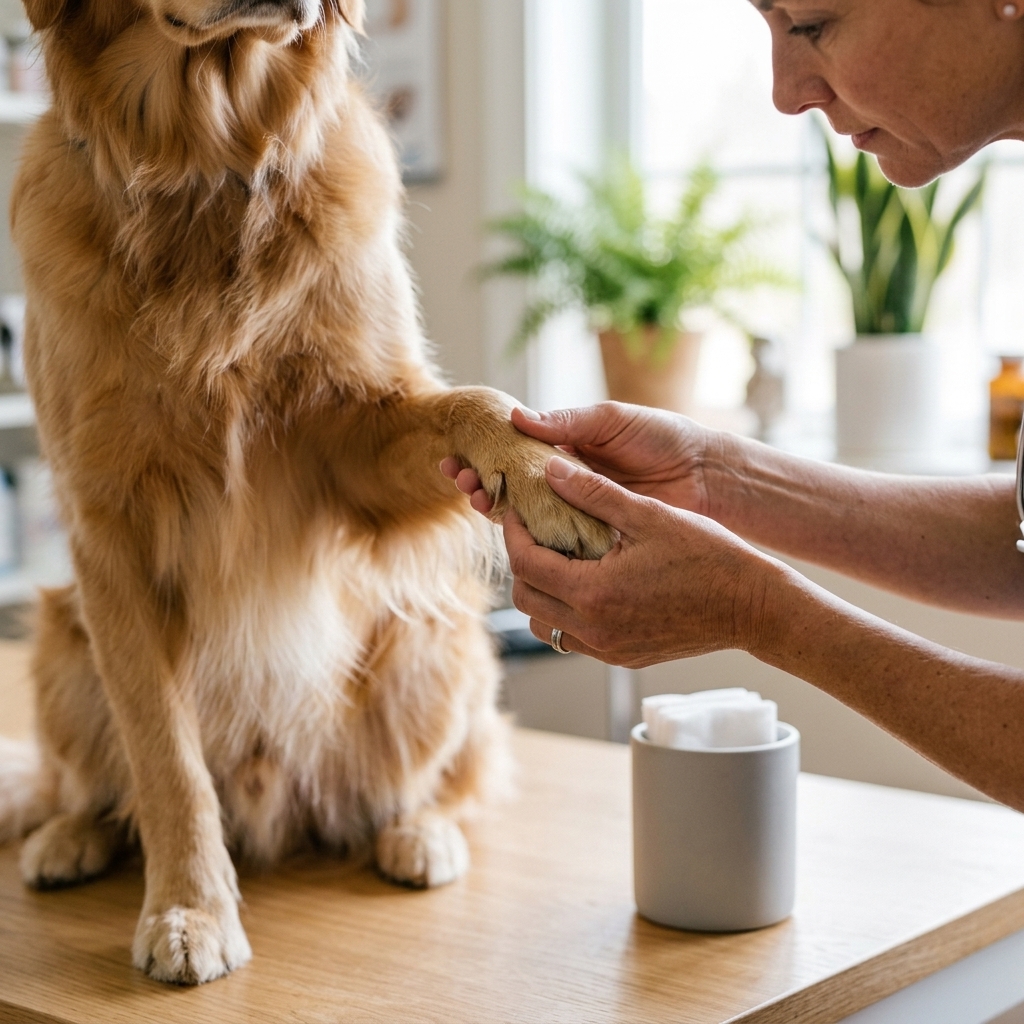
A sudden yelp during play, a bloody front leg, and a dog furiously licking its wrist usually point to one culprit: a torn dewclaw. These elevated thumbs snag easily on carpets, dense brush, or wire crates. Pain comes fast because nail beds pack dense nerve clusters and blood vessels.
To safely treat a split or torn dewclaw at home, muzzle your dog for safety, stop bleeding with styptic powder or cornstarch, gently clean the area with diluted chlorhexidine, and wrap the paw loosely to protect the exposed quick before seeking veterinary evaluation.
Immediate Step-by-Step Dewclaw First Aid
Proper first aid stabilizes the injury. It prevents deep bone infection and cuts down pain instantly.
1. Muzzle and Secure Your Dog
Pain makes gentle dogs bite. Expect sudden defensive reactions. Wrap a soft towel around your dog’s neck or apply a temporary basket muzzle before touching the injured paw. Keep your face away from the dog’s mouth.
2. Control Active Bleeding
Nail quicks bleed heavily. Apply firm pressure with a clean gauze pad for three full minutes. Do not check early. If bleeding persists, pack styptic powder or plain cornstarch directly onto the torn surface. Hold gentle pressure until a firm clot forms.
3. Inspect the Damage
Rinse the leg gently with warm water or sterile saline to clear blood and dirt. Look closely at the split line. Determine if the tear involves just the hard outer shell or if it extends deep into the fleshy quick near the skin base.
4. Trim Only Hanging Shell Fragments
If a piece of dead nail shell hangs by a tiny thread, clip it off using sanitized pet nail trimmers. Never pull or twist attached tissue. If the split runs straight up under the skin line, stop clipping immediately. Tearing attached quick tissue causes intense agony and risks permanent nail matrix damage.
5. Disinfect and Protect
Bath the claw in diluted chlorhexidine solution or mild povidone-iodine. Avoid rubbing alcohol or hydrogen peroxide; both burn raw tissue and delay healing. Apply a thin layer of plain antibiotic ointment, place a non-stick pad over the site, and wrap loosely with breathable self-adhesive bandage tape. Keep tape off skin to prevent friction sores.
Dewclaw Injury Severity Matrix
| Injury Type | Visible Symptoms | Immediate Home Action | Veterinary Need |
|---|---|---|---|
| Split Shell Tip | Cracked outer claw, minimal blood, quick intact. | Trim split piece with clippers, sanitize, monitor. | Low (Home care sufficient) |
| Dangling Fragment | Nail broken, hanging loose, light bleeding. | Clip dead hanging piece, stop blood with cornstarch. | Moderate (Vet check recommended) |
| Exposed/Crushed Quick | Severe bleeding, core exposed, extreme pain. | Control blood, apply soft bandage, muzzle dog. | High (Vet required within 24 hours) |
| Base Tear / Paronychia | Swollen toe base, pus, foul odor, limping. | Soak in warm saline, bandage loosely. | Urgent (Requires oral antibiotics) |
When to Escalate: Red Flags Requiring Urgent Veterinary Care
Home care works for simple outer splits. Deep tears require professional intervention. Veterinary guidelines from the American Animal Hospital Association (AAHA) highlight that severe nail base trauma often demands digital nerve blocks and complete surgical nail removal to prevent persistent osteomyelitis (bone infection).
- The nail is split longitudinally straight up into the skin fold.
- Active bleeding continues after 10 minutes of direct pressure and styptic application.
- The toe base becomes hot, swollen, or red.
- Yellow or green discharge oozes from the nail bed.
- Your dog refuses to bear weight on the leg after 24 hours.
Home Recovery and Aftercare Routine
Healing takes time. The soft tissue quick dries up and hardens within 3 to 5 days, while a full new nail takes 2 to 4 months to regrow completely.
Fit your dog with an Elizabethan collar (E-collar) or soft recovery cone immediately. A few seconds of licking can introduce oral bacteria into the open quick, causing severe infection. Change protective bandages daily, keeping the paw completely dry during outdoor potty breaks by slipping a plastic bag or water-resistant bootie over the wrap.
Frequently Asked Questions
Can I give my dog human pain medication like ibuprofen or Tylenol?
Never give your dog human pain medications like ibuprofen, Tylenol, or aspirin. These drugs are toxic to dogs, causing acute kidney failure, stomach ulcers, and severe internal bleeding. Only use pain medications prescribed directly by a licensed veterinarian.
Will a split dewclaw grow back normally?
Most split dewclaws regrow completely within a few months. However, if the underlying nail matrix or quick was crushed or infected, the new nail may grow back thicker, curved, or slightly brittle.
Should I pull off a torn dewclaw that is hanging by a thread?
Only snip the piece if it is dead, dry outer shell hanging by a hair-thin thread. If the fragment remains firmly attached to living quick or skin, pulling it will tear live nerve tissue, cause severe hemorrhage, and increase infection risk. Have a veterinarian snip attached fragments under local numbing.
“,
“seo_title”: “How to Treat a Split or Torn Dewclaw in Dogs Safely at Home”,
“seo_description”: “Learn expert step-by-step first aid to treat a dog’s torn or split dewclaw safely at home, stop bleeding, ease pain, and spot signs of infection.