
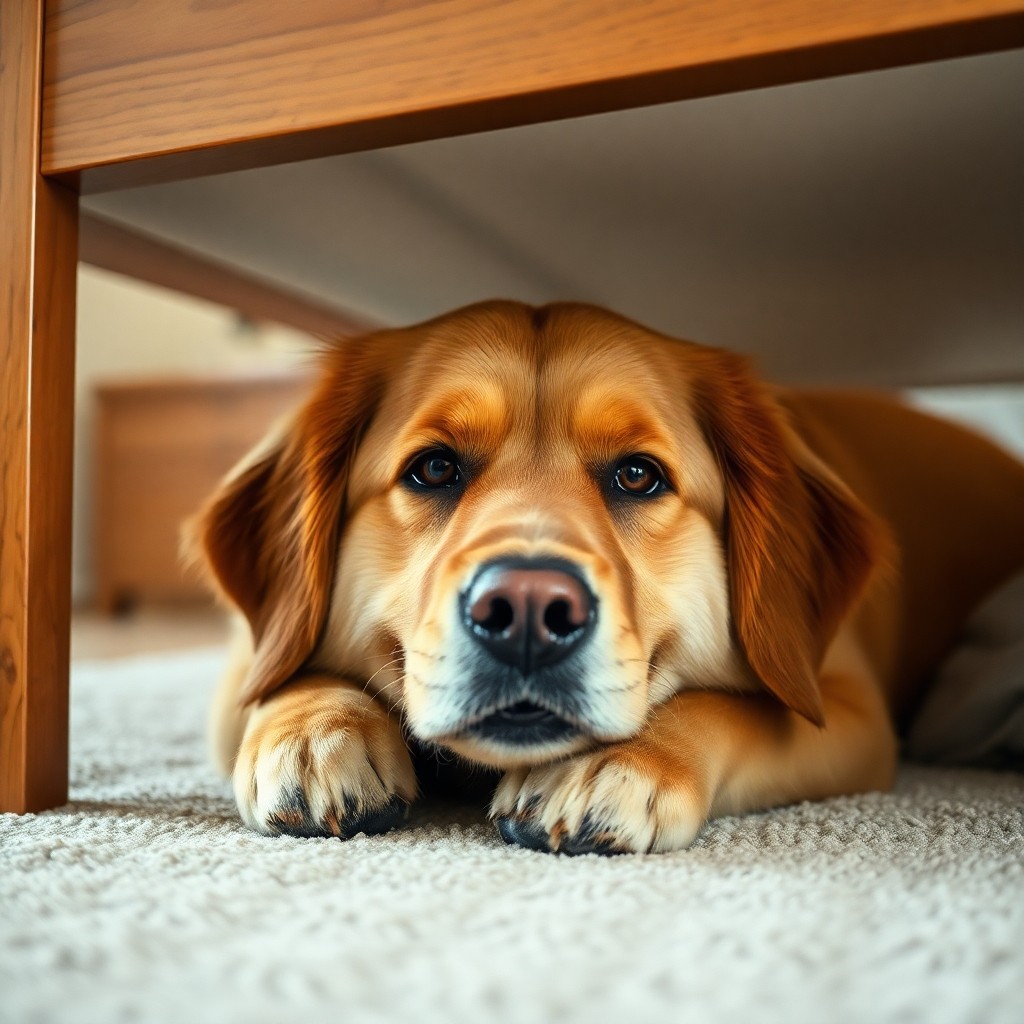
If you have ever reached down to coax your dog out from the dusty shadows beneath your bed frame, you are likely wondering what makes that narrow space so appealing. That shadowy retreat is rarely just a quirky hiding spot; it is often a window into your dog’s current emotional state, their physical comfort, or their need for a little extra security.
Dogs sleep under the bed because it taps into their natural denning instinct, offering a dark, enclosed, and secure space that provides safety, temperature control, or a quiet retreat from household stress. While often harmless, a sudden shift to this sleeping spot can sometimes signal underlying anxiety or physical pain.
The Ancestral Pull: The Denning Instinct
Before dogs became beloved couch companions, their wild ancestors relied on small, enclosed spaces for survival. In the wild, a hollow log, a shallow cave, or a burrow under a bush served as a sanctuary. These tight spaces offered protection from predators and shielded animals from harsh weather elements.
The area under your bed mimics these natural sanctuaries perfectly. It has a low ceiling, is surrounded on multiple sides, and limits visual stimuli. For many dogs, sleeping in this tight spot feels like resting in a secure, private den. It is a deeply ingrained evolutionary behavior that brings a profound sense of safety and calm.
Common Reasons Your Dog Seeks the Space Under the Bed
While instinct plays a major role, daily life and environmental factors often trigger this choice. Understanding these factors helps you determine if your dog is simply comfortable or trying to cope with a problem.
- Anxiety and Fear: Loud noises like thunderstorms, fireworks, construction, or even a loud vacuum cleaner can send a dog scrambling for cover. The space under the bed acts as a physical shield against perceived threats.
- Temperature Regulation: Depending on your flooring, the area under the bed can be significantly cooler than the rest of the room. Tile or hardwood floors shielded from direct sunlight offer a cool oasis for a hot dog. Conversely, a carpeted under-bed space can trap body heat, keeping a shivering pup warm.
- Overstimulation and Stress: Busy households with young children, frequent guests, or loud televisions can overwhelm a dog. Your pet might choose the bed as a quiet retreat to decompress and rest without being disturbed.
- Physical Illness or Pain: Instincitively, sick or injured animals isolate themselves to avoid showing vulnerability. If your dog suddenly starts hiding under the bed and refuses to come out, they may be dealing with pain, joint discomfort, or an upset stomach.
When Should You Worry? Warning Signs to Watch For
For many dogs, sleeping under the bed is a peaceful daily routine. However, you should pay close attention if this behavior starts overnight or is accompanied by other physical or emotional changes. A sudden shift from sleeping happily on your pillows to hiding away is a major red flag.
Watch for accompanying symptoms such as panting, shaking, whining, or lethargy. If your dog refuses to come out for meals, walks, or play, this indicates a state of distress or sickness rather than simple relaxation. In these cases, a veterinary checkup is essential to rule out hidden injuries, arthritis, or metabolic illnesses.
A Practical Action Plan: What to Do Today
If you want to manage this behavior or ensure your dog feels safe, follow these practical steps to create a supportive environment:
- Never Force Them Out: Forcing a fearful or anxious dog out from under the bed can trigger defensive aggression or deepen their anxiety. Always allow them to emerge on their own terms.
- Create a Safe Alternative: If you want to transition your dog to a new sleeping spot, set up a covered dog crate or a high-sided donut bed in a quiet corner of the room. Drape a blanket over the crate to mimic the dark, den-like atmosphere of the bed.
- Address the Root Cause of Anxiety: If noises trigger this behavior, use white noise machines, calming pheromone diffusers, or soft classical music to buffer the sound. Keep the bedroom door closed during high-stress events to maintain a quiet zone.
- Keep the Area Safe: If your dog insists on sleeping under the bed, ensure the space is free of dust bunnies, loose coins, electrical cords, or small objects they could accidentally swallow or choke on.
Frequently Asked Questions
Should I block off the area under my bed?
You should only block off the under-bed area if your dog is using it to isolate due to extreme, unaddressed anxiety, or if there are physical hazards underneath. Otherwise, blocking it off without providing a suitable, dark, covered alternative can increase your dog’s stress levels.
Why does my dog only sleep under the bed when it rains?
Dogs are highly sensitive to changes in barometric pressure, static electricity in the air, and the low-frequency rumble of thunder. The enclosed space under the bed helps muffle the sound and can reduce the build-up of static electricity in their fur, making them feel much safer during storms.