
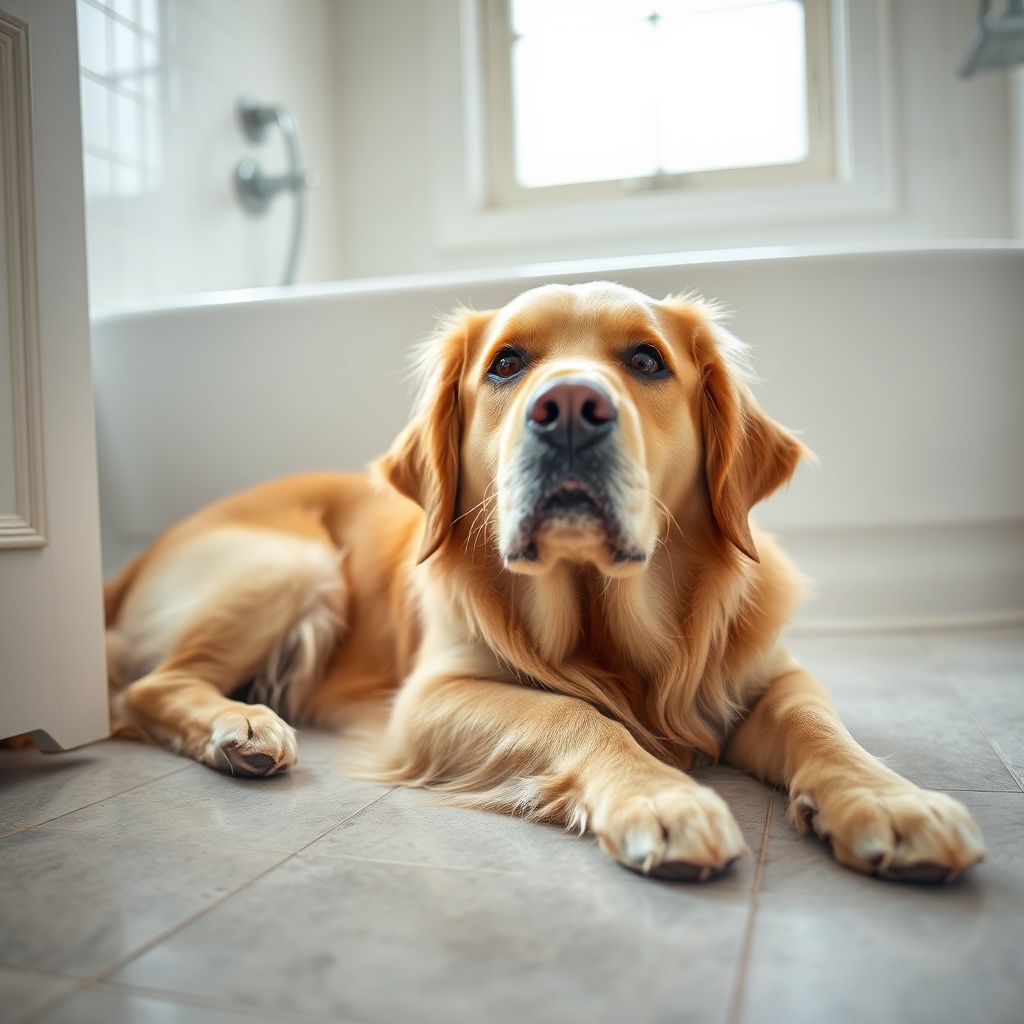
Finding your dog curled up fast asleep on the cold bathroom tile instead of the plush, expensive bed you bought them can feel a bit baffling. As strange as it might seem to us, our canine companions always have a good reason for where they choose to lay their heads at the end of the day.
Dogs sleep in the bathroom primarily because the tiled floor offers cool relief to lower their body temperature, the enclosed space provides a secure, den-like shelter during stressful events, or they simply want to remain close to their owner’s scent. For most pets, this behavior is a completely natural way to self-regulate comfort and anxiety.
Why Your Bathroom Is So Appealing to Your Dog
To understand this habit, you must look at the bathroom from your dog’s perspective. It is not just a room with plumbing; it is a unique microclimate and structural sanctuary within your home.
1. Temperature Regulation and Cooling Tiles
Unlike humans, dogs cannot sweat through their skin to cool down. They rely on panting and heat exchange through their paw pads and bellies. Ceramic, porcelain, or stone bathroom tiles naturally remain much cooler than carpets, hardwood floors, or plush dog beds. Pressing their belly against these cold tiles allows dogs to rapidly dump excess body heat, especially after a walk, during hot summer months, or if they have a thick double coat.
2. The Secure ‘Den’ Effect
Canines are ancestral den dwellers. They naturally seek out small, dark, and enclosed spaces when they want to feel safe. The narrow gap between the bathtub and the wall, or the tight corner behind the toilet, mimics a natural cave. This structural layout provides a sense of security, protecting them from perceived threats from the rear and sides.
3. Protection from Noise and Stress
Bathrooms are often located in the interior of the home, far from external walls, street noise, and windows. The heavy porcelain fixtures, thick walls, and lack of windows can deaden loud, frightening sounds like thunderstorms, fireworks, or loud construction. If your dog suddenly retreats to the bathroom during a storm, they are seeking a soundproof sanctuary.
4. Proximity to Your Scent
Bathrooms are highly concentrated with their owner’s scent. Towels, bath mats, and dirty laundry hampers hold strong olfactory signatures that comfort a dog when they feel lonely or anxious. Sleeping near these items helps them feel connected to you, even when you are asleep or away.
When Bathroom Sleeping Indicates a Problem
While sleeping on the tile is usually harmless, a sudden change in your dog’s sleeping habits can sometimes signal an underlying issue that requires attention.
- Fever or Illness: If your dog is suddenly seeking cold surfaces constantly, they might be running a fever or experiencing internal inflammation. Monitor them for lethargy, loss of appetite, or vomiting.
- Severe Noise Phobia: If the bathroom retreat only happens during storms or fireworks, it indicates a high level of stress. Left unaddressed, this phobia can worsen over time.
- Separation Anxiety: If your dog follows you into the bathroom and refuses to sleep anywhere else, it may stem from a hyper-attachment issue where they cannot tolerate being in a different room than you.
Action Plan: How to Address This Behavior
If you want to transition your dog back to their own bed or a more appropriate sleeping area, follow this practical step-by-step training plan.
Step 1: Provide a Cooler Sleeping Alternative
If your dog is sleeping in the bathroom to cool down, elevate their comfort options. Invest in a pressure-activated gel cooling mat. Place it in a quiet corner of your living room or bedroom. Alternatively, try an elevated cot-style dog bed, which allows air to circulate underneath their body.
Step 2: Recreate the ‘Den’ Environment
If security is what your dog craves, introduce a wire crate covered with a dark blanket to simulate a safe cave. Place comfortable, breathable bedding inside, and keep the crate door open so they can enter and exit freely. Position this crate in a quiet, low-traffic area of your home.
Step 3: Block Access and Redirect
Simply closing the bathroom door is the easiest way to break the habit. When you close the door, immediately redirect your dog to their designated bed. Reward them with high-value treats and praise when they lie down on their approved spot to build a positive association.
Common Mistakes Owners Make
- Forcing them out physically: Dragging an anxious dog out of their safe space will only increase their stress levels and could trigger defensive aggression. Always use positive reinforcement to lure them out.
- Ignoring sudden behavior shifts: Never dismiss a sudden, obsessive desire to sleep on cold tiles if your dog has never done it before. Always consult a veterinarian to rule out pain, fever, or metabolic issues.
- Using the bathroom as a punishment zone: Putting your dog in the bathroom for a ‘time-out’ confuses them. They will either associate their sleeping sanctuary with negative experiences or fail to understand the correction entirely.
Frequently Asked Questions
Is it bad for my dog to sleep on the hard tile floor?
For young, healthy dogs, sleeping on tiles is perfectly fine. However, for senior dogs or those with arthritis, joint pain, or hip dysplasia, sleeping on hard surfaces can worsen stiffness and pressure sores. It is best to provide orthotic cooling support for older pets.
Why does my dog sleep specifically behind the toilet?
The space behind or next to the toilet is typically the tightest, darkest, and most enclosed spot in the bathroom. This extreme containment provides the ultimate sense of security for an anxious dog, making them feel completely protected on all sides.