
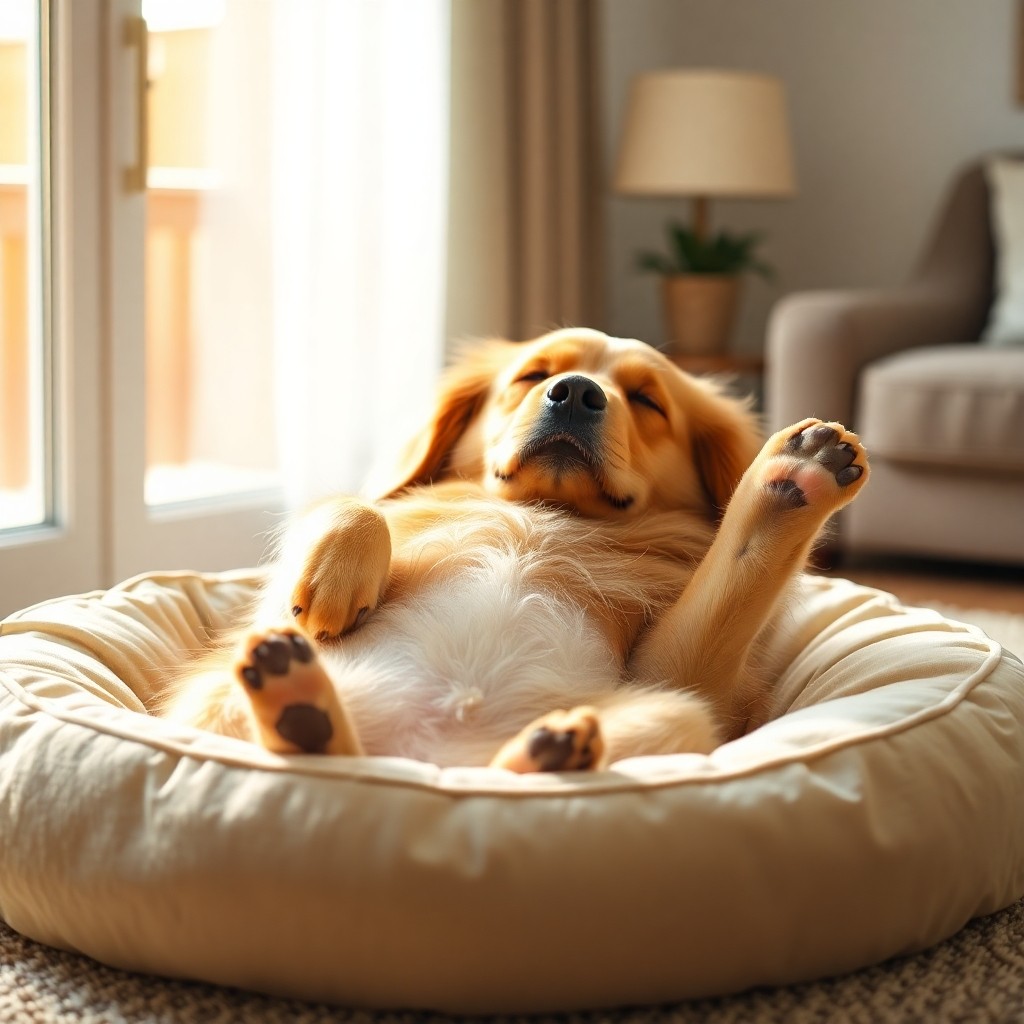
There is very little in the pet world quite as amusing as walking into a room to find your dog sprawled out completely on its back, legs sticking straight up in the air. While it looks like a design flaw in canine anatomy, this quirky sleeping posture actually tells a great story about how safe, comfortable, and healthy your dog feels in your home.
Dogs sleep on their backs primarily to cool down through sweat glands in their paws and exposed bellies, and because they feel completely safe and secure in their environment. This posture exposes their most vulnerable organs, meaning it is only adopted when a dog fully trusts their surroundings and has no need for self-defense.
The Core Reasons Behind the Belly-Up Posture
To understand why a dog chooses this seemingly awkward position, it helps to look at both their evolutionary history and their physical makeup. While wild canines would never sleep this way due to predators, domestic dogs have luxury and security on their side.
1. Efficient Temperature Regulation
Dogs do not sweat the way humans do. They primarily dissipate heat through panting and the sweat glands located in their paw pads. Additionally, the fur on a dog’s belly is significantly thinner than the fur on their back. By lying on their back, dogs expose their sparse belly hair to air currents and let heat escape from their paws, making this a highly effective way to cool down quickly on warm days.
2. A Display of Ultimate Trust and Security
In the animal kingdom, the belly is the most vulnerable part of the body. Underneath that soft skin lie vital organs unprotected by a rib cage. When a dog rolls onto their back to sleep, they are putting themselves in a highly defenseless position. If your dog sleeps like this around you, it is a massive compliment: it means they feel completely safe in your home and trust that no threats are nearby.
3. Achieving Deep REM Sleep
When dogs sleep curled up in a ball, they must keep their muscles tensed to maintain the position. This is a survival instinct designed to help them spring into action if attacked. By contrast, sleeping on the back allows every muscle group in a dog’s body to completely relax. This total lack of physical tension makes it much easier for them to slip into the deepest, most restorative stages of REM sleep.
Quick Facts: Canine Sleeping Postures Compared
- The Donut (Curled in a ball): Preserves body heat and protects vital organs. Highly common in outdoor dogs or during cooler weather.
- The Superman (On the belly, limbs stretched out): Common in puppies; allows the dog to wake up and immediately start running.
- The Side Sleeper: Indicates a relaxed state and a high level of comfort, though slightly more alert than the back-sleeping position.
- The Crazy Legs (On the back): The ultimate sign of comfort, relaxation, and trust in the environment.
When Back-Sleeping Might Signal a Problem
In almost all cases, back-sleeping is a sign of a happy, healthy dog. However, there are a few rare exceptions where owners should pay closer attention. If an older dog who has never slept on their back suddenly starts doing so, or if they struggle to roll back over, it could be a sign of arthritis or joint stiffness. Additionally, if your dog is panting heavily or wheezing while lying on their back, they may be trying to ease a respiratory issue. If you notice any labored breathing, it is best to consult with a veterinarian.
Frequently Asked Questions
Do all dog breeds sleep on their backs?
While any dog can technically sleep on their back, it is more common in certain breeds with flexible builds or those highly prone to overheating, such as Golden Retrievers, Boxers, and Greyhounds. Deep-chested breeds may also find this position comfortable for relieving pressure on their rib cages.
Is it safe to wake a dog sleeping on its back?
It is generally best to let sleeping dogs lie. Because back-sleeping is associated with deep REM sleep, startling a dog out of this state can cause them to wake up disoriented or defensive. If you must wake them, do so gently by calling their name rather than touching them.