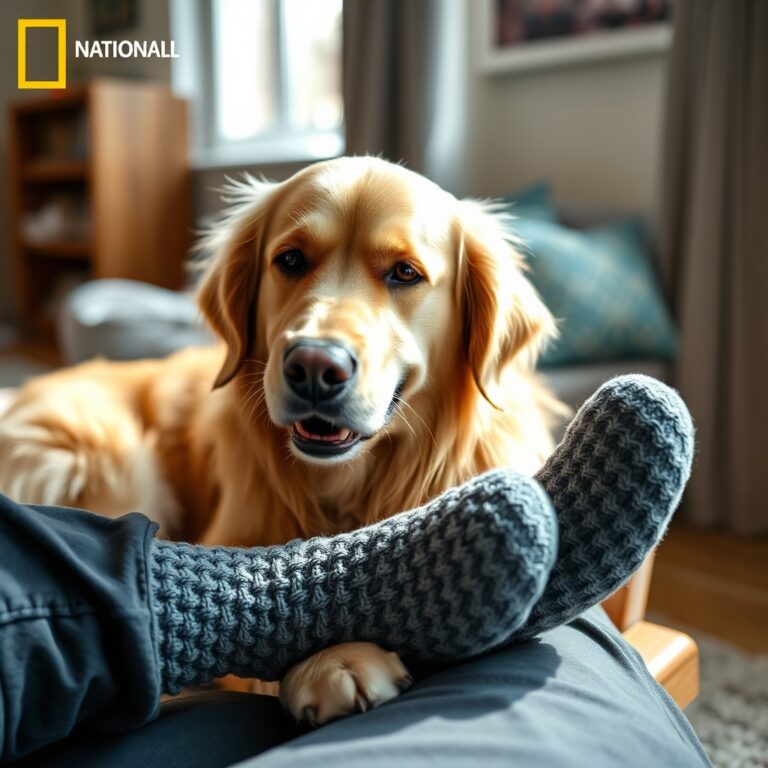


If you’ve ever tried to stretch out in bed only to find your dog wedged securely behind your knees, you know how surprisingly heavy and persistent a sleeping pup can be. Far from being a random quirk or a bid for dominance, curling up right between your legs satisfies deep-rooted instincts for safety, temperature regulation, and absolute loyalty.
Dogs sleep between their owner’s legs primarily for warmth, physical security, and emotional bonding. This behavior replicates the pack-huddling instincts of wild ancestors, providing your dog with a safe, enclosed space where they feel protected while showing deep trust in you.
Why Dogs Choose the Space Between Your Legs
To understand this behavior, look at the world from your dog’s perspective. The space between your legs creates a natural ‘cradle’ that appeals to several core canine instincts:
- Body Heat Preservation: Dogs have a higher natural body temperature than humans. Snuggling into the contour of your legs helps them retain heat, especially during cooler nights.
- The Denning Instinct: Wild canines are den animals. They seek out small, enclosed, semi-protected spaces to sleep because it prevents predators from sneaking up on them. Your legs act as natural barriers, offering a secure ‘den’ environment.
- Scent and Reassurance: Your legs and lower body carry a concentrated amount of your unique scent. Sleeping near your scent centers calms your dog’s nervous system and lowers cortisol levels.
- Emotional Security and Trust: When a dog sleeps, they are in their most vulnerable state. Choosing to sleep locked between your legs is the ultimate sign of trust—they know you will protect them, and they feel safe knowing exactly when you move.
Common Mistakes Owners Make When Managing This Behavior
While this habit is generally harmless, handling it incorrectly can lead to behavioral issues. Avoid these common pitfalls:
- Encouraging protective growling: If your dog growls at your partner or other pets when they approach the bed, and you pet them to ‘calm them down,’ you are accidentally rewarding resource-guarding behavior.
- Forcing sudden isolation: Shoving your dog off the bed abruptly when they try to cuddle can cause confusion and mild separation anxiety. Transition them slowly using positive reinforcement.
- Ignoring signs of underlying anxiety: If this behavior starts suddenly accompanied by panting, shaking, or pacing, it may not be a simple cuddle choice—it could be a reaction to noise phobias or separation distress.
How to Establish Healthy Bedtime Boundaries
If you prefer to reclaim your personal space on the bed, you can easily retrain your dog without damaging your bond. Follow this step-by-step transition plan:
- Step 1: Introduce a Dedicated Bedside Space. Place a high-quality, orthopedic dog bed right next to your side of the bed. This keeps them close enough to feel your presence without taking up your leg space.
- Step 2: Use the ‘On Your Bed’ Command. Guide your dog to their bed using a high-value treat. Reward them heavily when all four paws are on their cushion. Repeat this daily before bedtime.
- Step 3: Make Your Space Temporarily Inaccessible. Use pillows or a folded duvet to block the area between your legs while you sleep, making their favorite spot less physically convenient.
- Step 4: Reward Independence. Praise your dog when they choose to settle in their own bed voluntarily. Positive reinforcement solidifies the idea that sleeping nearby is just as rewarding as sleeping directly on you.
Frequently Asked Questions
Is it a sign of dominance when my dog sleeps between my legs?
No, this is a common myth. Dogs sleep between your legs for security, comfort, and affection, not to establish dominance over you. It is a sign of deep trust and bonding.
What should I do if my dog growls when my partner gets close to the bed?
This is resource-guarding. If your dog growls to protect ‘their’ space between your legs, immediately have them leave the bed with an ‘off’ command. Do not comfort or pet them, as this reinforces the aggressive behavior. Train them to sleep on their own bed until the guarding behavior stops.
Why does my dog only do this when it rains or during thunderstorms?
Thunderstorms cause static build-up in dog fur and create low-frequency noise anxiety. Sleeping tightly between your legs provides deep-pressure therapy, which naturally calms their nervous system during scary environmental events.