
Trying to physically exhaust a hyperactive dog usually backfires, resulting in an elite canine athlete who still refuses to settle down. Pushing a high-energy dog through endless exercise only builds their physical stamina while leaving their busy mind completely unaddressed. True calm doesn’t come from wearing out their paws—it comes from unlocking targeted cognitive fatigue.
Level 3 interactive puzzle toys provide the highest tier of canine cognitive stimulation by requiring multi-step, sequential problem-solving to access hidden food or treats. This structured mental work forces a hyperactive dog to slow down, think logically, and move from an erratic state of hyper-arousal to a focused, calm state of satisfaction.
The Science of Cognitive Fatigue in Hyperactive Dogs
Hyperactivity in dogs is often a symptom of mental under-stimulation rather than a simple excess of physical energy. When a dog’s brain is under-utilized, they seek out their own ‘jobs’—which usually manifest as nuisance behaviors like destructive chewing, barrier frustration, or excessive barking. Working through a complex puzzle engages the prefrontal cortex, consuming massive amounts of glucose and oxygen. This process actively drains mental energy far more efficiently than a five-mile run, resulting in a naturally relaxed, sleepy dog.
What Classifies a Toy as ‘Level 3’?
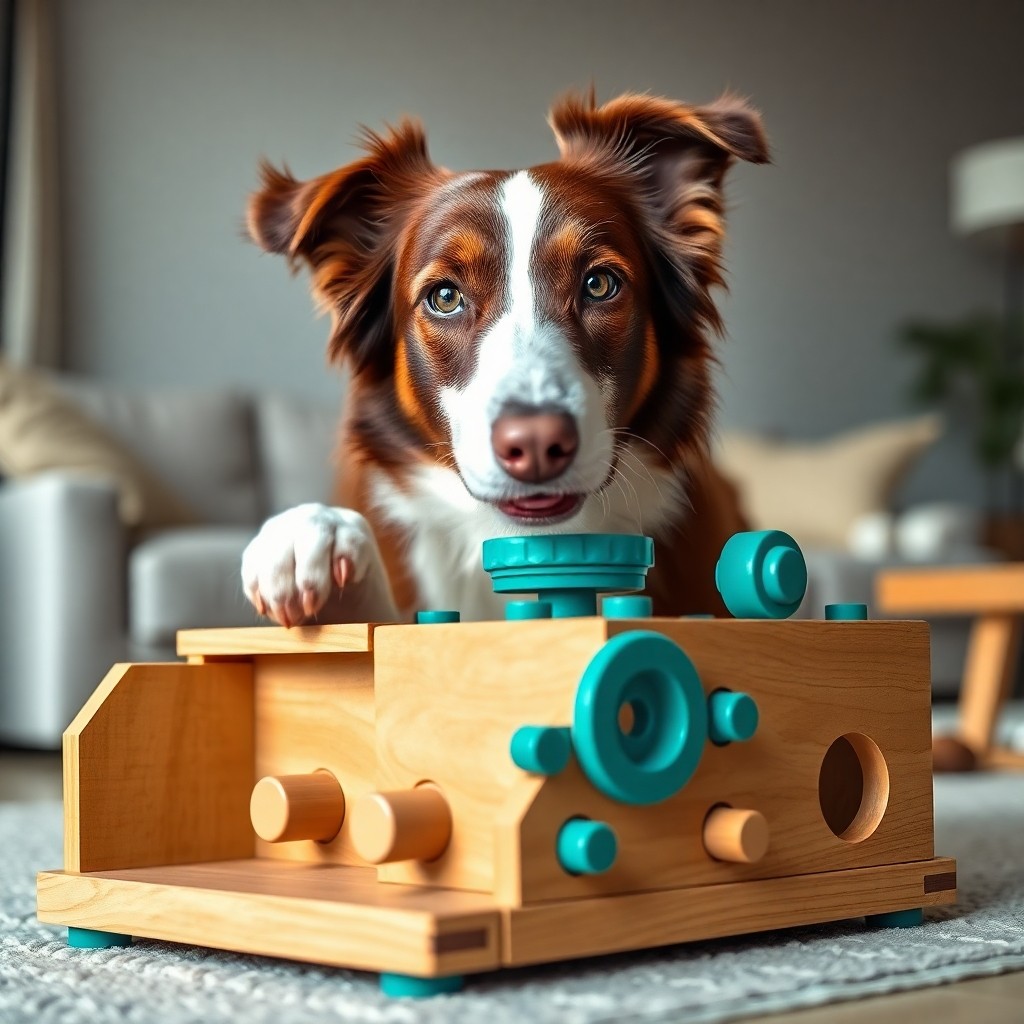
Dog puzzles are generally rated on a scale from 1 to 4. To successfully solve a Level 3 puzzle, a dog cannot simply nudge a lever or knock over a cup. They must perform a sequence of distinct actions in a specific, non-negotiable order. For example, your dog must first slide a locking bolt, then rotate a central wheel, and finally lift a cup to reveal the reward. If they attempt to lift the cup before sliding the bolt, the mechanism remains locked.
Step-by-Step Training Plan for Advanced Puzzles
Introducing a Level 3 puzzle directly to a hyperactive dog without preparation is a recipe for disaster. The dog will likely become frustrated, leading to clawing, biting, or throwing the toy. Use this progressive training protocol to ensure success:
- Phase 1: Unlock the Mechanisms Individually. Before assembling the full sequence, let your dog practice with a single mechanism unlocked. If the puzzle uses a bone-shaped peg to lock a drawer, leave the peg out entirely. Let them learn that sliding the drawer yields food.
- Phase 2: Introduce the Lock Concept. Once they easily slide the drawer, place the locking peg only halfway in. Show them how nudging the peg out unlocks the drawer. Praise heavily the moment they touch the peg.
- Phase 3: The Full Sequence. Push the locking peg all the way in. Encourage your dog verbally as they navigate the sequence: first removing the peg, then sliding the drawer. Keep sessions short—no more than five to ten minutes to avoid mental burnout.
Common Mistakes to Avoid
When working with highly intelligent, hyperactive dogs, minor tactical errors can stall their progress or ruin the toy. Avoid these common pitfalls:
- Using low-value treats: If the puzzle is difficult, the reward must match the effort. Skip dry kibble and use high-value rewards like freeze-dried liver, small bits of cheese, or roasted chicken.
- Leaving the dog unsupervised: A frustrated hyperactive dog will quickly pivot from solving a puzzle to chewing through the plastic or wood components to bypass the steps. Always supervise and put the puzzle away when finished.
- Stepping in too quickly: Let your dog struggle slightly. Frustration in small, manageable doses is part of the learning and cognitive growth process. Only assist if they completely disengage or begin to use destructive physical force.
Frequently Asked Questions
How long should a puzzle session last?
Keep puzzle sessions to a maximum of 10 to 15 minutes. High-level cognitive problem-solving is intense, and overextending a session can lead to frustration, irritability, and stress rather than peaceful exhaustion.
Can puzzle toys replace daily physical walks?
No, puzzle toys do not replace physical exercise. They work in tandem with physical activity. A balanced routine combines structured physical exercise (like sniffing walks) with focused cognitive stimulation.
What should I do if my dog tries to chew the puzzle apart?
Immediately interrupt the behavior with a neutral cue, remove the puzzle, and ask for a simple behavior like a ‘sit’. Reintroduce the puzzle with easier settings or higher-value treats to reduce the frustration that triggers the destructive chewing.