

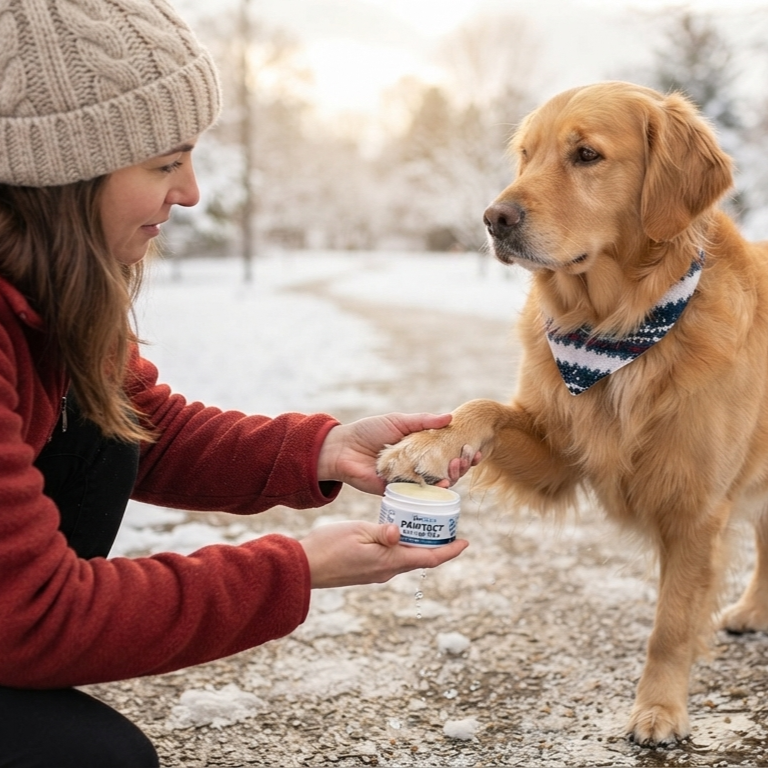
Winter walks bring a crunch of fresh snow and, unfortunately, handfuls of melting salts that sting every step our dogs take. While those tough little paw pads look ready for anything, freezing asphalt and chemical de-icers can quickly turn a joyful snowy stroll into painful, cracked skin and chemical burns.
To protect your dog’s paws from snow and salt, you should apply a pet-safe paw barrier wax before walks, use insulated waterproof dog booties, trim the hair between their toes to prevent ice accumulation, and thoroughly rinse their paws with lukewarm water immediately after returning indoors.
The Hidden Dangers of Winter Walks
Winter brings beautiful scenery, but it also introduces harsh elements that can quickly damage your dog’s paws. Understanding what happens to your pet’s feet during cold weather is key to keeping them comfortable and healthy.
- Chemical De-icers and Road Salt: Traditional rock salt (sodium chloride) and modern chemical de-icers (calcium or magnesium chloride) are highly corrosive. When trapped against a dog’s warm paw pad, these substances can cause painful chemical burns, severe dryness, and systemic toxicity if the dog licks its paws.
- Ice Ball Accumulation: Dogs with longer fur between their toes often suffer from ice balling. Snow melts from body heat, refreezes in the fur, and forms hard, sharp ice balls that stretch the toes apart and cut the sensitive skin.
- Frostbite and Cracking: Extremely cold pavement rapidly saps heat from the paw pads. Prolonged exposure can cause the skin to dry out, lose elasticity, and crack, leaving open wounds vulnerable to infection.
Top Methods for Winter Paw Protection
Depending on your dog’s tolerance and your daily walking route, there are several highly effective ways to shield their paws from winter elements.
1. Protective Dog Booties
Booties provide the most comprehensive physical barrier against both physical debris and chemical de-icers. When selecting boots, look for models with durable rubber soles and adjustable Velcro straps to ensure a snug fit.
Pros: Complete isolation from salt, snow, and freezing pavement; excellent traction on icy surfaces.
Cons: Many dogs require an adjustment period to walk comfortably in them; they can easily slip off in deep snow if not fitted correctly.
2. Pet-Safe Paw Waxes
If your dog refuses to wear boots, a specialized paw wax is the next best line of defense. These food-grade waxes create a semi-permeable barrier that repels water, salt, and chemicals while keeping the skin hydrated.
Pros: Easy to apply, highly tolerated by most dogs, and provides natural conditioning for dry pads.
Cons: Wears off gradually during long walks; can leave temporary oily smudges on household carpets if not wiped off after returning.
3. Strategic Grooming
Keeping the hair between your dog’s pads trimmed flush with the pads is an easy, preventative step. Use safety scissors or a small pet trimmer to remove long wisps of hair that would otherwise collect wet snow and freeze into painful ice clumps.
The Post-Walk Recovery Routine
Even with protective measures in place, a consistent post-walk routine is crucial for minimizing damage from residual salt and chemicals.
- Warm Water Rinse: Keep a shallow bowl of lukewarm water or a wet, warm washcloth near the door. Gently wash each paw to dissolve any stuck salt crystals. Avoid hot water, which can irritate cold, sensitive skin.
- Thorough Drying: Use a soft microfiber towel to dry the paws completely, paying special attention to the spaces between the toes to prevent yeast infections from trapped moisture.
- Moisturize and Inspect: Check the pads for redness, cuts, or peeling. If the pads feel rough or dry, apply a soothing, non-toxic paw balm to help the skin regenerate overnight.
Frequently Asked Questions
Is road salt toxic to dogs if they lick their paws?
Yes. Road salt and commercial de-icers can cause chemical irritation in the mouth and throat. If ingested in larger quantities, they can lead to salt toxicosis, which causes vomiting, diarrhea, lethargy, and extreme thirst. Always rinse your dog’s paws before they have a chance to groom themselves.
Can I use human Vaseline or petroleum jelly on my dog’s paws?
While Vaseline is not highly toxic in small amounts, it is not recommended. It can cause upset stomachs and diarrhea if licked off. Additionally, petroleum jelly acts as a heavy barrier that can trap moisture and bacteria inside the paw folds, potentially leading to fungal or bacterial infections.
How do I get my dog used to wearing booties?
Introduce the boots slowly indoors. Start by letting your dog sniff them, offering high-value treats. Put just two boots on at first, reward your dog immediately, and let them walk around for a few minutes. Gradually increase the duration and add the remaining boots before heading outside into the snow.