
Dogs navigate their world through a mix of keen hearing and a remarkable, though often misunderstood, sense of sight. While we might stumble in a pitch-black bedroom, our canine companions experience the dark quite differently—though some still benefit from a gentle, low-level glow to keep nocturnal anxiety at bay.
Generally, healthy adult dogs do not need a night light because their superior night vision allows them to see well in dim settings. However, senior dogs with cognitive decline, puppies adjusting to a new home, and dogs with visual impairments benefit significantly from a soft, low-intensity night light to prevent anxiety and disorientation.
How Canines See in the Dark: The Science of Dog Vision
To understand whether your dog needs a night light, it helps to explore how canine eyes function. Dogs possess several biological adaptations that make them incredibly efficient at navigating low-light environments. Their eyes contain a much higher concentration of rod cells than human eyes, which are highly sensitive to light and motion.
Additionally, dogs have a specialized reflective tissue behind their retina called the tapetum lucidum. This biological mirror reflects light back through the retina, giving their photoreceptors a second chance to absorb it. This is why your dog’s eyes seem to glow in the dark when hit by light. While humans struggle to navigate a dark hallway, a healthy adult dog can see quite clearly with only a tiny fraction of the ambient light we require.
Pros and Cons of Using a Night Light for Your Dog
While biological science shows dogs have excellent night vision, real-world living situations vary. Here is a practical breakdown of the advantages and disadvantages of adding a night light to your dog’s sleeping area:
The Benefits (Pros)
- Reduces Nighttime Anxiety: For dogs prone to separation anxiety or fear of the dark, a gentle glow provides visual reassurance that their surroundings are safe.
- Aids Senior Dogs: Older dogs suffering from Canine Cognitive Dysfunction (CCD) often get disoriented at night. A light source helps them navigate without panic.
- Prevents Bumping into Obstacles: Visually impaired dogs or those with cataracts can use the extra light to avoid furniture and find their water bowl safely.
- Helps Puppies Adjust: Young puppies transitioning away from their mother and littermates find comfort in seeing their new, unfamiliar environment.
The Drawbacks (Cons)
- Can Disrupt Melatonin Production: Just like in humans, excessive or bright light can interfere with a dog’s natural circadian rhythm, lowering sleep quality.
- May Attract Insects: Depending on the placement and type of bulb, certain lights can attract nighttime pests, irritating your sleeping pet.
- Creates Unnecessary Shadows: Flickering or poorly positioned lights can cast scary, moving shadows that actually increase anxiety rather than soothe it.
Signs Your Dog Might Benefit from a Night Light
Since your dog cannot tell you how they feel, you must look for behavioral clues. Watch your dog’s nighttime routine and look out for these common indicators that they are struggling in the dark:
- Pacing and Whining: Walking aimlessly around the room or crying shortly after the lights go out.
- Refusing to Enter Dark Rooms: Hesitating or backing away when it is time to go to bed in a dark room.
- Frequent Startle Reflexes: Waking up suddenly and barking at minor household noises that they normally ignore during the day.
- Clinging to Your Side: Showing an unusual level of clinginess or trying to climb into your bed only when the sun goes down.
How to Set Up the Ideal Sleeping Environment
If you decide to introduce a night light, setting it up correctly is crucial to avoid disrupting your dog’s natural sleep-wake cycle. Follow these practical tips to create a cozy, sleep-friendly environment:
- Choose Warm Colors: Opt for a warm amber, red, or orange light. Avoid cool blue or white lights, as these wavelengths suppress melatonin production and can keep your dog wide awake.
- Keep It Dim: The light should be just bright enough to outline furniture, not light up the entire room. A 0.5-watt to 1-watt LED bulb is usually perfect.
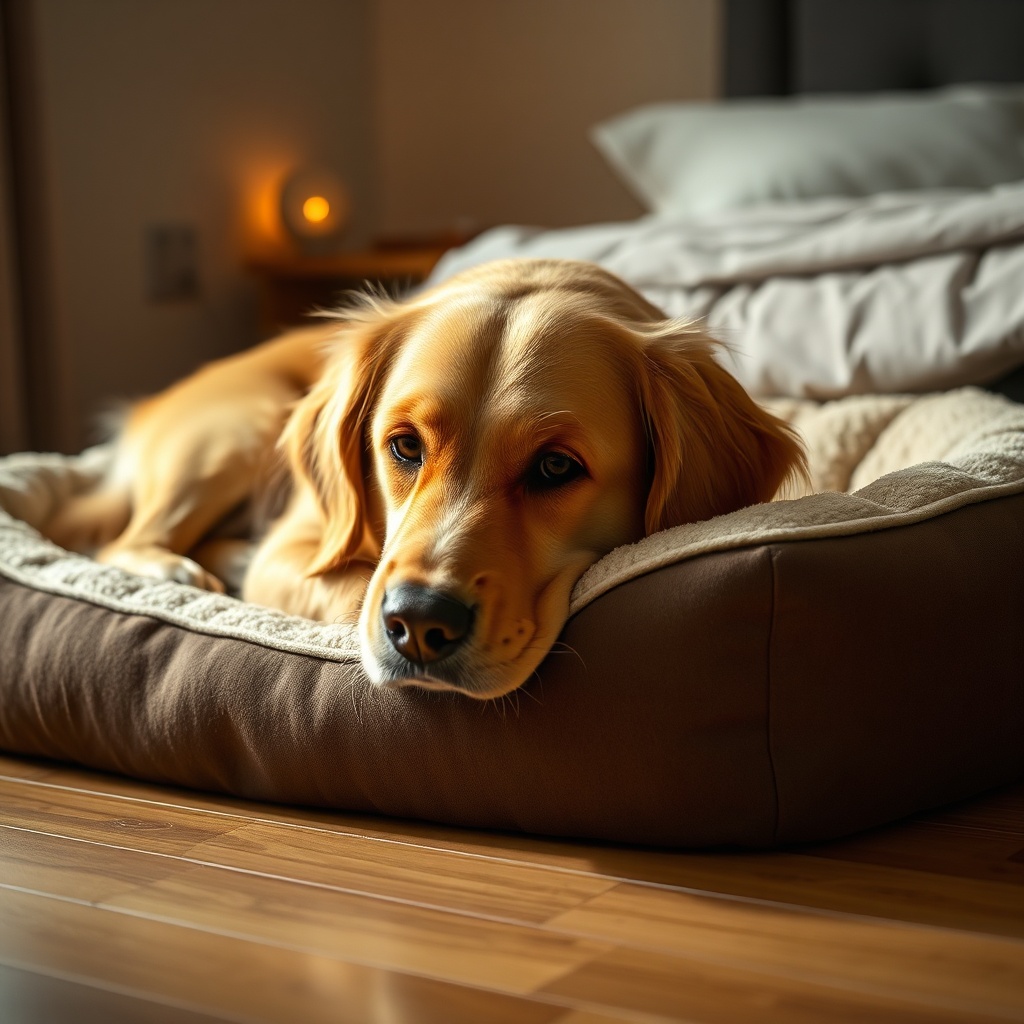
- Use Smart Placement: Place the light near the floor, away from your dog’s direct line of sight when they are lying down. Avoid pointing the light directly at their crate or bed.
- Consider Motion-Activated Options: If your dog only needs light when they get up to drink water, a motion-activated sensor light is an excellent compromise that keeps the room dark during deep sleep.
Frequently Asked Questions
Can dogs sleep in pitch black?
Yes, healthy adult dogs can sleep perfectly well in pitch-black rooms. Their natural night vision adapts to minimal light, allowing them to feel comfortable and secure without any external light sources.
Are dogs afraid of the dark?
While dogs do not experience fear of the dark in the same imaginative way humans do, they can feel anxious if their vision is compromised due to age, illness, or trauma. This anxiety can manifest as fear of being left alone in a dark space.
What color night light is best for dogs?
A warm amber or red night light is the best choice. These colors have a longer wavelength and do not interfere with your dog’s sleep cycle, unlike blue or bright white lights, which mimic daylight and can disrupt sleep.