
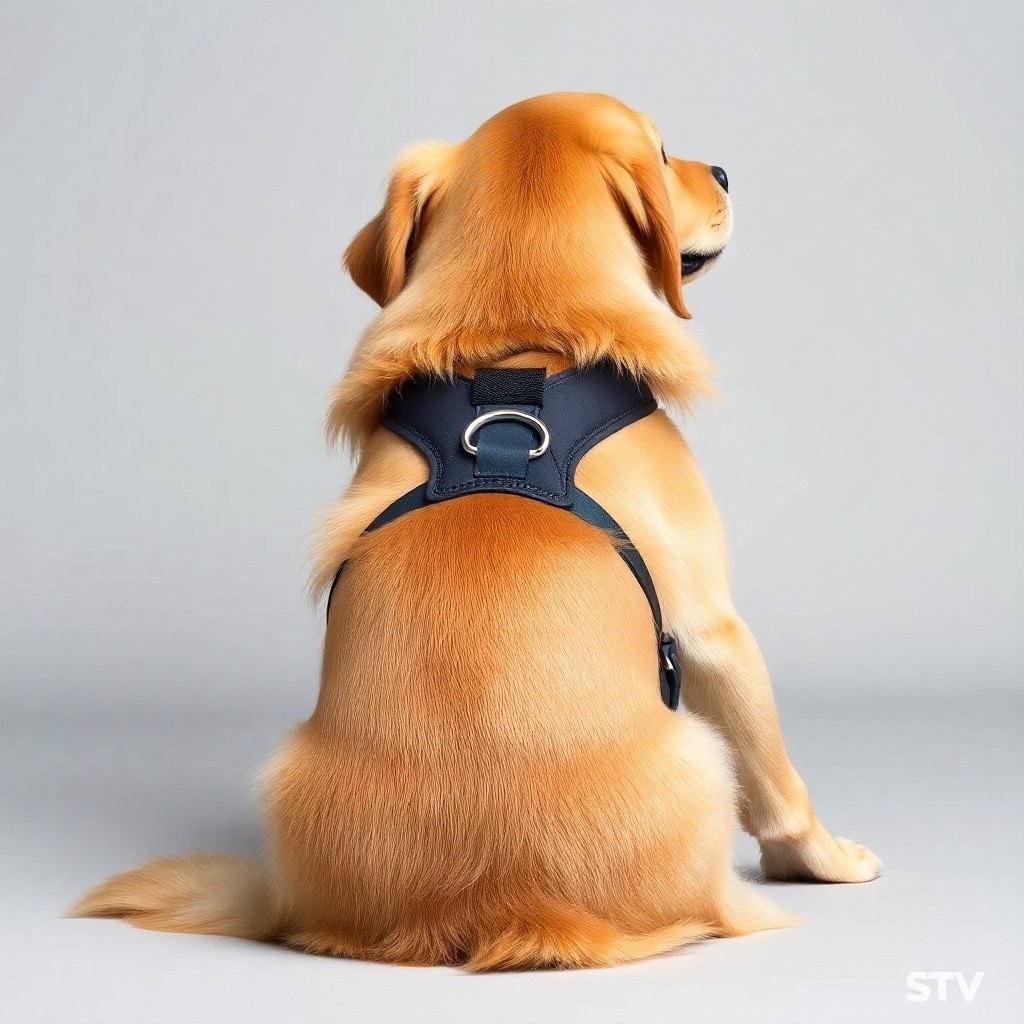
That split-second decision at the pet store aisle—grabbing the harness with the ring on the chest versus the one on the back—actually changes the entire physics of your daily walk. Where that leash clips dictates whether your arm gets pulled out of its socket down the sidewalk or your dog smoothly stays by your side, making this simple piece of nylon far more important than it looks.
The main difference is that a front-clip harness attaches at the dog’s chest to redirect pulling behavior by turning the dog’s body toward you, while a back-clip harness attaches on the dog’s spine, offering maximum comfort for trained walkers but potentially triggering a pulling reflex in untrained dogs.
Understanding the Core Differences
Every dog harness is designed to distribute pressure away from the fragile neck area, protecting the trachea from damage. However, where the leash attaches to the harness changes how physical force is applied to the dog’s body. Choosing the right style depends heavily on your dog’s size, behavioral training, and physical structure.
The Front-Clip Harness: Best for Training and Pullers
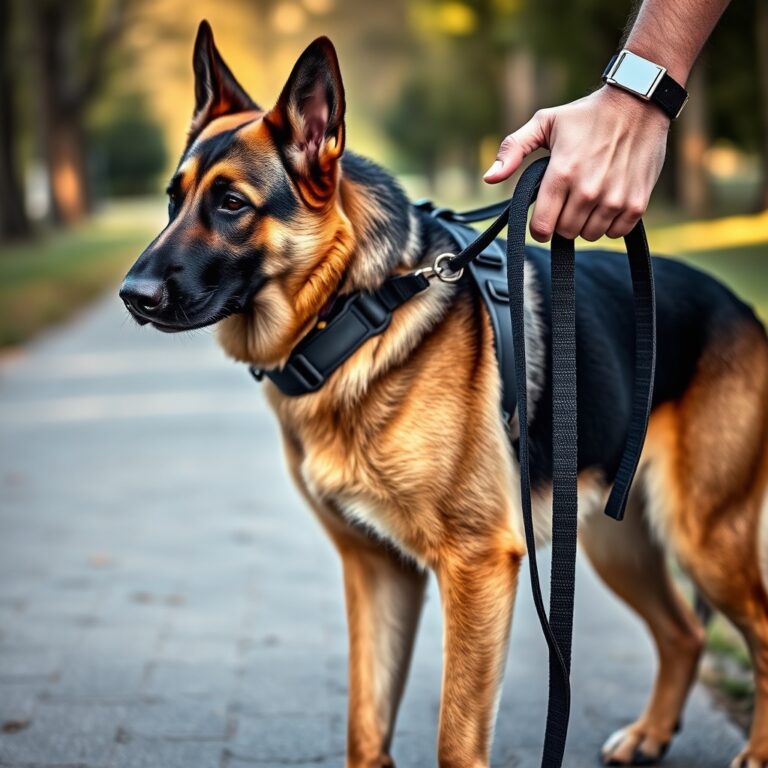
On a front-clip harness, the leash attachment ring is located directly on the dog’s chest strap. When your dog starts to pull forward, the leash tension pulls their chest to the side, gently guiding their torso and gaze back toward you. This pivot mechanism breaks their forward momentum without causing pain or strain.
Pros of Front-Clip Harnesses
- Superior Pull Control: It reduces pulling naturally by redirecting the dog’s momentum sideways instead of allowing them to lean forward into the harness.
- Improved Steerability: Like a halter on a horse, controlling the chest allows you to steer a large, strong, or highly distracted dog much more easily.
- Better Focus: Because the dog is turned back toward you when they pull, it creates an immediate opportunity to reward them for eye contact and loose-leash walking.
Cons of Front-Clip Harnesses
- Leash Tangling: Because the leash hangs in front of the dog, it can easily drop down between their front legs if they walk slowly or have a low posture.
- Gait Alteration: If fitted incorrectly or used with heavy tension over long periods, the side-pulling action can temporarily alter the dog’s natural shoulder alignment.
- Harder for Very Small Dogs: The metal clip on the chest can sometimes be too heavy or hang too low for toy breeds, dragging on the ground.
The Back-Clip Harness: Best for Trained Walkers and Small Breeds
The back-clip harness features a D-ring positioned on the top of the dog’s back, usually between the shoulder blades. This is the most common and traditional design found in pet stores, prioritizing basic security and freedom of movement.
Pros of Back-Clip Harnesses
- Maximum Comfort: The leash stays away from the dog’s face, neck, and legs, allowing for a natural, uninhibited stride.
- Zero Leg Tangling: Keeping the leash high up on the spine prevents your dog from stepping over or getting tangled in their own lead.
- Tracheal Protection for Small Breeds: Small dogs and brachycephalic (flat-faced) breeds are highly prone to collapsed tracheas; a back-clip harness completely isolates pressure away from the throat.
- Easy to Put On: Most step-in and overhead back-clip harnesses are incredibly intuitive for owners to secure quickly.
Cons of Back-Clip Harnesses
- Triggers the Opposition Reflex: Dogs have a natural instinct (called the opposition reflex) to push against resistance. When they feel pressure on their back, their immediate instinct is to lean forward and pull harder.
- Minimal Steering Control: If a 70-pound dog decides to lung toward a squirrel, a back-clip harness gives you almost no directional control over their head and shoulders.
Comparative Breakdown: Front-Clip vs. Back-Clip
To help visualize which gear fits your current walking routine, here is a direct comparison of how these two configurations perform in real-world scenarios:
| Feature | Front-Clip Harness | Back-Clip Harness |
|---|---|---|
| Primary Purpose | Training loose-leash walking, managing pullers | Casual walking, running, hiking with trained dogs |
| Control Level | High (steers the dog’s body) | Low (allows the dog to pull using full body weight) |
| Tangle Risk | Moderate to High (leash can drop under front legs) | Very Low (leash stays elevated along the spine) |
| Breed Suitability | Medium to large, high-energy, or reactive dogs | Small, toy, brachycephalic, or well-trained dogs |
| Opposition Reflex | Minimized (redirects force sideways) | Maximized (encourages sled-dog style pulling) |
Dual-Clip Harnesses: The Hybrid Alternative
If you cannot decide between the two, a dual-clip harness offers the best of both worlds. These models feature attachment rings on both the chest and the back. This versatility allows you to use the front clip during high-distraction training sessions and switch to the back clip for casual sniff walks once your dog has calmed down. Alternatively, you can use a double-ended leash attached to both rings simultaneously for absolute control over a reactive or incredibly strong dog.
How to Choose the Right Harness for Your Dog
Evaluate your dog’s current behavior honestly before purchasing. If your daily walks feel like a constant tug-of-war, or if you are working with a young puppy learning leash manners, a front-clip harness is an excellent active training tool. It keeps the handler in control and shortens the learning curve for loose-leash training.
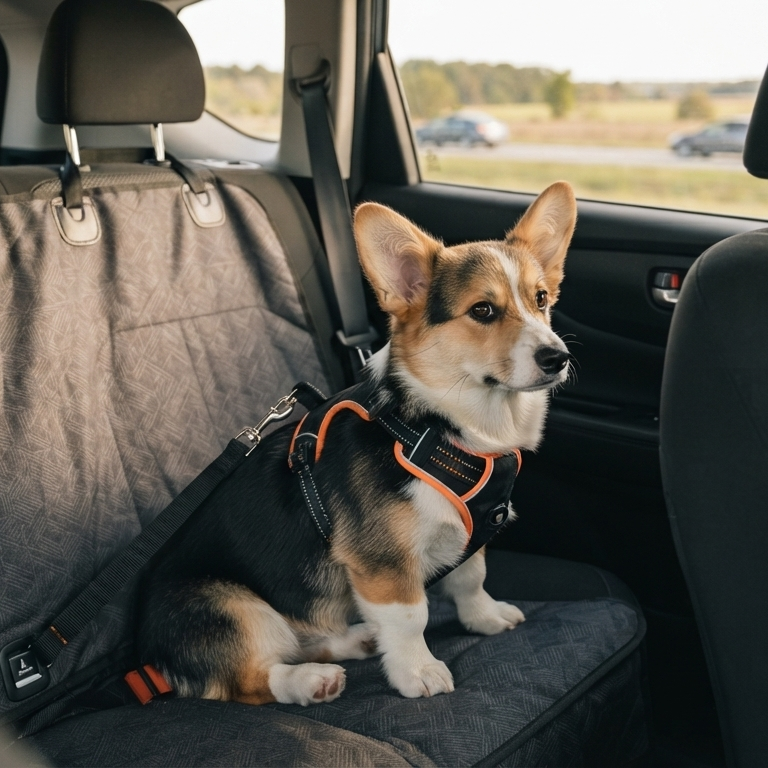
Conversely, if your dog already walks politely by your side without tension, a back-clip harness is the most comfortable and unrestricted option. It is also the undisputed choice for toy breeds like Chihuahuas, Pomeranians, or Yorkies, where any front-clip hardware would be too bulky, heavy, or close to their delicate front legs.
Frequently Asked Questions
Can a front-clip harness hurt my dog’s shoulders?
If a front-clip harness is poorly fitted, sags too low, or is used with a heavy hand, it can restrict the natural movement of the shoulder blades. To prevent this, ensure you buy a Y-shaped front-clip harness that sits above the shoulder joint and does not wrap straight across the chest horizontally like a T-strap.
Why does my dog pull more in a back-clip harness?
Dogs pull more because of the opposition reflex. When they feel tension pulling back on their spine, their automatic neurological response is to lean forward and pull against that tension with their entire body weight, mimicking the action of a sled dog.
Is a back-clip harness safer for small dogs?
Yes, back-clip harnesses are highly recommended for small dogs. Their delicate throats are incredibly prone to tracheal collapse under pressure, and their short stature makes front-clip leashes a constant tripping hazard. A back-clip design safely distributes any leash tension across their ribcage and spine.