
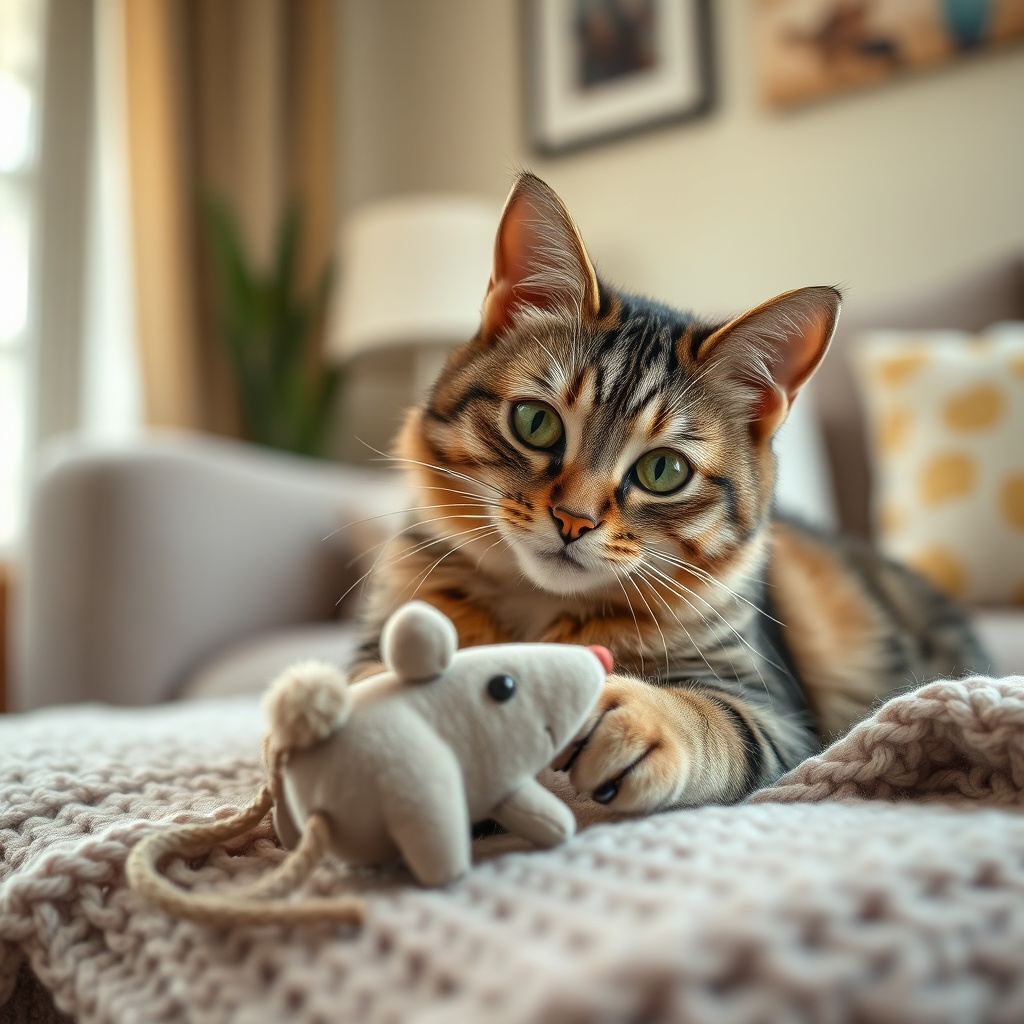
Leave a catnip mouse lying on the rug for a few days, and you will likely notice a familiar scene: your cat sniffing it once, looking entirely unimpressed, and walking away. That frantic rolling and drooling usually fades fast because of sensory overload. When cats have constant, unlimited access to the herb, their receptors quickly burn out, turning an exciting thrill into boring background furniture.
Cats should only play with catnip toys 2 to 3 times per week, with each session lasting around 10 to 15 minutes. This schedule prevents olfactory fatigue (desensitization), ensuring your cat continues to respond to the natural herb during future play sessions.
Understanding the Science of the Catnip Response
To understand why moderation is so important, it helps to look at how catnip affects your cat’s brain. The active ingredient in catnip is an organic compound called nepetalactone, which is found in the microscopic bulbs on the plant’s leaves and stems. When your cat rubs, bites, or kicks a catnip toy, these bulbs break open, releasing the chemical into the air.
When nepetalactone enters your cat’s nasal passages, it binds to sensory receptors that trigger the olfactory bulb. This sends signals directly to the amygdala (the emotional center) and the hypothalamus (the behavioral center) of the brain. For about 70% to 80% of cats, this results in a safe, non-addictive ‘high’ characterized by rolling, purring, playful pouncing, or quiet zoning out. However, after about 15 minutes of exposure, the sensory receptors temporarily ‘shut down’ and become fully saturated.
The Ideal Catnip Toy Schedule
Keeping catnip exciting requires a deliberate routine. By controlling when and how long your cat interacts with these toys, you preserve the novelty and maximize the health benefits.
The 2 to 3 Times a Week Rule
Limiting exposure to two or three times a week ensures that your cat’s olfactory receptors have plenty of time to reset completely. If a cat is exposed to catnip every day, their body adapts to the stimulus, and they will stop reacting to it altogether. Treating catnip as a special event rather than a permanent fixture keeps the magic alive.
The 15-Minute Play Window
A typical catnip reaction lasts between 5 and 15 minutes. Once the effect wears off, your cat will naturally walk away from the toy. At this exact point, it is best to pick up the toy and store it away. Once the reaction ends, it takes about two hours for your cat’s sensory system to reset. If the toy is left on the floor during this reset period, the constant low-level smell of stale catnip will accelerate desensitization.
Pros and Cons of Regular Catnip Toy Play
Using catnip toys in your pet’s routine offers incredible benefits, but there are a few drawbacks to keep in mind:
- Pro: Mental and Physical Stimulation – Catnip encourages sedentary indoor cats to jump, kick, and run, providing excellent cardiovascular exercise.
- Pro: Effective Stress Relief – The euphoric state caused by catnip can help soothe anxious cats during stressful events like veterinary visits, moves, or thunderstorms.
- Pro: Enrichment and Bonding – Interactive play with catnip toys strengthens the bond between you and your pet while preventing boredom-induced behaviors.
- Cons: Risk of Desensitization – Leaving toys out permanently leads to olfactory fatigue, rendering the toys useless.
- Cons: Temporary Aggression – Some cats, particularly unneutered males, may become overstimulated and display play-aggression or territorial behavior.
- Cons: Digestive Upset – If your cat tears a toy open and ingests a large amount of dried catnip, it can lead to mild vomiting or diarrhea.
How to Store Catnip Toys to Keep Them Potent
Proper storage is the secret to making catnip toys last for months. Because nepetalactone is a volatile oil, it breaks down and evaporates when exposed to open air and sunlight. To preserve potency, follow these simple steps:
- Use Airtight Containers: After your cat is finished playing, wipe away any drool and let the toy air dry for a few minutes. Then, place it inside a sealed glass jar or a high-quality airtight plastic container.
- Store in a Cool, Dark Place: Keep the container inside a pantry or drawer away from direct sunlight, which speeds up the degradation of the active oils.
- The Freezer Trick: For long-term preservation, you can store your cat’s favorite catnip toys in a sealed zip-top bag inside the freezer. The cold temperatures lock in the essential oils and keep the herb fresh.
- Toy Rotation: Keep a rotation of three to four different toys. Introducing a ‘new’ shape or texture every week keeps your cat mentally stimulated.
Frequently Asked Questions
Can kittens have catnip toys?
Most kittens do not react to catnip toys. The sensitivity to nepetalactone is hereditary and only develops once a cat reaches sexual maturity, typically between 3 and 6 months of age. Introducing catnip toys to very young kittens is not harmful, but it will likely produce no reaction.
Can a cat overdose on catnip toys?
Cats cannot experience a fatal overdose on catnip. They are highly adept at self-regulating and will simply walk away once they have had enough. However, if a cat tears a toy open and eats excessive amounts of dried catnip, they may experience mild digestive upset, including temporary vomiting or diarrhea.
What should I do if my cat doesn’t react to catnip?
Approximately 20% to 30% of cats do not possess the autosomal dominant gene required to experience the catnip response. If your cat is indifferent, you can try natural alternatives such as silver vine (Actinidia polygama) or valerian root, which contain different active compounds that often trigger a similar, safe, joyful reaction.