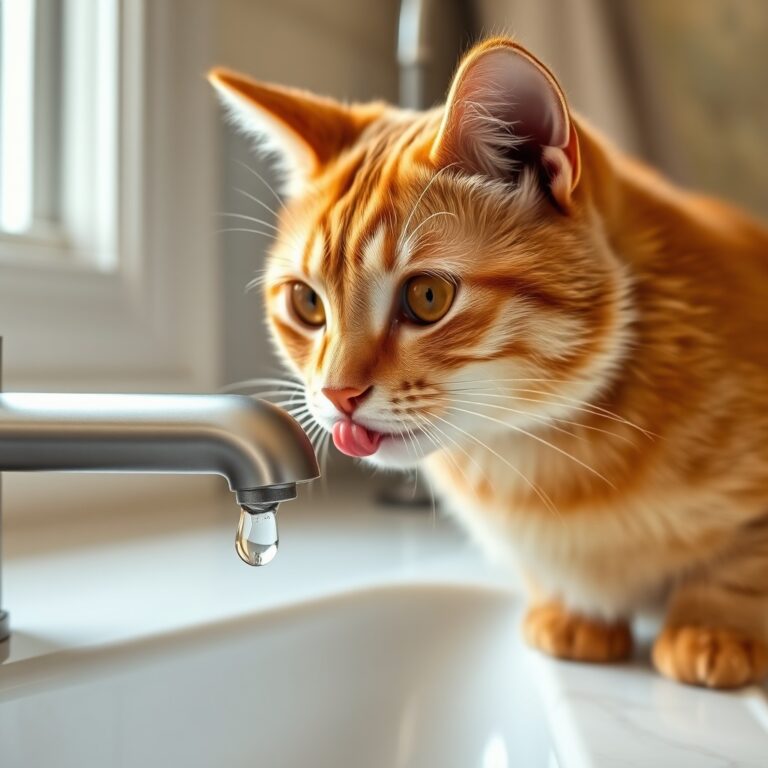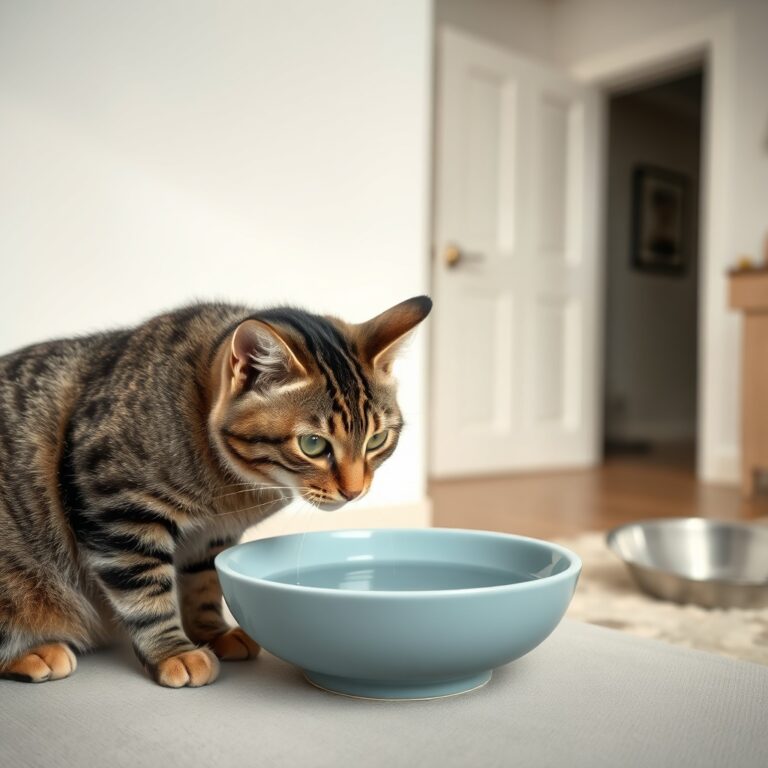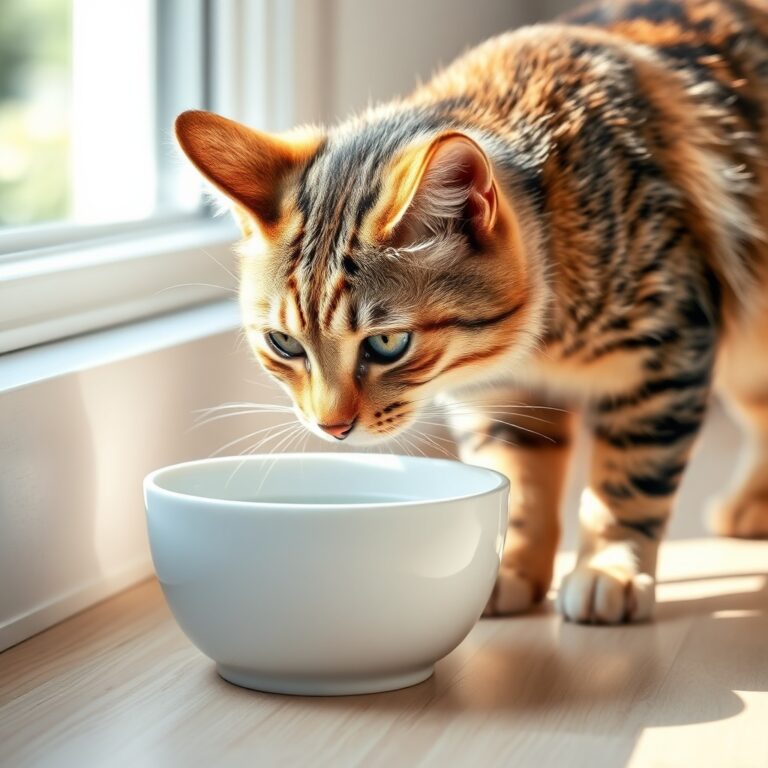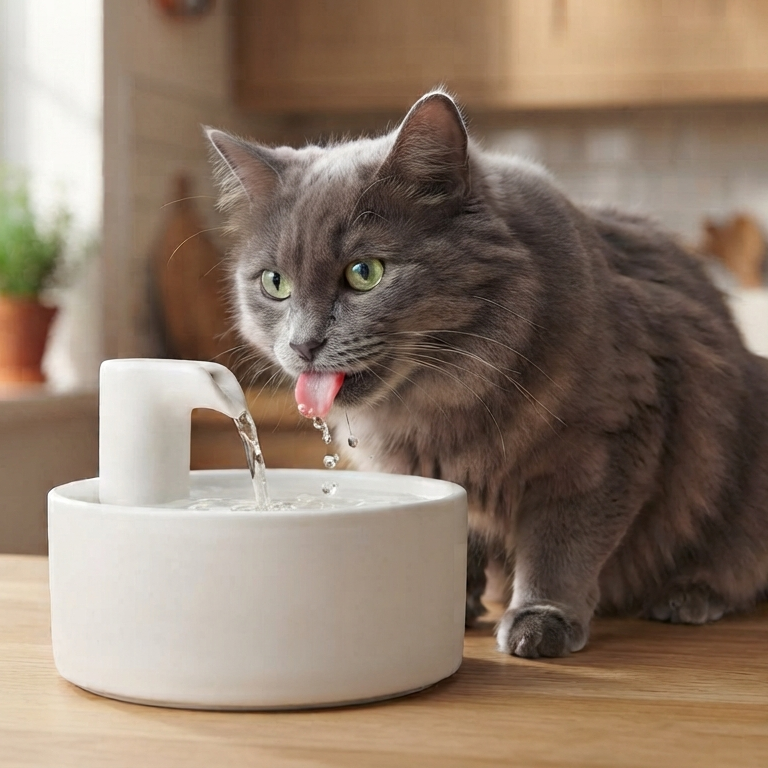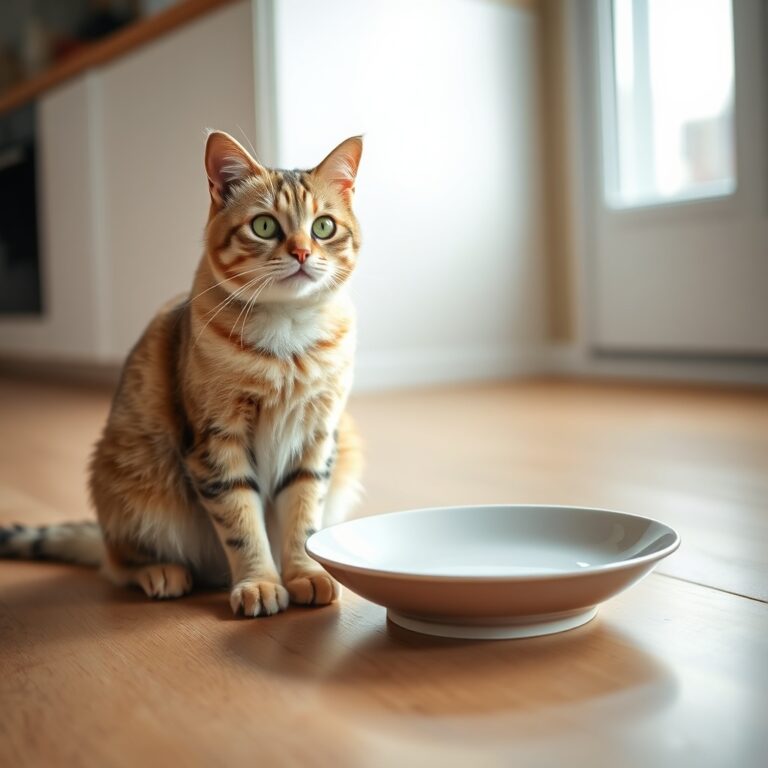

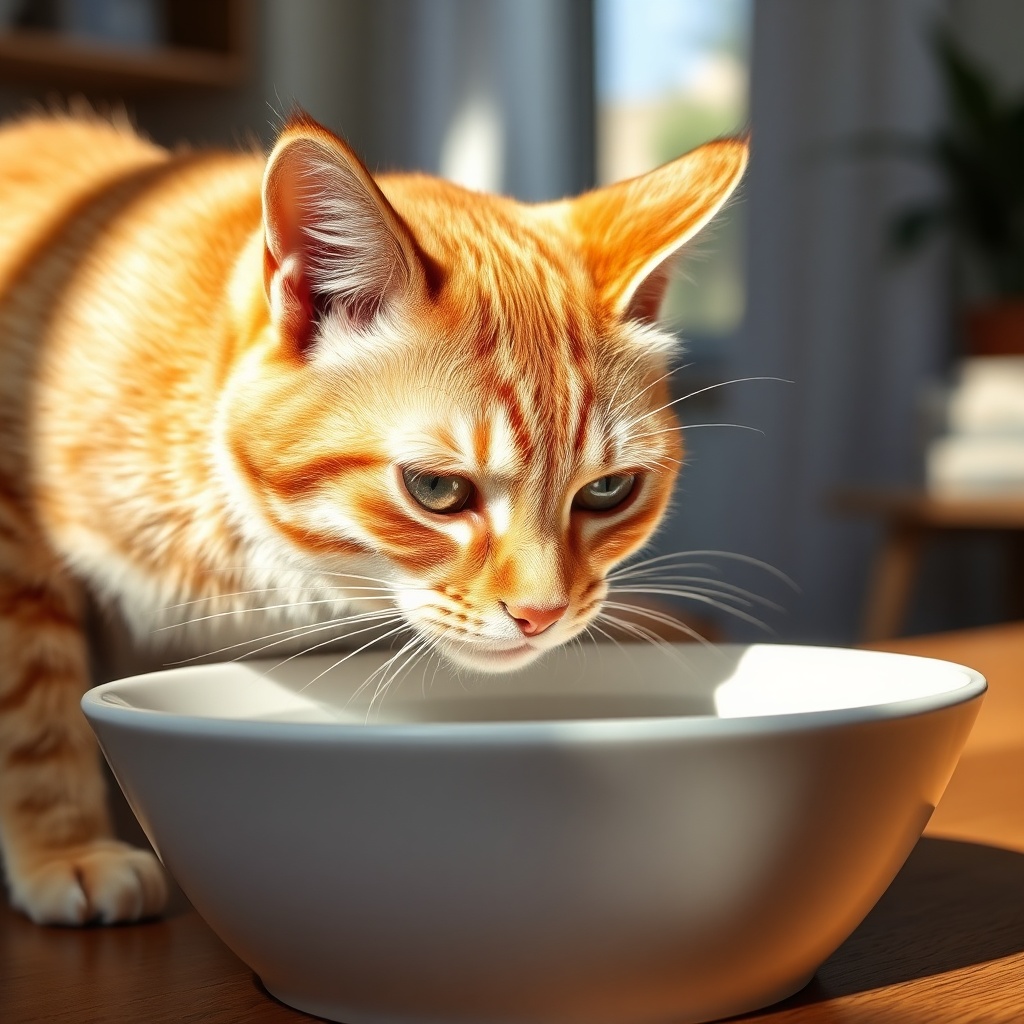
Choosing a water bowl for a cat usually comes down to aesthetics and floor space, yet that simple kitchen dish might actually be turning daily hydration into a stressful daily chore. If your feline friend constantly splashes water across the floor, paws at the edges, or refuses to drink unless the water level is pushed right to the brim, the issue usually comes down to the physical dimensions of the container.
The Ideal Water Bowl Size for Your Cat
The best water bowl size for an average cat is a wide, shallow dish measuring at least 5 to 6 inches (12 to 15 cm) in diameter and 1 to 2 inches (2.5 to 5 cm) deep, holding approximately 8 to 16 ounces (250 to 500 ml) of water. This specific dimension profile ensures that your cat can drink comfortably without their highly sensitive whiskers rubbing against the sides of the dish.
Why Bowl Size and Shape Matter to Your Cat
To a human, a bowl is just a bowl. To a cat, the shape and size of their water dish directly affect their sensory comfort and natural survival instincts. Understanding these biological drivers helps explain why choosing the right dimensions is so crucial for daily hydration.
The Threat of Whisker Fatigue
Cat whiskers, or vibrissae, are highly sensitive sensory organs packed with nerve endings. When a cat is forced to squeeze their face into a narrow, deep bowl, their whiskers constantly rub against the inner edges. This continuous tactile stimulation causes sensory overload, commonly referred to as whisker fatigue. Over time, this makes drinking physically irritating or even painful, leading to cats avoiding their water bowls entirely.
Survival Instincts and Peripheral Vision
In the wild, cats are both predators and prey. When drinking, they are inherently vulnerable. A deep, narrow bowl forces a cat to plunge their entire head downward, completely blocking their peripheral vision. By choosing a wide, shallow bowl, your cat can keep their eyes on their surroundings while lapping up water, reducing environmental stress and anxiety.
Quick Facts: Ideal Cat Water Bowl Dimensions
When shopping for a new water dish, keep these specific target ranges in mind to ensure a perfect fit for your pet:
- Target Width: 5 to 6 inches (12 to 15 cm) to allow a clear zone for whiskers.
- Target Depth: 1 to 1.5 inches (2.5 to 3.8 cm) to keep the head elevated and preserve peripheral vision.
- Target Capacity: 8 to 16 ounces (250 to 500 ml) to encourage daily washing and fresh refills.
- Base Stability: A wide, non-slip rubber base or heavy bottom to prevent tipping.
Pros and Cons of Different Bowl Profiles
Not all wide bowls are created equal. Let us look at the real-world advantages and disadvantages of different physical profiles to help you make the best purchase decision.
Wide and Shallow Bowls
These are the gold standard for feline hydration. They mimic natural puddles, allowing easy access from any angle.
- Pros: Eliminates whisker fatigue completely; allows full peripheral vision; easy to clean.
- Cons: Holds less total volume; water evaporates faster and must be refilled daily.
Deep and Narrow Bowls
Often sold in bulk or as standard pet dishes, these are unfortunately the worst option for feline biology.
- Pros: Holds a large volume of water; takes up very little floor space.
- Cons: Triggers whisker fatigue; blocks the cat’s sightlines; can cause feline acne if chin oils rub against the inner rim.
Elevated Water Bowls
An increasingly popular option that raises the drinking surface several inches off the floor.
- Pros: Reduces neck strain, especially for senior cats or those with arthritis; keeps dust and floor debris out of the water.
- Cons: Needs to be paired with a wide, shallow bowl design to prevent whisker irritation.
The Best Materials to Pair with Your Bowl Size
While size is the most critical physical attribute, the material of the bowl plays a massive role in hygiene. No matter how perfect the dimensions are, the wrong material can harbor bacteria and ruin the drinking experience.
Stainless Steel: The most hygienic option. It is non-porous, highly durable, easy to sanitize, and does not scratch easily. It is excellent for wide, shallow dishes.
Ceramic: Heavy and sturdy. Ceramic bowls are difficult for mischievous cats to tip over. Ensure the glaze is lead-free and food-safe.
Glass: Easy to clean and allows you to easily see the water level. Like ceramic, glass is heavy and highly hygienic.
Avoid Plastic: Plastic scratches incredibly easily. Microscopic scratches harbor bacteria that cause feline acne, a painful skin condition on the chin. Plastic can also leach chemical odors into the water, deterring sensitive cats from drinking.
Frequently Asked Questions
Why does my cat splash water out of the bowl before drinking?
Cats have poor close-up vision and struggle to see static water levels. If the bowl is too deep or dark, they may pat the water with their paw to create movement and gauge where the surface is. Switching to a wide, shallow, light-colored bowl can eliminate this behavior.
Is a wider bowl better for multiple cats?
While a wider bowl (such as 8 inches) can technically accommodate more water, cats are solitary drinkers. It is much better to provide multiple, separate wide bowls across different rooms rather than forcing your cats to share a single large station.
Should the water bowl be placed directly next to the food bowl?
No. In the wild, cats avoid drinking water near their fresh prey to prevent contamination. Placing the water bowl directly next to the food bowl can cause behavioral aversion. Keep the water bowl at least a few feet away from the feeding station for best results.