

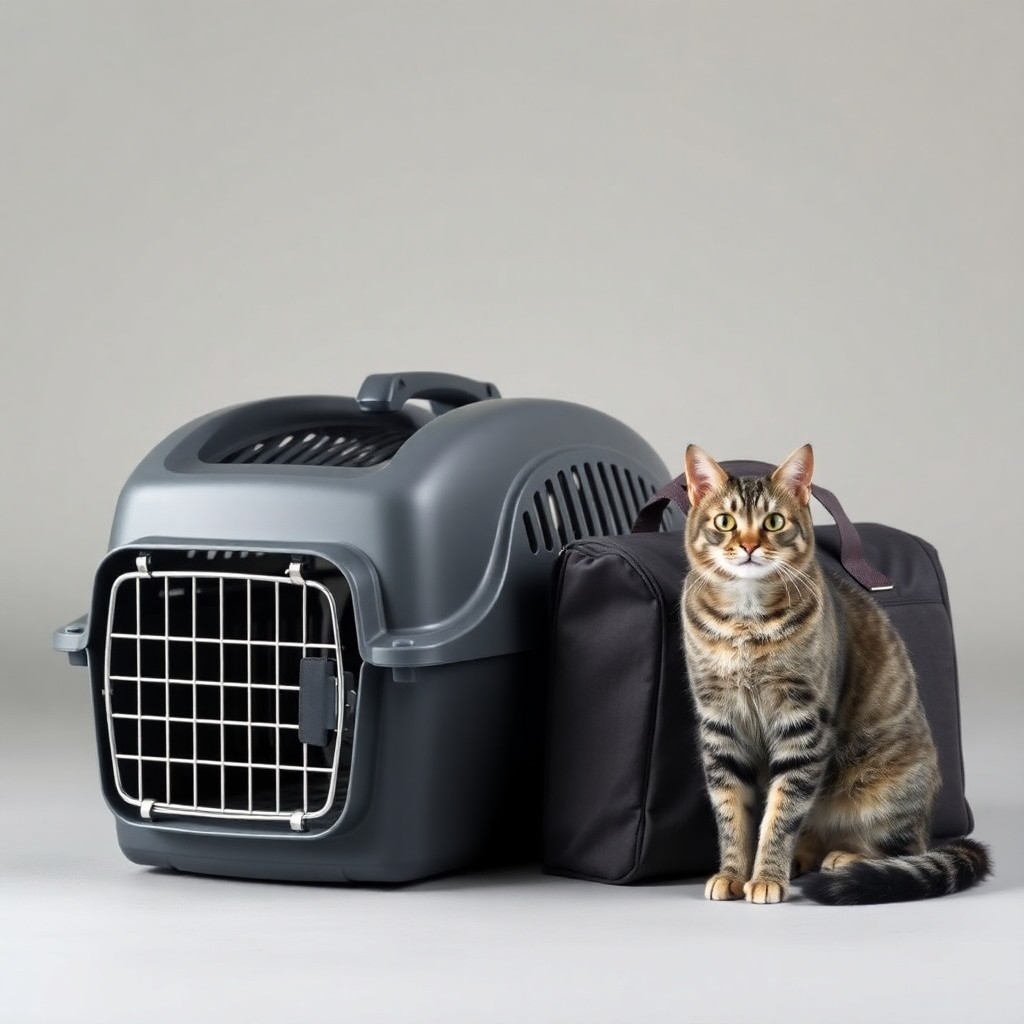
Few things test a cat owner’s patience quite like wrestling an unhappy feline into a too-small carrier right before a vet appointment. To keep travel stress to a minimum, the golden rule is simple: your cat’s carrier should be roughly one and a half times their body size. This gives them just enough space to stand, stretch, and turn around comfortably without feeling unmoored in a cavernous plastic box.
The Golden Rule of Cat Carrier Sizing
The primary purpose of a carrier is secure transport, not long-term housing. For a carrier to be secure, it must hit the sweet spot between snug security and freedom of movement. A carrier that is too small causes physical cramping and heightens anxiety. Conversely, a carrier that is too large can lead to your cat sliding around and sustaining injuries during abrupt car stops or turns.
How to Measure Your Cat for a Carrier
Do not guess your cat’s carrier size based on weight alone; skeletal length and height are much more reliable indicators. Follow these two simple measurements to find the perfect fit:
- Length Measurement: Measure your cat from the tip of the nose to the base of the tail (do not include the full tail). Add 4 to 5 inches to this number to find the ideal carrier length.
- Height Measurement: Measure from the floor to the top of your cat’s shoulders when they are standing. Add 3 to 4 inches to this measurement to determine the minimum carrier height.
Cat Carrier Size Chart by Weight and Dimensions
While physical measurements are best, this general sizing guide can help you match your cat’s weight to standard carrier categories:
| Cat Weight | Typical Cat Size | Recommended Carrier Dimensions (L x W x H) |
|---|---|---|
| Under 8 lbs (3.6 kg) | Kittens, Small Breeds (e.g., Singapura, Bambino) | 15 x 10 x 10 inches (Small) |
| 8 to 15 lbs (3.6 to 6.8 kg) | Average Adult Cats (e.g., Domestic Shorthair, Siamese) | 19 x 12 x 12 inches (Medium) |
| Over 15 lbs (6.8 kg) | Large Breeds (e.g., Maine Coon, Ragdoll, Siberian) | 24 x 14 x 14 inches (Large) |
Can a Cat Carrier Be Too Big?
Yes, safety is highly dependent on a snug, secure environment. If a carrier is excessively large, your cat will slide from side to side during car turns, acceleration, and braking. This lack of stability can cause physical bruising, motion sickness, and intense travel anxiety. Additionally, oversized carriers are heavy and awkward for you to carry steadily, resulting in a bumpy, swinging ride for your pet.
Choosing Between Soft-Sided and Hard-Sided Carriers
The material of the carrier affects both physical space and safety during travel:
- Hard-Sided Carriers: Offer superior physical protection, easy cleanup, and are ideal for car travel. Look for models with dual doors (top and front) for stress-free access.
- Soft-Sided Carriers: Provide slight flexibility, making them excellent for airline travel as they can compress slightly to fit under seats. They are lightweight but harder to sanitize if your cat has an accident.
Frequently Asked Questions
Should I buy a bigger carrier for a growing kitten?
It is best to buy an adult-sized carrier from the start to avoid purchasing multiple units. When using an adult-sized carrier for a small kitten, pack the extra space with folded towels or secure blankets to prevent them from sliding around during transport.
Can two cats share one carrier?
Except for very young kittens from the same litter, cats should always travel in separate carriers. Even closely bonded cats can become highly stressed during travel and redirect physical aggression toward each other in a confined space.
How do I know if my current carrier is too small?
If your cat cannot stand up completely without hunching their back, or if they cannot turn around in a full circle without pressing hard against the sides, the carrier is too small and needs an immediate upgrade.