
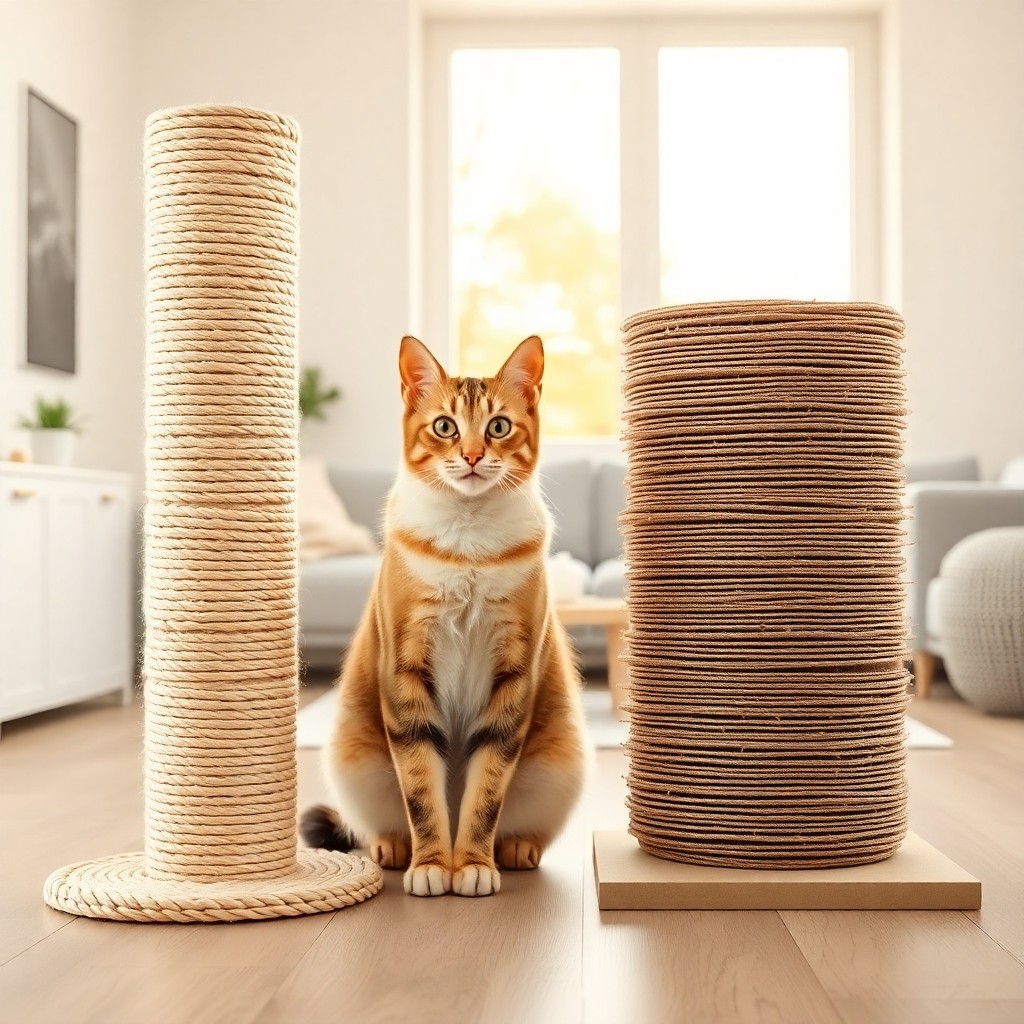
Every cat owner knows the sound: that sudden, rhythmic ripping noise coming from the side of the sofa. Choosing between a sisal rope post and a humble cardboard scratcher often feels like a guessing game, usually ending with expensive gear gathering dust while your furniture takes the hit. But figuring out your cat’s texture preference doesn’t have to be a mystery. By running a quick, side-by-side preference test right in your living room, you can decode your cat’s exact scratching profile and finally save your upholstery.
In vertical scratching post preference tests, sisal is generally preferred by cats seeking structural stability and resistance, while cardboard attracts cats who enjoy visual marking through deep shredding and immediate tactile feedback. No two cats share the same behavior, which is why understanding the mechanics of these materials is crucial to saving your home furniture.
Understanding the Materials: Sisal vs Cardboard
To choose the right gear, it is important to understand what each surface offers to an indoor cat. Scratching is not just a habit; it is a vital physiological need used to shed outer claw sheaths, stretch muscles, and deposit scent from interdigital glands.
Sisal is a natural fiber derived from the Agave sisalana plant. In cat furniture, it is used in two forms: woven sisal carpet or wound sisal rope. Woven sisal is highly durable, offering uniform resistance that allows cats to pull downward with maximum force without tearing the material apart immediately. It closely mimics the tough, fibrous texture of natural tree bark.
Corrugated cardboard scratching posts consist of layers of pressed paper glued together to expose the open honeycomb cells. This design provides immediate physical feedback. When a cat scratches cardboard, the material shreds audibly and visually, leaving clear physical marks. This feedback is highly reinforcing for many cats, though it comes at the cost of household cleanliness.
Sisal vs Cardboard Comparison
Below is a direct comparison of the physical properties, costs, and behavioral dynamics of both vertical scratching post materials:
| Feature | Sisal Vertical Posts | Corrugated Cardboard Vertical Posts |
|---|---|---|
| Texture Feedback | High resistance, smooth pull, minimal tearing | Low resistance, immediate shredding, high auditory feedback |
| Durability | Excellent (often lasts 1 to 3 years) | Low (requires replacement every 2 to 6 months) |
| Mess Factor | Very low; produces minimal fibers | High; leaves paper flakes and debris around the base |
| Stability Requirement | Requires heavy, weighted bases to prevent tipping | Often lighter, but highly prone to tipping if not secured |
| Average Cost | Moderate to High (higher upfront investment) | Low (economical upfront, recurring cost over time) |
The At-Home Preference Testing Protocol
Do not guess what your cat prefers. Running a simple, controlled preference test inside your home will save you money and ensure your cat uses the designated scratching areas. Follow these steps to execute a reliable test:
- Acquire Identical Dimensions: Obtain one vertical sisal post and one vertical cardboard post. To keep the test fair, both posts must be of a similar height—ideally at least 32 inches tall—allowing your cat to fully stretch their spine.
- Position Side-by-Side: Place both vertical posts immediately next to each other in a high-traffic area where your cat already likes to spend time. Do not hide them in a back room; cats scratch to mark active territory.
- Eliminate Confounding Variables: Do not apply catnip, sprays, or silvervine to either post during the first week of testing. You want to evaluate the raw material appeal without artificial scent attractants.
- Observe and Record: Monitor your cat’s behavior for 7 to 10 days. Take note of which post they approach first, how long they spend scratching, and which post shows physical signs of wear.
Key Behavioral Indicators to Watch
During the preference test, pay close attention to how your cat interacts with each material. These physical cues will tell you which post is the clear winner:
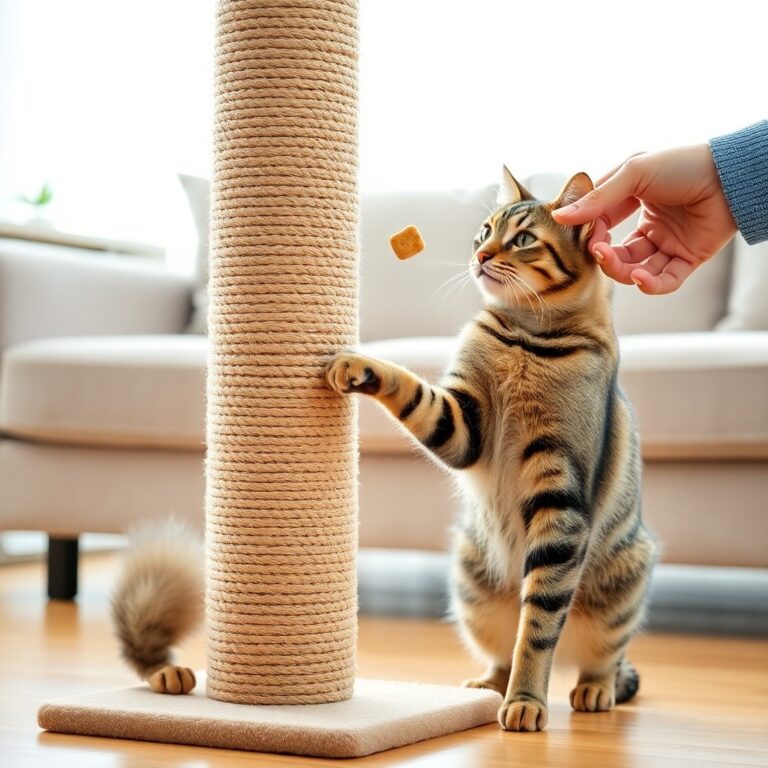
If your cat approaches the sisal post, stretches tall, digs their claws in, and pulls down with their entire body weight while keeping their hind legs firmly planted, they prefer heavy-duty resistance. This cat needs a stable, heavy-base sisal post that will not wobble. A wobbly post is the primary reason cats reject sisal.
If your cat prefers the cardboard post, you will notice them scratching rapidly, often purring, and immediately inspecting the shredded pieces left behind. The tactile sensation of digging claws into soft paper and hearing the ‘crunch’ is their primary motivator. If they choose cardboard but tip the light post over, you must find a way to anchor the cardboard post to a wall or a heavier base.
Pros and Cons: Weighing Your Options
Choosing the right material requires balancing your cat’s natural preferences with your household maintenance habits.
Sisal Scratching Posts
- Pros: Outstanding longevity, clean household integration, superior physical resistance for deep muscle stretching, and structural safety when built with heavy wood.
- Cons: Higher initial price point; some cats find the hard fibers too abrasive for sensitive paw pads.
Cardboard Vertical Posts
- Pros: Incredibly inviting texture for almost all cats, budget-friendly initial purchase, and highly effective for cats who need visual proof of their territory marking.
- Cons: Constant cleanup of shredded cardboard debris; quick degradation requires frequent replacement; lightweight designs can easily tip over and frighten cats.
Frequently Asked Questions
Why does my cat ignore the new sisal post?
Most cats ignore sisal posts because the post is unstable or too short. If a vertical post wobbles even slightly when your cat applies weight, they will feel unsafe and abandon it. Ensure the base is wide and heavy, and the height allows for a full vertical stretch.
Can I use catnip to influence the preference test?
It is best to avoid catnip during the initial testing phase so you can see which material your cat naturally prefers. Once you have determined the preferred material, you can use catnip on that specific post to reinforce the positive behavior and draw them away from your furniture.
How often should a cardboard scratching post be replaced?
A vertical cardboard post should be replaced as soon as the core layers are entirely shredded and no longer offer resistance, which typically takes between 2 to 6 months depending on the frequency of use and the number of cats in your home.