
Anyone who has ever tried to trim a cat’s claws knows the sudden shift from a peaceful afternoon to a flurry of fur and escape attempts. Rushing the process often ends in accidental bleeding and a pet that vanishes the moment the clippers come out. Learning the right technique and choosing the proper tools can completely change the dynamic, turning a stressful wrestling match into a calm, routine bonding session.
How do you safely clip a cat’s nails? To safely trim a cat’s claws, gently press the paw pad to extend the nail, locate the pink quick (the blood vessel inside), and use a sharp pet clipper to snip only the translucent tip at a 45-degree angle.
Anatomy of a Cat’s Claw: Avoiding the Quick
Before making the first cut, it is vital to understand the internal structure of a cat’s claw. Unlike human nails, a cat’s claw contains a sensitive living core known as the quick. The quick houses blood vessels and nerve endings, visible as a pinkish triangular zone near the base of light-colored claws.
For owners, this means that cutting into this pink area will cause immediate sharp pain and bleeding. If a cat has dark-colored claws where the quick is invisible, it is safest to trim only the very tip of the claw, or proceed in tiny increments. Keeping a styptic powder or cornstarch close by during the grooming session ensures peace of mind, as it quickly stops bleeding in case of an accidental nick.
Step-by-Step Guide to Stress-Free Trimming
Forcing a cat into a hold will only trigger their natural fight-or-flight response. Success relies on patience, positive reinforcement, and gradual desensitization.
- Step 1: Paw Handling Desensitization: Weeks before attempting a trim, practice touching and massaging your cat’s paws during relaxed moments. Reward them with high-value treats to create positive associations.
- Step 2: Gentle Extension: Hold the paw gently and press down lightly on the center of the pad to extend the claw. Release and reward immediately.
- Step 3: Introduce the Clipper Sound: Let the cat sniff the trimmers. Snip a piece of dry uncooked pasta nearby so they get used to the clicking sound without associating it with pain.
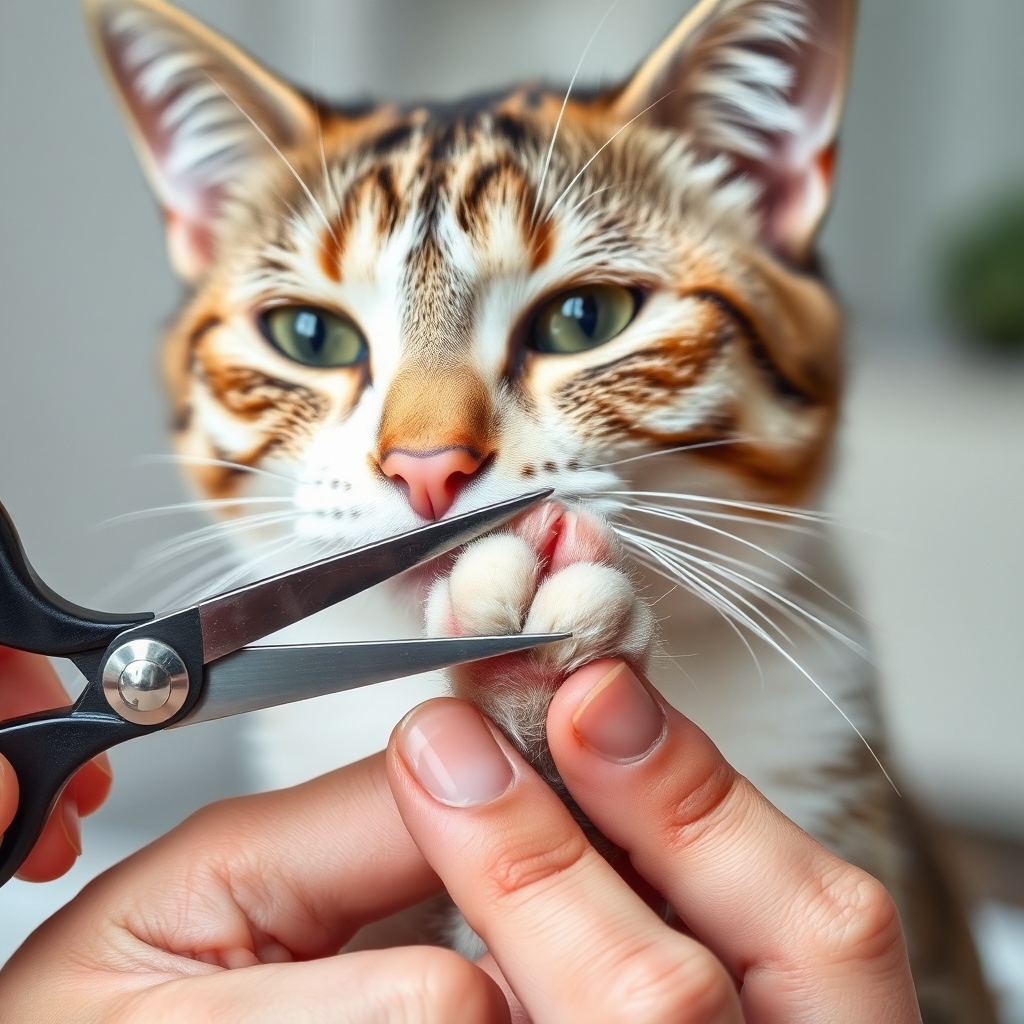
- Step 4: The Cut: Position the clipper away from the pink quick, angling it parallel to the natural curve of the nail. Swiftly clip just the sharp, pointed tip.
- Step 5: Reward Generously: Offer a favorite treat after every successful nail or paw. If the cat becomes restless, stop immediately and try again later.
Choosing the Best Cat Claw Trimmers
Using the correct tool makes clipping faster and safer. Specialized pet trimmers are designed to cut cleanly without crushing the delicate layers of the claw.
| Trimmer Type | Best Used For | Pros | Cons |
|---|---|---|---|
| Scissor-Style Clippers | Kittens and small cats | Easy to maneuver, offers great visibility | Requires some hand strength for thick claws |
| Guillotine Trimmers | Adult cats with thick claws | Powerful, clean cut with minimal effort | Harder to see the quick through the blade ring |
| Rotary Nail Grinders | Anxious cats sensitive to clips | Smooths edges, less risk of sudden deep cuts | The noise and vibration can scare sensitive cats |
Common Cat Grooming Mistakes to Avoid
Many cat owners inadvertently turn nail trims into a battle of wills. Avoid these common slip-ups to ensure a smooth routine:
- Using human nail clippers: Human clippers slice flat, which crushes and splits the curved structure of a cat’s claw. Always use curved pet clippers.
- Trimming an excited or playful cat: Schedule grooming sessions when the cat is naturally sleepy or relaxed, such as after a meal.
- Yelling or physical restraint: Scolding or wrapping a cat too tightly will reinforce their fear of the process, making future trims increasingly difficult.
Frequently Asked Questions
How often should you trim a cat’s claws?
Most indoor cats benefit from a nail trim every two to three weeks. Regular maintenance prevents the claws from curling inward and snagging on carpets, blankets, or furniture.
What should you do if you accidentally cut the quick?
Do not panic, as cats easily pick up on human anxiety. Quickly press styptic powder, a styptic pencil, or clean cornstarch directly onto the tip of the bleeding claw and apply gentle pressure for a few seconds until the bleeding stops.
Can you use human nail clippers on cats?
It is strongly discouraged. Human nail clippers are designed for flat nails, whereas cat claws are round. Using human tools can crush, split, or shatter the claw, causing discomfort and potential infection.