
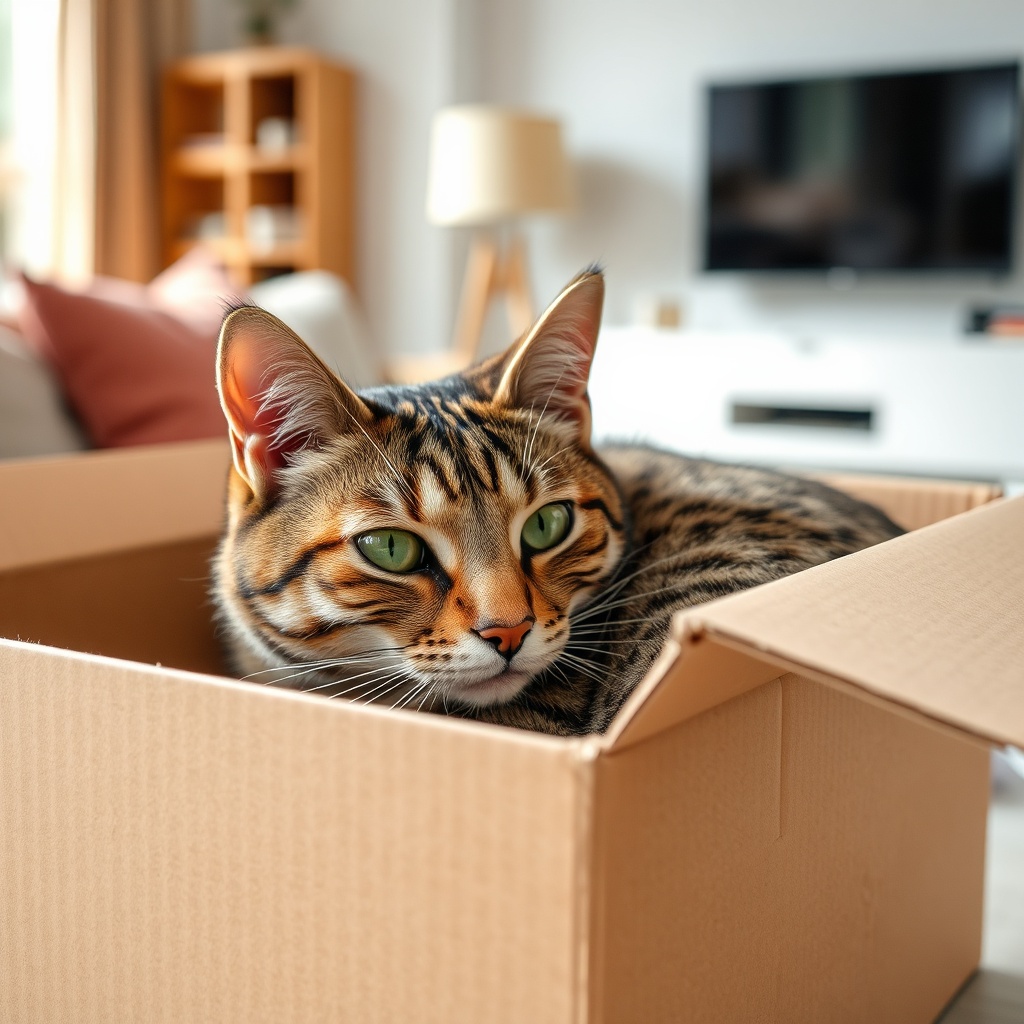
You spend fifty dollars on a plush, multi-tier cat tree, only to watch your feline friend completely ignore it in favor of the battered Amazon shipping box it came in. It is a familiar scene in almost any cat household, but this peculiar obsession goes far beyond a simple preference for cheap thrills. Backed by science, a cat’s undeniable attraction to cardboard is actually hardwired into their biology, offering them a unique mix of safety, warmth, and stress relief that helps them navigate our strange human world.
Cats love cardboard boxes because they provide a secure, enclosed hiding space that lowers stress, offers exceptional thermal insulation for warmth, and serves as a perfect safe zone to observe potential prey or predators.
1. The Ultimate Stress Relief and Security Zone
To understand why cats seek out cramped spaces, we must look at how they manage stress. In the wild, cats are solitary predators. While they hunt small prey, they are also vulnerable to larger predators. A cardboard box provides an immediate physical barrier that shields them from three sides, leaving only one angle of approach to monitor.
A ground-breaking study conducted by researchers at the University of Utrecht examined the stress levels of shelter cats. The study divided newly arrived cats into two groups: one group was provided with hiding boxes, while the other was not. Within just a few days, the cats with access to boxes showed significantly lower stress levels and adapted to their new environment much faster than those without boxes. For owners, this means that a simple cardboard box is one of the most effective, low-cost stress management tools available for anxious or newly adopted pets.
2. Exceptional Thermal Insulation
A domestic cat’s optimal ambient temperature is much higher than that of a human. The thermoneutral zone for cats—the temperature range where they do not have to expend energy to heat or cool their bodies—is between 86 and 97 degrees Fahrenheit. Most human homes are kept much cooler than this, typically around 68 to 72 degrees Fahrenheit.
Corrugated cardboard is an incredible thermal insulator. The layers of paper trapping air within the flutes act like high-grade insulation. When a cat curls up inside a small cardboard box, its own body heat is trapped and reflected back, creating a cozy microclimate that allows the cat to rest without burning precious calories to stay warm.
3. The Instinctive Ambush Vantage Point
Cats are ambush predators by nature. They rely on stealth, concealment, and sudden bursts of speed to capture prey rather than long-distance chases. A box serves as a perfect artificial duck blind. From the safety of a box, a cat can watch the family dog, dangling toys, or human ankles, planning a mock attack without being seen. This instinct is so hardwired that even large wild cats, such as lions, leopards, and tigers, will eagerly climb into large cardboard boxes when given the opportunity by wildlife sanctuaries.
4. How to Make Cardboard Boxes Safe for Your Cat
While cardboard is generally harmless, you should always inspect any box before handing it over to your pet. Keep your feline companion safe by following this practical checklist:
- Remove heavy metal staples: Shipping boxes often use thick copper staples that can scratch your cat’s nose or paw pads.
- Peel off plastic tape and labels: Cats love to lick or chew adhesive tape, which can pose a dangerous choking hazard or cause intestinal blockage if swallowed.
- Check for chemical residues: Avoid boxes that once contained household cleaners, laundry detergents, or toxic industrial liquids.
- Discard damaged cardboard: If a box becomes damp, soiled, or excessively shredded, replace it immediately to prevent mold growth or the ingestion of cardboard pulp.
Frequently Asked Questions
Why does my cat chew on cardboard boxes?
Many cats chew on the edges of cardboard boxes to mark their territory using the scent glands located around their lips and cheeks. Additionally, some cats enjoy the physical sensation of tearing cardboard, which mimics the natural act of tearing prey. However, if your cat is actively swallowing the cardboard, remove the box immediately to prevent intestinal blockages and consult your veterinarian.
Does the size of the box matter to a cat?
Yes. Cats generally prefer boxes that are slightly too small for them. The tight fit provides physical feedback on all sides of their body, mimicking the comforting pressure of being held or snuggled, which triggers a calming neurological response similar to how swaddling calms human infants.
Can I leave cardboard boxes out permanently?
Yes, keeping a few clean, safe boxes around the house is a fantastic way to provide environmental enrichment. You can make them more appealing by placing a soft fleece blanket inside, placing them in quiet corners of your home, or cutting small viewing holes for your cat to spy through.