
Catching your cat in the act of shredding the living room sofa usually leads to a quick spray of water or a sharp scolding, only for you to find new claw marks waiting the moment you leave the house. The truth is that scratching isn’t a bad habit that needs breaking; it’s a deep-seated feline instinct that can’t simply be punished away. Saving your furniture isn’t about stopping the scratching, but rather guiding those sharp paws toward places where it’s actually welcome.
To stop a cat from scratching your sofa without punishment, you must provide highly appealing alternative scratching surfaces placed directly next to the couch, temporarily block access to the sofa targets using double-sided tape or foil, and reward your cat with high-value treats whenever they use their new post.
Understanding the Scratching Instinct
Before modifying your cat’s behavior, it helps to understand why the sofa is such an appealing target. Scratching serves multiple physiological and psychological purposes for a feline. It is not done out of malice or spite.
- Nail Maintenance: Scratching helps cats shed the dead outer layers of their claws, keeping their nails sharp and healthy.
- Scent Marking: Cats have scent glands in their paw pads. When they scratch an object, they leave behind visual claw marks and invisible chemical pheromones that mark the area as their secure territory.
- Stretching and Exercise: Scratching allows cats to fully extend and stretch their back, shoulder, and leg muscles, which is vital for joint health and flexibility.
- Stress Relief: Many cats scratch when they are excited, anxious, or seeking attention. It serves as an emotional release mechanism.
The Step-by-Step Sofa Protection Plan
This practical training plan focuses on changing your cat’s environment and reinforcing positive choices. By making the sofa unattractive and the new scratching post incredibly inviting, your cat will naturally choose the post on their own.
Step 1: Introduce High-Quality Alternatives
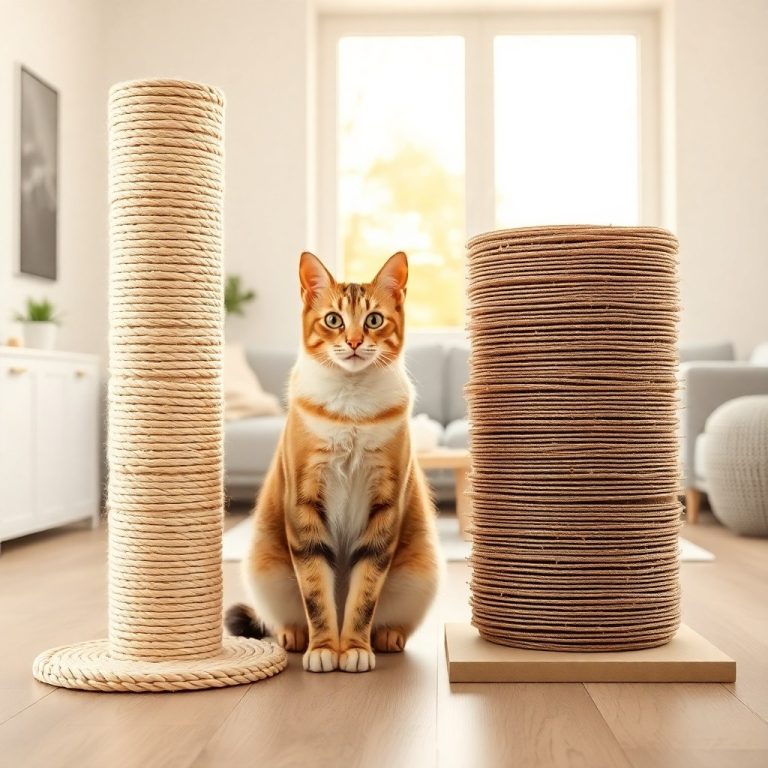
Cats are picky about what they scratch. If your current scratching post is too short, wobbles, or has the wrong texture, your cat will ignore it and head straight back to the heavy, stable sofa. Buy a scratching post that is at least 32 inches tall so your cat can fully stretch. Ensure it has a heavy, wide base that will not tip over under weight. Choose textures like rough sisal rope, heavy cardboard, or natural wood blocks.
Step 2: Perfect the Post Placement
Placing a scratching post in a hidden corner of the house is a recipe for failure. Cats want to scratch where they spend the most time and where they want to claim territory. Place the new scratching post directly next to the arm or corner of the sofa your cat has been targeting. This places the correct choice directly in their path.
Step 3: Make the Sofa Temporarily Unappealing
While your cat learns to love the new post, you must temporarily remove the temptation of the couch. Wrap the scratched corners of the sofa in double-sided training tape or clean plastic furniture guards. Cats hate the sticky feeling on their paws and will quickly look for a different surface to scratch. Alternatively, clean aluminum foil can be draped over the area, as the crinkly texture and sound are naturally repellent to feline paws.
Step 4: Use Positive Reinforcement and Rewards
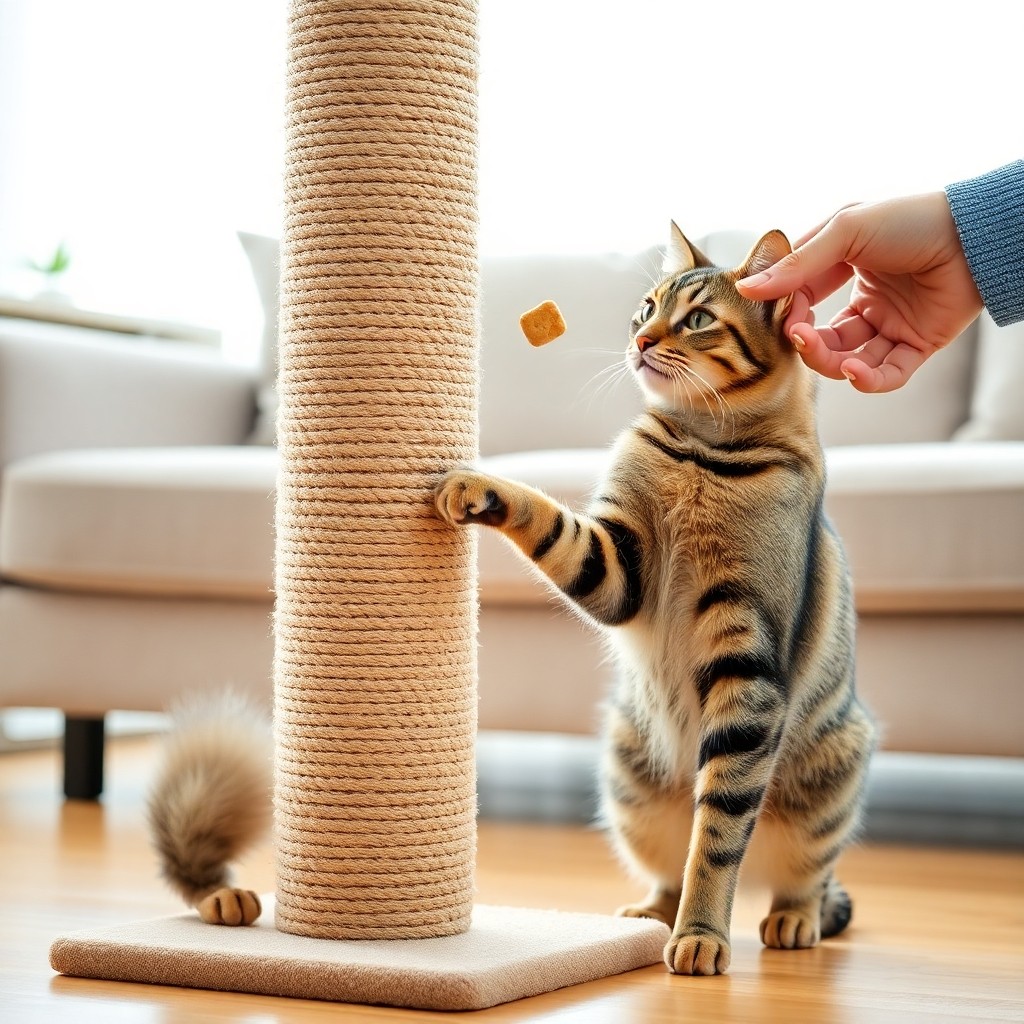
Punishment only teaches your cat to fear you. Instead, use positive reinforcement to build a strong association with the new post. Keep a container of high-value treats near the post. Whenever you see your cat sniff, touch, or scratch the post, immediately praise them in a happy tone and hand them a treat. You can also rub organic catnip or spray a catnip infusion onto the post to draw their initial interest.
Common Mistakes When Training Your Cat
Even well-intentioned owners can accidentally prolong the training process by falling into common behavioral traps. Avoid these pitfalls to see faster, more permanent results.
- Using Spray Bottles or Yelling: This damages the bond of trust between you and your cat, causing anxiety which actually increases the urge to scratch for stress relief.
- Throwing Away Shredded Posts: Cats love posts that look and smell used because their scent is already deeply embedded in the fibers. Replacing a favorite ragged post with a brand new one can drive them back to the sofa.
- Choosing Unstable Posts: If a scratching post wobbles or falls over even once while a cat is using it, they may feel unsafe and refuse to touch it again.
- Forcing Their Paws onto the Post: Grabbing your cat’s paws and physically rubbing them against the post creates negative associations. Let them discover and use the texture naturally.
Frequently Asked Questions
How long does it take to stop a cat from scratching the sofa?
Most cats adapt to the new system within two to four weeks. The exact timeline depends on how long the scratching habit has existed and how consistently you reward the correct behavior while keeping the sofa protected.
My cat only scratches horizontally. What should I do?
If your cat prefers horizontal scratching, vertical posts may not interest them. Swap standard vertical posts for cardboard scratching lounges, angled scratchers, or flat sisal mats placed flat on the floor right next to the couch.
Can trimming my cat’s nails help prevent furniture damage?
Yes, regular nail trims every two to three weeks significantly reduce the sharpness of the claws, minimizing any accidental damage to fabrics. Always use dedicated pet nail clippers and avoid cutting the quick.