

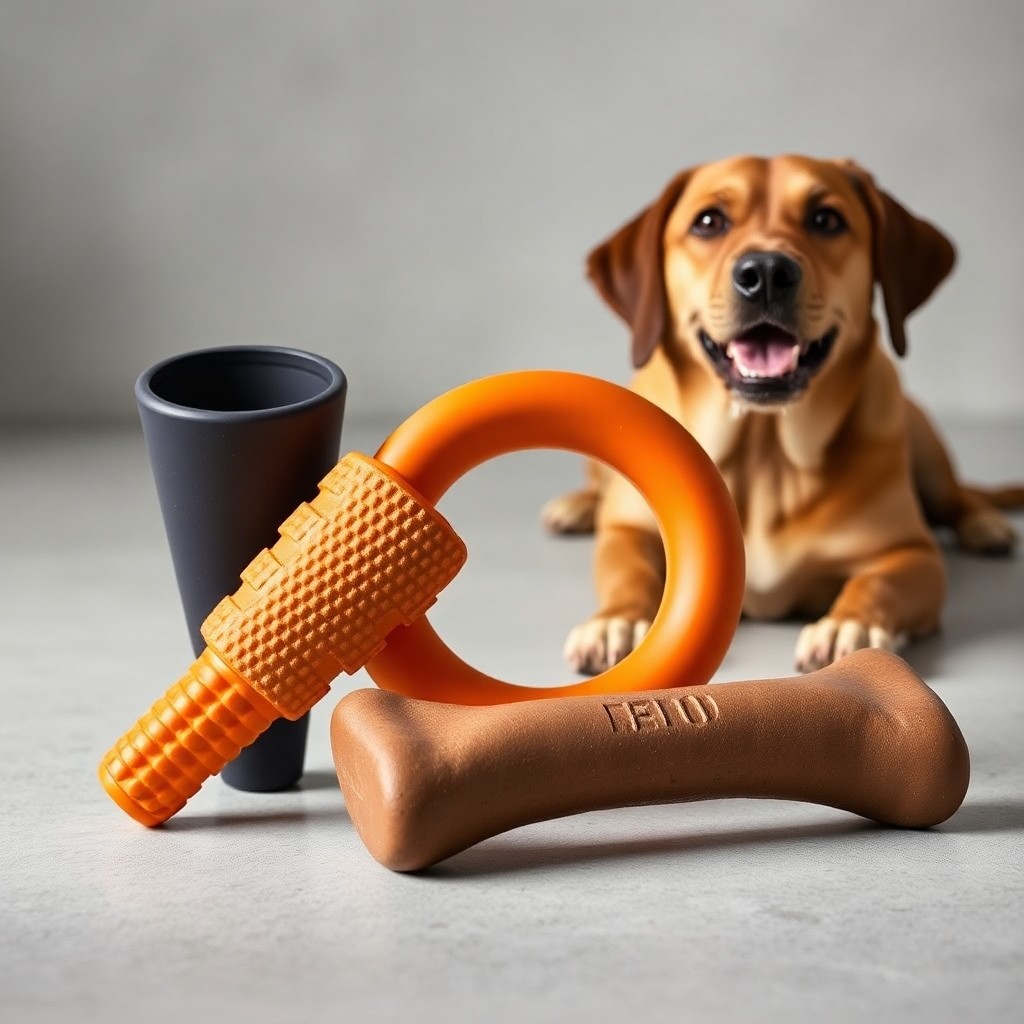
Within five minutes of unboxing, a power chewer can turn a standard pet store toy into a pile of hazardous plastic shreds. Finding something that actually lasts isn’t about trusting the “indestructible” label on the packaging; it comes down to understanding the actual material science behind how dogs apply pressure and shear force.
The best dog toys for aggressive chewers are made from natural, heavy-duty vulcanized rubber or high-density thermoplastic elastomer (TPE), which flex under pressure rather than splintering or tearing. These materials absorb the mechanical energy of a dog’s jaw without structural failure, protecting both the toy and your dog’s teeth.
The Science of Power Chewing: Why Standard Toys Fail
Most plush, vinyl, or cheap plastic toys are designed for interactive play or gentle chewing. When an aggressive chewer applies their jaw force—which can range from 200 to over 600 pounds per square inch (PSI) depending on the breed—these weak materials stretch past their elastic limit. Once a micro-tear occurs, the structural integrity collapses, leading to dangerous synthetic debris ingestion.
For owners, this means that safety isn’t just about ‘hardness’. If a toy is too hard, like real animal bones or hard plastics, it can cause painful tooth fractures. If it is too soft, it becomes a bowel obstruction hazard. The goal is to find materials with high tear strength and moderate elasticity.
Key Features to Evaluate Before Buying
- Material Composition: Natural rubber harvested from rubber trees offers the best natural rebound and tear resistance. High-grade TPE is a close second, offering lightweight durability.
- Shape and Geometry: Avoid toys with sharp edges, thin protrusions, or obvious seam lines. Rounded, spherical, or organic shapes distribute jaw pressure evenly across the entire surface.
- The Thumbnail Test: Press your thumbnail firmly into the toy. If the material offers absolutely zero give (like a rock), it poses a high risk of breaking your dog’s teeth. If your nail punctures or easily gouges the material, it will not last ten minutes against a power chewer.
Comparison of Heavy-Duty Toy Materials
Before purchasing, consider how different materials perform under sustained jaw pressure:
| Material Type | Durability Level | Flexibility / Safety | Best For |
|---|---|---|---|
| Natural Vulcanized Rubber | Extreme | High (Gentle on teeth) | Power chewers, daily interactive play, treat dispensing |
| Thermoplastic Elastomer (TPE) | Very High | Medium-High | Water toys, high-visibility fetch toys |
| Hard Composite Nylon | High | Low (Risk of dental wear) | Scraping plaque, persistent, non-destructive gnawing |
| Ballistic Kevlar / Firehose | Medium-High | Very High (Soft) | Supervised tugging, structured fetch |
Top Categories of Toys for Power Chewers
1. Natural Rubber Chew and Treat Toys
Natural rubber is the gold standard for heavy chewers. These toys are engineered with thick walls and hollow centers, allowing them to compress when bitten and spring back into shape immediately.
- Pros: Excellent elastic memory, highly puncture-resistant, gentle on gums, dishwasher safe, and can be stuffed with peanut butter or wet food to extend play sessions.
- Cons: Heavier than synthetic plastic toys; can collect dirt and hair if dropped on dusty floors.
2. Textured Hard Nylon Wishbones and Rings
Nylon toys are infused with real food flavorings to keep dogs interested. They do not yield to teeth; instead, the surface gradually wears down into tiny, hair-like bristles that act like a toothbrush to clean plaque.
- Pros: Extremely long-lasting; excellent for dental hygiene; does not break into large, sharp chunks.
- Cons: Lacks flexibility; can develop rough, sharp edges over time that need to be filed down; not suitable for dogs with existing dental sensitivity.
3. Heavy-Duty Retrieval and Fetch Toys
Standard tennis balls are notorious for their abrasive felt, which acts like sandpaper on canine tooth enamel, and their weak glue joints that split easily. Heavy-duty fetch toys use solid or thick-walled TPE formulations that float and withstand structural compression.
- Pros: Safe for teeth, highly visible in grass, easy to clean, and designed to bounce unpredictably to keep dogs mentally stimulated.
- Cons: Often sink if not explicitly labeled as buoyant; can be too heavy for smaller breeds if the incorrect size is purchased.
Red Flags: Materials to Avoid Entirely
When shopping for a dog that regularly destroys toys, avoid the following dangerous items:
- Vinyl and Latex: These thin materials can be shredded within seconds, and the squeaker inside poses an immediate choking or obstruction hazard.
- Antlers and Real Hooves: While popular, these are harder than canine enamel and are a leading cause of slab fractures in premolar teeth.
- Rope Toys with Loose Strands: When swallowed, single cotton or synthetic strands can cause linear foreign body obstructions in the digestive tract, which require emergency surgery.
Frequently Asked Questions
How often should I inspect my dog’s toys for damage?
Inspect chew toys daily. If you notice deep cracks, missing chunks, or if the toy has worn down to a size small enough to be swallowed entirely, discard it immediately to prevent ingestion hazards.
Are ‘indestructible’ dog toys real?No toy is completely indestructible. Every material will degrade eventually under the constant mechanical action, moisture, and enzymes of a dog’s mouth. ‘Indestructible’ is a marketing term; durability is relative to your dog’s size, breed, and chewing style.
Why does my dog target the seams of toys?
Dogs possess an instinctual drive to dissect prey. When given a toy, they will naturally find the weakest points, such as fabric seams, glue lines, or injection-molding seals, and focus all their jaw power on those exact coordinates to open the toy.