
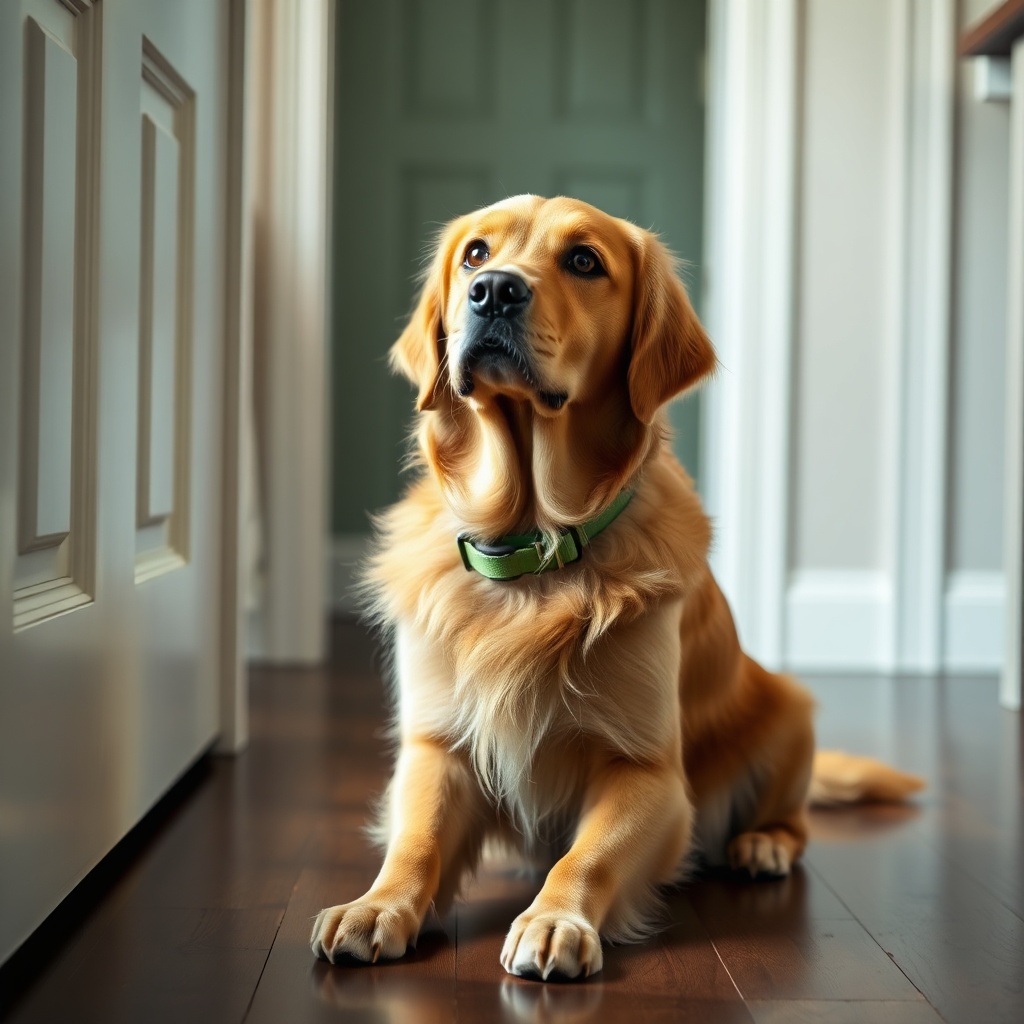
You barely even touch your boots before your dog is already plastered against the front door, staring fixedly at the knob with a tail vibrating with pure anticipation.
Dogs wait by the door before walks because they have cracked your daily schedule, associated specific cues (like grabbing keys or putting on shoes) with outdoor time, and are actively managing their excitement in anticipation of exercise.
While this behavior is usually harmless, it can sometimes cross the line into anxiety or dangerous door-darting. Understanding why your dog does this helps you keep walks safe, calm, and structured.
The Psychology Behind the Door-Waiting Ritual
Dogs are masters of observation. They read your body language better than anyone else. Here is what is actually going on inside your dog’s head when they camp out by the entryway:
- Pattern Recognition: Dogs thrive on routines. If you walk them every day at 8:00 AM, their internal circadian rhythm acts as an alarm clock. They know the walk is coming before you even think about it.
- Classical Conditioning: Think of Pavlov’s dogs. Instead of a bell, your dog associates the sound of clinking keys, the squeak of your sneakers, or the rustle of the leash with the thrill of the outdoors. These are ‘predictive triggers.’
- The Scent Vault: The gap under the door is a portal of information. Drafts carry the scent of neighborhood dogs, squirrels, and fresh air. Your dog is already sniffing the outside world before they even step through.
When Door-Waiting Becomes a Safety Risk
A dog sitting politely is great. A dog coiled like a spring, ready to bolt the second the latch clicks, is a safety hazard. This behavior is called door-darting. It leads to lost pets, traffic accidents, and pulled muscles for owners who get dragged out the door.
If your dog is whining, pacing, or barking frantically while waiting, their excitement has morphed into hyper-arousal or barrier frustration. You need to reset their emotional state before clipping on the leash.
How to Train a Calm Threshold Routine
Do not let your dog dictate when the door opens. Use this practical training routine to build impulse control and keep everyone safe.
Step 1: Devalue Your Walking Cues
Your dog goes crazy when you pick up your keys. Change that. Pick up your keys, then sit on the couch and watch TV. Put on your walking shoes, then make a cup of coffee. By separating these triggers from the actual walk, you break the automatic anxiety cycle.
Step 2: Establish a ‘Place’ Command
Instead of letting your dog crowd the door, teach them to wait on a designated mat or bed nearby. Send them to their ‘place’ before you touch the doorknob. Only walk toward the door when they are lying down calmly on their mat.
Step 3: The ‘Door Opens, You Stay’ Rule
Touch the doorknob. If your dog gets up, take your hand off the knob. Wait for them to sit back down. Turn the handle. If they lunge forward, close the door immediately. Repeat this until you can open the door fully while your dog remains sitting. They must learn that calm behavior is the only key that unlocks the door.
Frequently Asked Questions
Why does my dog wait by the door even when it is not walk time?
Your dog might be bored, seeking a cooler spot on the tile floor, or listening to noises outside. They may also be waiting for a specific family member to return home.
Should I ignore my dog when they wait by the door?
If they are sitting calmly, you do not need to ignore them. However, if they are whining, scratching, or barking to demand a walk, ignore the behavior entirely. Do not reward demand-barking with outdoor access.
Can separation anxiety cause a dog to hover by the exit?
Yes. If your dog stays by the door for hours after you leave, whines, or chews the door frame, they are likely suffering from separation anxiety rather than just excitement for a walk.