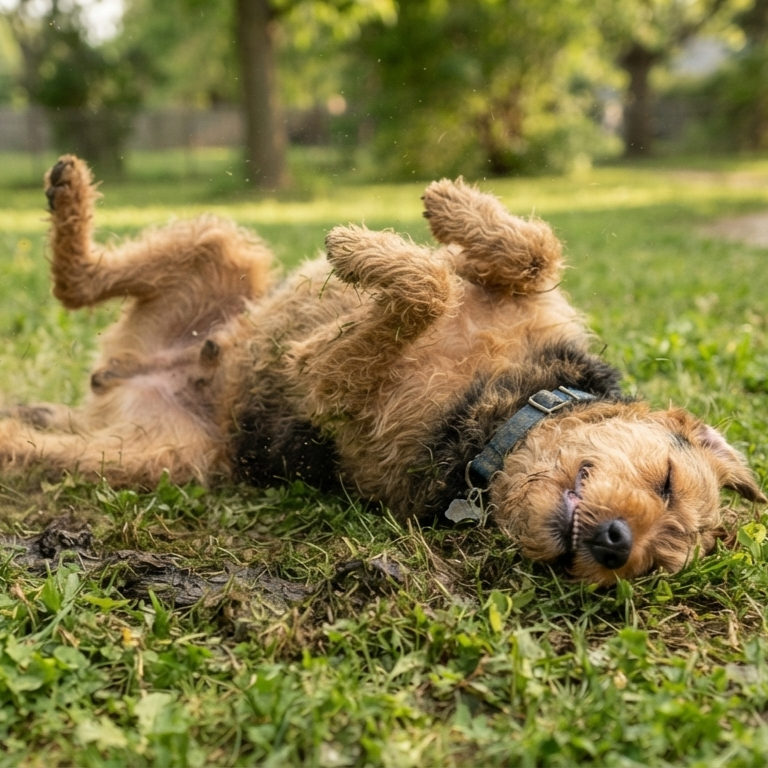
The moment you see your dog drop their shoulder and dive joyfully into a patch of decomposing lawn-gunk, pure panic usually sets in. Screaming and lunging forward is a knee-jerk reaction for any pet parent, but unfortunately, it rarely stops the behavior—it often just turns a deeply gross habit into a thrilling, high-speed game of chase. To break the cycle and salvage your next walk, you first have to understand why your dog finds their inner perfume so irresistible.
Why Dogs Roll in Smelly Things: The Evolutionary Reasons
Dogs roll in smelly things like animal carcasses, manure, or garbage due to ancient evolutionary instincts: it helps them mask their own scent for hunting, communicate valuable environmental resources to their pack, and experience the world through their highly advanced olfactory system. This behavior, known as scent rolling, is deeply hardwired into canine DNA and has little to do with defiance or poor hygiene.
1. The Hunting Camouflage Theory
Before dogs became pampered couch companions, their ancestors relied on stealth to survive. Rolling in the scent of a prey animal, or even predator feces, masked their natural canine odor. This olfactory camouflage allowed wild dogs to get closer to their prey without triggering an immediate flight response. While your dog does not need to hunt for kibble, the instinct to hide their scent remains incredibly strong.
2. Pack Communication and Scent Sharing
In a wild pack setting, a dog returning with a strong odor acts as a walking bulletin board. By rolling in a distinct smell, a dog carries information back to the group, essentially saying, ‘Look what I found over there.’ It is a form of social sharing that tells other pack members about nearby resources, food sources, or potential dangers.
3. The Perfume Effect
Humans love the smell of lavender and citrus, but dogs have entirely different aesthetic preferences. To a dog, decomposing organic matter or a patch of wild animal waste is the ultimate high-end perfume. Rolling in it is simply their way of wearing a scent they find incredibly appealing and stimulating.
Common Mistakes Owners Make When Dealing With This Habit
- Chasing and yelling: This reaction acts as an accidental reward. Your dog thinks you are playing a high-energy game, which actually reinforces the rolling behavior.
- Using highly perfumed human shampoos: Bathing a smelly dog with strong floral or chemical scents often drives them to run straight back outside to roll in something gross again to neutralize the artificial smell.
- Neglecting positive reinforcement: Simply pulling your dog away without offering a better alternative fails to teach them what they should do instead.
How to Stop Your Dog from Rolling in Smelly Things
Breaking this natural habit requires a mix of proactive management and targeted training. By shifting your focus from punishment to redirection, you can keep your dog clean and safe.
Step 1: Build a Bulletproof ‘Leave It’ Command
The ‘leave it’ command is your strongest defense against scent rolling. Start training this in a low-distraction environment. Hold a low-value treat in a closed fist, and when your dog stops sniffing or trying to get it, reward them with a high-value treat from your other hand. Gradually progress to dropping items on the floor, rewarding your dog only when they actively look away from the object.
Step 2: Recognize the Prep Work
Dogs rarely dive straight into a roll without warning. They almost always exhibit a specific sequence of behaviors: sniffing intensely at a specific spot, pausing, lowering their head, and tilting their shoulder toward the ground. The moment you see your dog lower their shoulder, immediately intervene with your ‘leave it’ command or recall cue.
Step 3: Reward Heavily with High-Value Treats
If your dog successfully turns away from a tempting, smelly patch on your command, reward them with something far better than average kibble. Use small pieces of freeze-dried liver, chicken, or cheese. Make them feel like choosing you over the smell is the most profitable decision they can make.
Step 4: Keep a Drag Line in High-Risk Areas
If you are walking in the woods, near farms, or in areas where wildlife is common, keep your dog on a long training lead. This allows them some freedom to explore while giving you the ability to gently prevent them from dropping to the ground if they ignore your vocal commands.
How to Get Rid of Stubborn Odors
If your preventive training fails and your dog manages to find something foul, standard dog shampoo might not cut it. To neutralize stubborn odors like fox feces or decaying matter, mix one quart of 3% hydrogen peroxide, a quarter-cup of baking soda, and a teaspoon of mild liquid dish soap. Apply this mixture to the affected area, let it sit for five minutes, and rinse thoroughly. Be careful to avoid their eyes and mouth, as this mixture can cause irritation.
Frequently Asked Questions
Is rolling in smelly things dangerous for my dog?
While the act of rolling is not inherently dangerous, the substances they roll in can carry health risks. Carcasses, feces, and garbage can contain harmful bacteria, parasites, or chemical residues. If your dog licks their fur after rolling, they could ingest these toxins, leading to gastrointestinal upset or parasitic infections.
Why do dogs roll in smelly things right after a bath?
Most commercial dog shampoos have strong floral, citrus, or synthetic scents that feel overwhelming to a dog’s sensitive nose. Dogs will often seek out natural, earthy, or foul smells immediately after a bath to mask the artificial perfume and restore a smell that feels natural and comforting to them.