
The moment a puppy hits the end of a leash, a tug-of-war usually begins. Instinct tells us to pull back, but that physical tension actually triggers an opposing reflex in our dogs, making them lean in and pull even harder. Breaking this cycle is all about communication: teaching your puppy that a slack leash unlocks forward movement, while any tension brings all progress to an immediate halt.
Why Do Puppies Pull on the Leash?
Before diving into training, it helps to understand why your puppy is pulling in the first place. Puppies naturally walk at a much faster pace than humans do. To a young, curious pup, the world is filled with incredible sights, smells, and sounds, and they simply want to reach them as fast as possible. Additionally, dogs possess an opposition reflex—a natural instinct to push or pull against applied pressure. When you pull back on the leash, your puppy’s muscles automatically fight against that resistance by pulling forward.
The Stop-and-Go Method: Your Step-by-Step Training Guide
This is the most reliable, positive reinforcement training protocol to build perfect leash manners. It teaches your puppy that pulling works against their goals, while walking calmly by your side gets them exactly what they want.
Step 1: Start in a Low-Distraction Environment
Do not expect your puppy to learn loose-leash walking in a busy park. Start inside your living room or hallway where there are no competing smells, other dogs, or distracting people. Once your puppy masters the technique indoors, gradually move to the backyard, then the driveway, and finally the sidewalk.
Step 2: Establish the ‘Be a Tree’ Rule
Begin walking. The moment your puppy pulls and the leash loses its slack, freeze immediately. Do not yank the leash, do not yell, and do not move forward. Stand completely still like a tree. Wait until your puppy looks back at you or steps back to create slack in the leash.
Step 3: Reward the Slack
As soon as the leash goes slack—even by a tiny fraction—mark the behavior with a cheerful ‘yes!’ or a clicker, deliver a small, high-value treat right next to your thigh, and take a few steps forward. This teaches your puppy that staying close to your side is highly rewarding.
Step 4: Use the ‘Red Light, Green Light’ Game
Turn walks into a dynamic game. Green light means the leash is loose, so you walk together. Red light means the leash is tight, so you stop instantly. Consistency is absolutely critical; if you let your puppy pull you even once to sniff a tree, they learn that pulling occasionally works, which reinforces the behavior.
Common Puppy Leash Training Mistakes to Avoid
Even the most dedicated pet parents fall into common traps that accidentally reward the wrong behavior. Keep an eye out for these frequent slip-ups:
- Using a retractable leash: These leashes keep constant tension on the collar or harness, which teaches your puppy that pulling is the standard way to move forward.
- Yanking the leash: Quick, aggressive jerks can injure your puppy’s sensitive neck and create negative associations with outdoor walks.
- Inconsistent expectations: Letting your puppy pull when you are in a rush, but punishing them when you have time to train, confuses their developing brain.
- Using low-value treats: Kibble may work inside the house, but in the highly stimulating outdoor environment, you need irresistible rewards like small pieces of freeze-dried liver or boiled chicken.
Essential Gear for Stress-Free Walks
Using the right equipment makes a massive difference in your training success. Avoid equipment designed to pinch, choke, or cause discomfort.
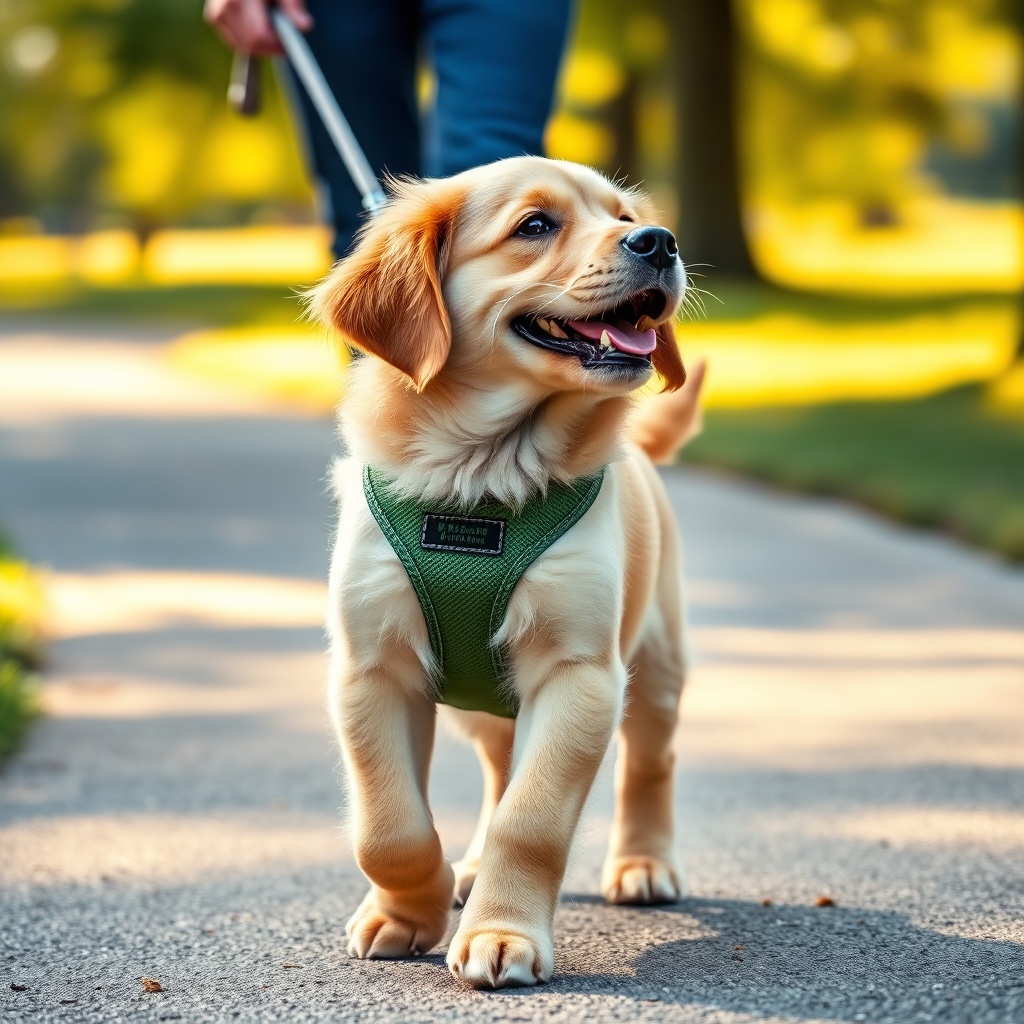
A standard flat collar is perfect for holding ID tags, but a back-clip or front-clip non-pull chest harness is highly recommended for training. A front-clip harness features a leash attachment point on the center of the puppy’s chest. When the puppy attempts to pull forward, the design gently redirects their momentum sideways toward you, instantly reducing their pulling power without causing neck strain.
Frequently Asked Questions
How long does it take to train a puppy to stop pulling?
Most puppies begin to understand the concept within two weeks of daily, consistent training sessions. However, full mastery can take several months, especially as puppies enter their adolescent phase and become more easily distracted.
Should I use a front-clip or back-clip harness?
A front-clip harness is ideal for puppies who are heavy pullers, as it redirects their forward motion. A back-clip harness is great for puppies who have already mastered basic leash manners, as it prevents the leash from tangling under their front legs.
What should I do if my puppy refuses to move on walks?
If your puppy sits or lies down and refuses to budge, avoid dragging them. Instead, crouch down, speak in an encouraging voice, and offer a high-value treat a few feet away to make moving forward a fun, low-pressure experience.