
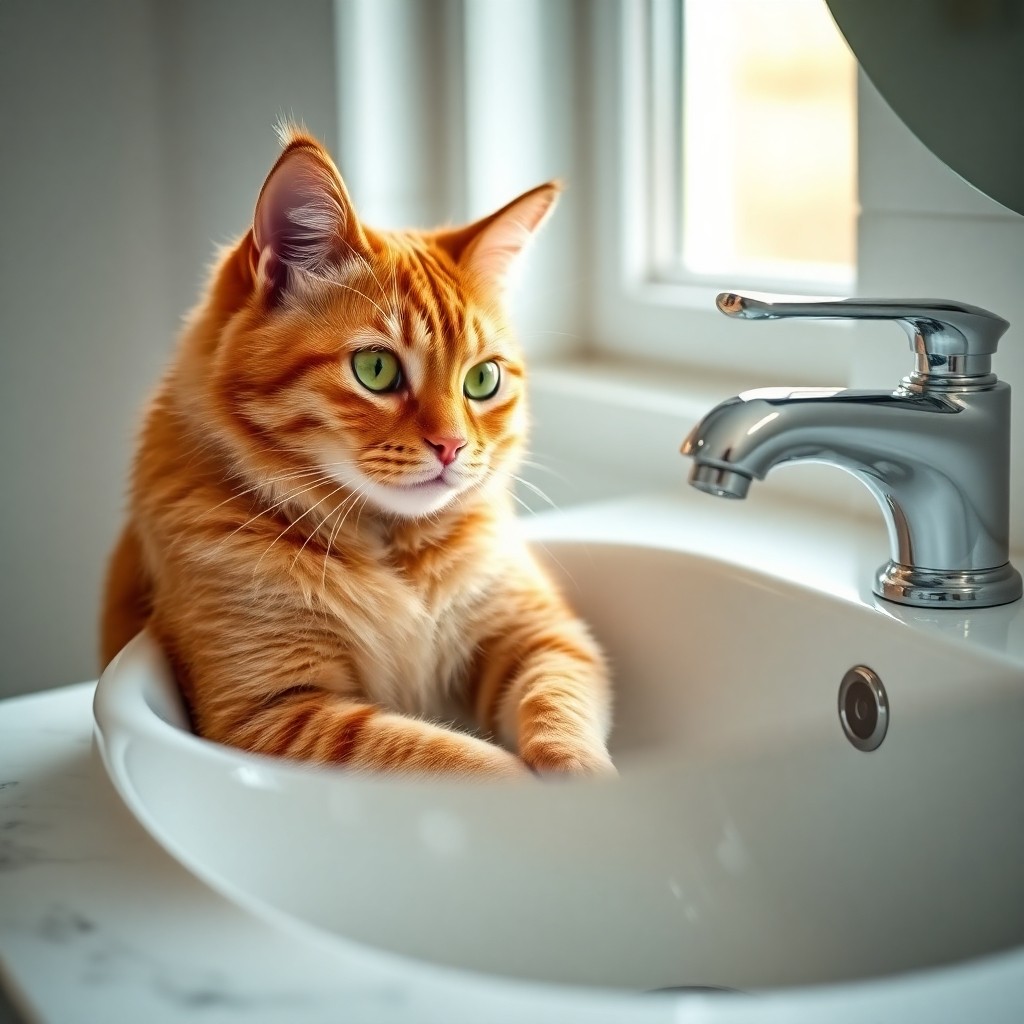
If you have ever walked into the bathroom only to find your cat curled up comfortably inside the porcelain basin, you are definitely not alone. While this quirky spot might look entirely random to us, felines choose the sink for very specific reasons—ranging from the cool, smooth surface to a prime vantage point for keeping an eye on the house. Figuring out what draws your cat to the bathroom vanity is the key to decoding their daily routine.
Cats sit in sinks primarily because the smooth porcelain or ceramic provides a cool, body-contouring surface that regulates their body temperature, while the elevated position offers a secure vantage point near a fresh water source. This behavior combines their wild survival instincts with a simple desire for comfort and security.
The Top Reasons Why Sinks Are Irresistible to Cats
To a feline, a household sink is not a piece of plumbing; it is a perfectly designed piece of structural real estate. Several unique factors come together to make bathroom and kitchen basins highly attractive to cats of all ages and breeds.
1. Natural Temperature Regulation
Cats have a higher baseline body temperature than humans, averaging around 101 to 102.5 degrees Fahrenheit. While they love soaking up warm sunlight, they also overheat easily. Materials like porcelain, ceramic, and cast iron are excellent heat sinks. When a cat lies down on these cool surfaces, the material conducts heat away from their body, offering rapid, soothing cooling on warm days.
2. The Perfect ‘Box’ Shape and Thigmotaxis
Cats are driven by thigmotaxis, a preference for physical contact with close boundaries. This is why they love cardboard boxes. A sink’s curved, sloping sides perfectly cradle a cat’s body, providing gentle pressure on all sides. This physical contact triggers a deep sense of safety and comfort, simulating the feeling of nesting in a protected den away from predators.
3. Elevation, Security, and Territorial Control
In the wild, felines are both predators and prey. To keep themselves safe while resting, they seek high ground. Bathroom counters and sinks place your cat at eye-level or above, allowing them to monitor the entire room. The high sides of the basin hide them from sight, giving them the ultimate tactical vantage point where they can observe without being seen.
4. Fresh, Running Water on Demand
Cats have a natural aversion to stagnant water, an evolutionary trait that kept their ancestors safe from waterborne pathogens. A dripping faucet or the smell of residual moisture in a sink drain is highly enticing. Sitting in the sink puts them right at the source of fresh, cold running water, prompting many cats to wait patiently for their owners to turn on the tap.
5. Comforting Scents of Their Humans
The bathroom is a hub of familiar scents. Sinks absorb the smells of soap, toothpaste, lotions, and your natural skin oils. For a companion animal, spending time in a spot heavily concentrated with your scent is deeply reassuring and fosters a stronger emotional bond, even when you are not in the room.
When Sink-Sitting Signals a Medical Issue
While sink-sitting is usually a harmless, charming habit, a sudden change in behavior warrants close attention. If your cat has never shown interest in the sink before and suddenly begins spending hours there, it is time to assess their health.
Increased seek for cool surfaces can point to a fever or systemic inflammation. Conversely, if your cat is constantly licking the faucet or begging for water, they may be experiencing polydipsia (increased thirst). This is a common early clinical sign of several serious feline conditions, including:
- Chronic Kidney Disease (CKD): A common issue in aging cats where the kidneys lose their concentration ability, leading to excessive drinking and urination.
- Feline Diabetes: High blood sugar levels prompt the body to flush out glucose, resulting in dehydration and constant thirst.
- Hyperthyroidism: An overactive thyroid gland accelerates the metabolism, raising body temperature and making cats seek cool resting spots while increasing their water consumption.
If you notice this sudden change paired with weight loss, lethargy, or changes in appetite, schedule a diagnostic consultation with your veterinarian immediately.
Practical Hacks to Reclaim Your Sink
If you are tired of washing your hands around a sleeping cat, you can redirect this behavior without causing stress. The key is to offer alternative spots that mimic the exact benefits of the sink.
Provide an Elevated, Curved Bed
Place a structured, bowl-shaped cat bed or a cardboard scratching lounge on a nearby high shelf or windowsill. This satisfies their desire for elevation and body-contouring support. To make it even more attractive, choose a model made of breathable fabrics or locate it in a quiet, breezy spot.
Invest in a Feline Water Fountain
If your cat is drawn to the sink for hydration, a circulating water fountain is the ultimate solution. These devices continuously filter and aerate the water, keeping it cool, fresh, and moving. Placing a fountain in a quiet corner of the house often diverts their attention entirely away from bathroom faucets.
Introduce Cooling Mats
For cats seeking heat relief, pressure-activated gel cooling mats are highly effective. Place one in a cardboard box or on their favorite perch. This replicates the cool-touch sensation of porcelain without requiring them to jump into your bathroom sink.
Frequently Asked Questions
Why does my cat lick the metal faucet?
Cats are attracted to the cool temperature of the metal faucet and the condensation that forms on it. To a cat, water dripping from a clean metal tap tastes fresher and cooler than stagnant water sitting in a plastic bowl on the floor.
Is porcelain bad for my cat’s fur or skin?
Porcelain is entirely safe for cats. It is non-porous and does not harbor bacteria easily, which is why it is often preferred over plastics. However, make sure the sink is completely free of harsh cleaning chemical residues, such as bleach or abrasive scrubs, before letting your cat rest there.
How can I safely clean my sink without harming my cat?
Switch to pet-safe, natural cleaning solutions like diluted white vinegar or baking soda. If you must use commercial disinfectants, rinse the sink thoroughly with warm water and wipe it dry before allowing your cat access to the area again.