
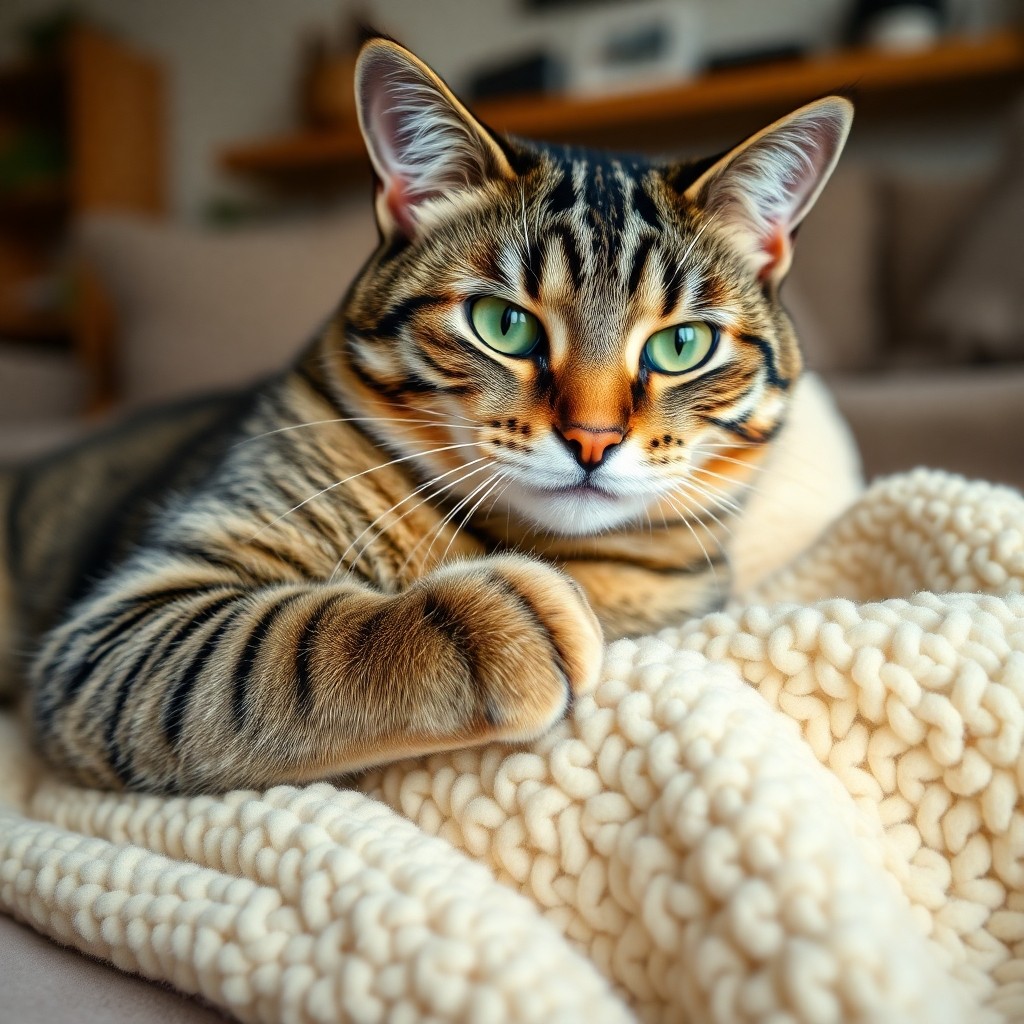
Watching your cat rhythmically massage a soft throw blanket is undeniably hypnotic, but this endearing habit—affectionately known as ‘making biscuits’—is far more than just a quirky way to pass the time. Deeply rooted in evolutionary instinct, emotional self-regulation, and early kittenhood, this kneading behavior serves as a fascinating window into your feline’s state of mind.
Cats knead blankets because it is an instinctive comfort behavior retained from kittenhood, when they massaged their mother to stimulate milk flow. This rhythmic action helps cats self-soothe, mark their territory using scent glands in their paws, and prepare a cozy place to rest.
The Biological and Psychological Reasons Behind Kneading
To understand why your cat targets soft blankets, it helps to look at their wild ancestry and early developmental stages. This behavior is not just a quirky habit; it serves several critical biological functions.
1. Recreating the Comfort of Kittenhood
From the moment they are born, kittens instinctually press their paws against their mother’s abdomen. This rhythmic motion stimulates the release of oxytocin in both the mother and the kitten, strengthening their bond and encouraging milk flow. Even though adult cats no longer rely on their mother for sustenance, the physical action of kneading remains associated with ultimate safety, warmth, and contentment.
2. Scent Marking and Claiming Territory
Cats are highly territorial animals that communicate largely through scent. Felines possess active scent glands located on the undersides of their paws, specifically between their toe pads. When your cat kneads a soft blanket, they are actually depositing their unique pheromones onto the fabric. This tells other animals that the space is claimed and safe.
3. Creating a Safe Wild Nest
Before cats became pampered household pets, their wild ancestors had to construct temporary nests in tall grass or leaf piles to sleep safely and hide from predators. Kneading the ground helped pat down tall foliage, clear out hidden pests, and create a soft, flat surface for resting. When your cat kneads a plush blanket, they are running a primal survival program.
4. Showing Deep Affection and Trust
If your cat chooses to knead a blanket while sitting directly on your lap, take it as a major compliment. This behavior indicates that your cat views you as a maternal figure and feels entirely safe in your presence. They are associating your scent and warmth with the absolute security of their first days of life.
How to Manage Kneading When It Becomes Painful
While kneading is a wonderful sign of a happy cat, it can sometimes become uncomfortable for you if your cat’s claws sink through the blanket into your skin. Instead of stopping the behavior altogether, you can implement a few practical strategies to make the experience enjoyable for both of you.
- Deploy a Dedicated ‘Kneading Barrier’: Keep a thick, dedicated fleece or microfiber blanket nearby. Whenever your cat starts to knead on your lap, gently slide this thick barrier between their claws and your skin.
- Maintain Regular Claw Trimmings: Clip the very tips of your cat’s claws every two to three weeks. This minimizes the sharp, needle-like points without affecting their natural desire to knead.
- Gently Redirect Their Focus: If the kneading becomes too intense or painful, do not scold them. Instead, gently pet your cat, redirect their attention with a toy, or stand up slowly so they slide off your lap without a negative interaction.
Common Mistakes Owners Make with Kneading Cats
Understanding what not to do is just as important as knowing how to guide your cat’s behavior. Avoid these common missteps to maintain a strong bond with your feline friend:
- Punishing or Scolding: Never yell, push, or spray your cat with water for kneading. Because this is an instinctual behavior linked to safety and affection, punishment will only confuse them, damage your bond, and induce severe anxiety.
- Pulling Their Paws Abruptly: Forcibly pulling your cat’s legs or paws away mid-knead can cause them to reflexively extend their claws deeper to hang on, leading to accidental scratches.
- Ignoring Sudden Behavior Changes: While occasional kneading is normal, a sudden, obsessive increase in kneading accompanied by loud vocalizations or pacing can sometimes indicate stress, skin irritations, or environmental anxiety.
Frequently Asked Questions
Why do cats purr so loudly while kneading?
Purring and kneading go hand in hand because both behaviors trigger the release of feel-good endorphins. The combination of these two actions is the ultimate sign of a relaxed, happy cat entering a meditative state of comfort.
Why does my cat bite or suck on the blanket while kneading?
This is known as ‘wool sucking’. It is especially common in cats that were weaned too early from their mothers. Biting or sucking on a soft, warm fabric mimics the nursing experience even more closely, helping the cat achieve a deeper level of comfort and security.
Is excessive kneading a sign of stress?
It can be. If your cat suddenly starts kneading constantly, obsessively, or seems unable to settle down, they may be using the behavior as a self-soothing mechanism to cope with environmental stress, a move to a new home, or the introduction of a new pet. If you notice this alongside changes in appetite or litter box habits, consult your veterinarian.