
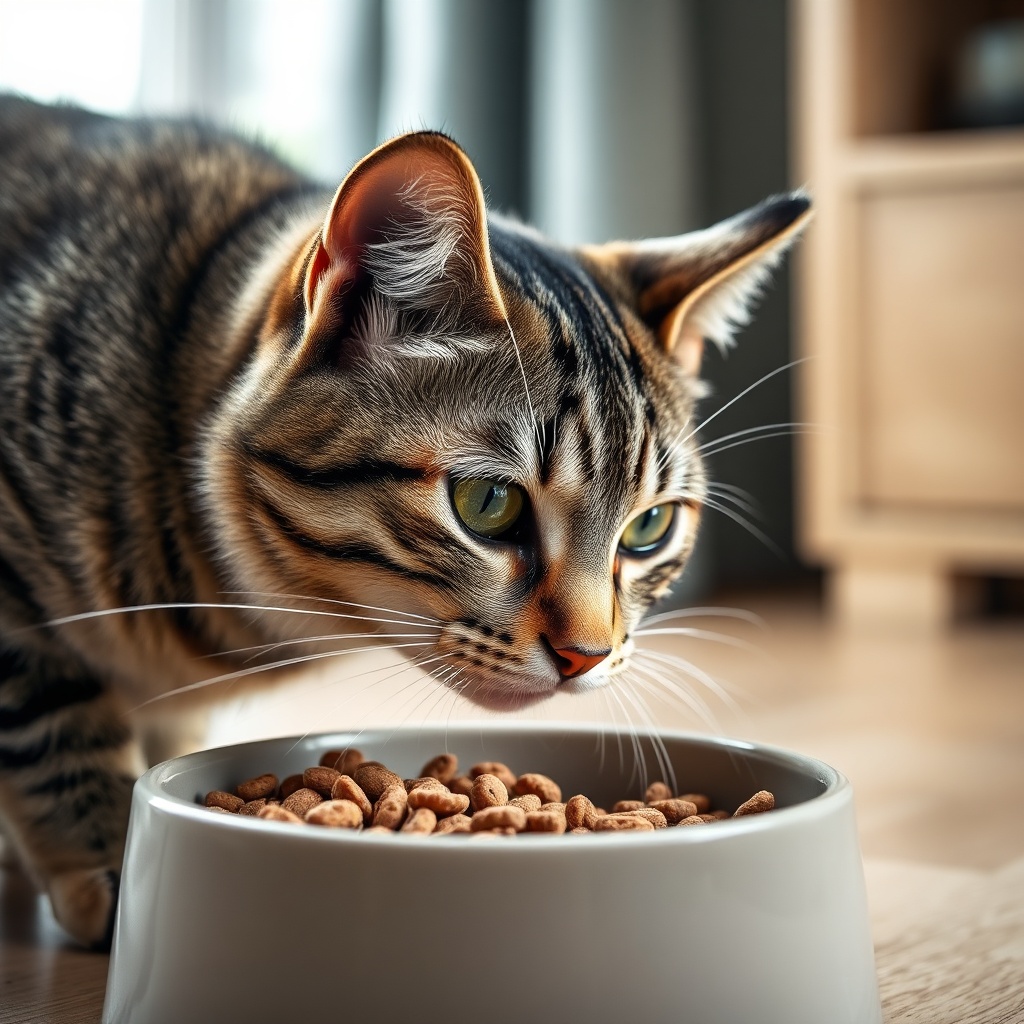
A cat sprints to the food bowl, gulps down a heap of dry kibble in under thirty seconds, and immediately deposits a perfectly shaped tube of semi-digested food onto your clean rug. This cycle, often called ‘scarf and barf,’ is incredibly common but highly preventable. By modifying how fast your cat accesses their food, you can put an end to this daily clean-up routine.
Slow feeder bowls prevent feline vomiting and bloat by forcing cats to navigate puzzles or ridges, which naturally slows their ingestion rate, prevents them from swallowing excess air, and stops the stomach stretch reflex from triggering sudden regurgitation.
The Biological Threat of Speed Eating
When cats eat too quickly, their digestive systems simply cannot keep up. Domestic felines are biologically designed to hunt small prey, consuming tiny meals throughout the day. When we present them with a bowl of dense dry kibble, their instinctual drive to secure resources can lead to rapid gulping. This causes two major physiological issues:
- The Stomach Stretch Reflex (Regurgitation): A cat’s stomach is highly sensitive to rapid expansion. When kibble is swallowed whole without chewing, along with pockets of trapped air, the stomach stretches too fast. This triggers a survival reflex, causing the esophagus to spasm and reject the food before it even begins to digest.
- Feline Bloat (Gastric Dilatation): While far more common in deep-chested dogs, cats can also suffer from bloat. Gulping air alongside large volumes of unchewed food causes the stomach to swell. This can compress major blood vessels, limit blood flow to vital organs, and cause intense abdominal pain.
How Obstacle Bowls Solve the Problem
Slow feeder bowls utilize raised patterns, ridges, mazes, or cups that partition the food into tiny pockets. Instead of vacuuming up a massive pile of kibble in a single bite, your cat must use their tongue or paws to extract individual pieces. This mimics natural foraging behaviors and stretches a thirty-second meal into a ten-minute activity.
| Material | Pros | Cons | Best For |
|---|---|---|---|
| Ceramic | Heavy, non-porous, dishwasher safe, prevents feline acne. | Can chip or break if dropped. | Cats prone to chin acne and aggressive pushers. |
| Food-Grade Silicone | Gentle on sensitive whiskers, highly durable, travel-friendly. | Can attract dust and hair; requires frequent scrubbing. | Brachycephalic (flat-faced) breeds like Persians. |
| BPA-Free Plastic | Lightweight, inexpensive, highly complex maze designs. | Scratches easily, harboring bacteria that cause acne. | Budget-conscious owners with non-sensitive cats. |
Transitioning Your Cat to a Slow Feeder
Cats are notoriously sensitive to changes in their environment. Introducing a strange, complex new bowl too quickly can cause frustration, leading to food stress or refusal to eat. Use these steps to ensure a smooth transition:
- The Dual-Bowl Phase: Place the new slow feeder next to their old bowl for the first three days. Put a few high-value treats in the slow feeder while keeping their regular meals in the old bowl. This builds a positive association.
- The Half-and-Half Step: Split their daily ration. Put half of the food in the old bowl and half in the slow feeder. Once they comfortably empty the slow feeder, retire the old bowl.
- Adjust the Maze Depth: If your cat has a flat face (such as a Persian or British Shorthair), choose a shallow maze. Deep mazes can cause painful ‘whisker fatigue’ when their sensitive whiskers repeatedly rub against the plastic or ceramic ridges.
Frequently Asked Questions
Can slow feeder bowls be used for wet food?
Yes. Many silicone and ceramic slow feeders are specifically designed with shallow grooves and textured mats that work exceptionally well for wet food. Licking wet food out of these patterns also stimulates saliva production, which aids oral health and digestion.
What should I do if my cat gets frustrated and knocks the bowl over?
Choose a heavy, wide-based ceramic slow feeder with a non-slip rubber bottom. If your cat continues to struggle, the maze may be too complex. Try a simpler design with wider ridges before moving to intricate puzzles.
Are there other medical reasons my cat might be vomiting after meals?
While fast eating is the primary cause of immediate post-meal vomiting, chronic vomiting can point to food allergies, inflammatory bowel disease (IBD), kidney disease, or hyperthyroidism. If your cat continues to vomit despite eating slowly, consult your veterinarian for diagnostic testing.