
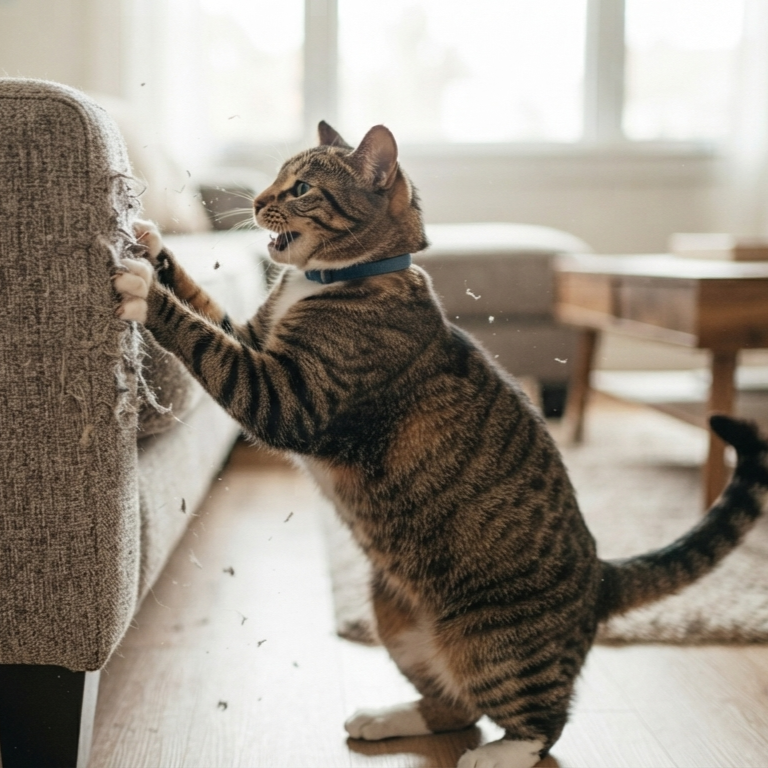
Catching your cat in the act of shredding the sofa usually triggers an instant reaction, but yelling or spraying them with water rarely solves the problem. Scratching isn’t a malicious act meant to ruin your decor; it is an entirely natural instinct your cat relies on for stretching, marking territory, and keeping their claws healthy. Redirecting that undeniable urge rather than fighting it is the secret to saving your furniture while keeping your bond intact.
To gently stop a cat from scratching furniture, you must redirect their natural urge by placing appealing scratchers (like sisal posts) immediately next to the targeted sofa, applying temporary physical deterrents like double-sided tape, and rewarding alternative scratching behaviors with treats or catnip.
Why Cats Scratch (It Is Not Spite)
Before implementing any correction plan, it is vital to understand that scratching is essential for a cat’s physical and psychological well-being. Cats scratch to shed the outer dead layers of their claws, stretch their back muscles, and mark their territory both visually and through scent glands located in their paws. Attempting to stop scratching entirely is impossible and detrimental to their health; the goal must always be redirection.
The 4-Step Gentle Redirection Plan
Step 1: Introduce High-Value Scratching Alternatives
Provide your cat with surfaces that are far more appealing than your sofa. Observe how your cat scratches: do they prefer vertical stretching on the arm of the couch, or horizontal scratching on the carpet? For vertical scratchers, invest in a sturdy, heavy-based post wrapped in natural sisal rope that is tall enough for your cat to fully extend their body. For horizontal scratchers, cardboard ramps or flat sisal mats work exceptionally well.
Step 2: Make the Furniture Temporarily Unappealing
While your cat learns to use the new posts, make the target furniture unattractive to touch. Apply double-sided training tape or a smooth plastic furniture guard to the specific corners they favor. Cats dislike the sticky sensation on their paws and will quickly seek out alternative surfaces. Avoid using strong chemical sprays that could irritate your cat’s sensitive olfactory system; stick to physical barriers.
Step 3: Correct Placement is Crucial
Cats scratch to mark their territory, which is why they target highly visible items like the living room sofa. Placing a scratching post in a hidden basement corner will not work. Place the new, appealing post directly in front of the furniture piece they have been scratching. Once they consistently use the post, you can gradually move it a few inches every day to a more convenient location.
Step 4: Use Positive Reinforcement
Encourage your cat to use the new posts by rubbing high-quality catnip or spraying a catnip infusion onto the sisal fibers. When you see your cat scratching the post, immediately reward them with a high-value treat, verbal praise, or gentle petting. Never scold, yell, or spray water at your cat for scratching the furniture, as this only teaches them to fear you and can lead to anxiety-related behavioral issues.
Common Mistakes to Avoid
- Buying flimsy scratching posts: If a post wobbles or falls over when your cat leans against it, they will never use it again and will return to the sturdy sofa.
- Yelling or physical punishment: This damages the human-animal bond and creates stress, which actually increases a cat’s desire to scratch for self-soothing.
- Throwing away old, shredded posts: Cats love the look and feel of a well-worn scratcher. Replacing a beloved, frayed post too quickly can cause them to return to your furniture.
- Using claw caps incorrectly: While temporary soft plastic caps can protect furniture, they must be applied correctly and replaced every few weeks, and some cats find them highly stressful.
Frequently Asked Questions
Should I trim my cat’s claws to protect my furniture?
Yes, regular nail trims every two to three weeks can significantly reduce the damage caused by scratching. Trim only the sharp, clear tips of the claws, taking great care to avoid the pink quick which contains blood vessels and nerves.
Are declawing procedures acceptable?
Declawing is a major surgical amputation of the last bone of each toe, not a simple nail trim. It is highly painful, can lead to long-term chronic pain, biting behaviors, and litter box avoidance, and is widely condemned by veterinary organizations worldwide.
What should I do if my cat ignores the new scratching post?
Try experimenting with different materials. Some cats dislike sisal and prefer real wood log scratchers, carpeted posts, or corrugated cardboard. Ensure the post is tall enough and placed in a high-traffic area where the family spends most of their time.