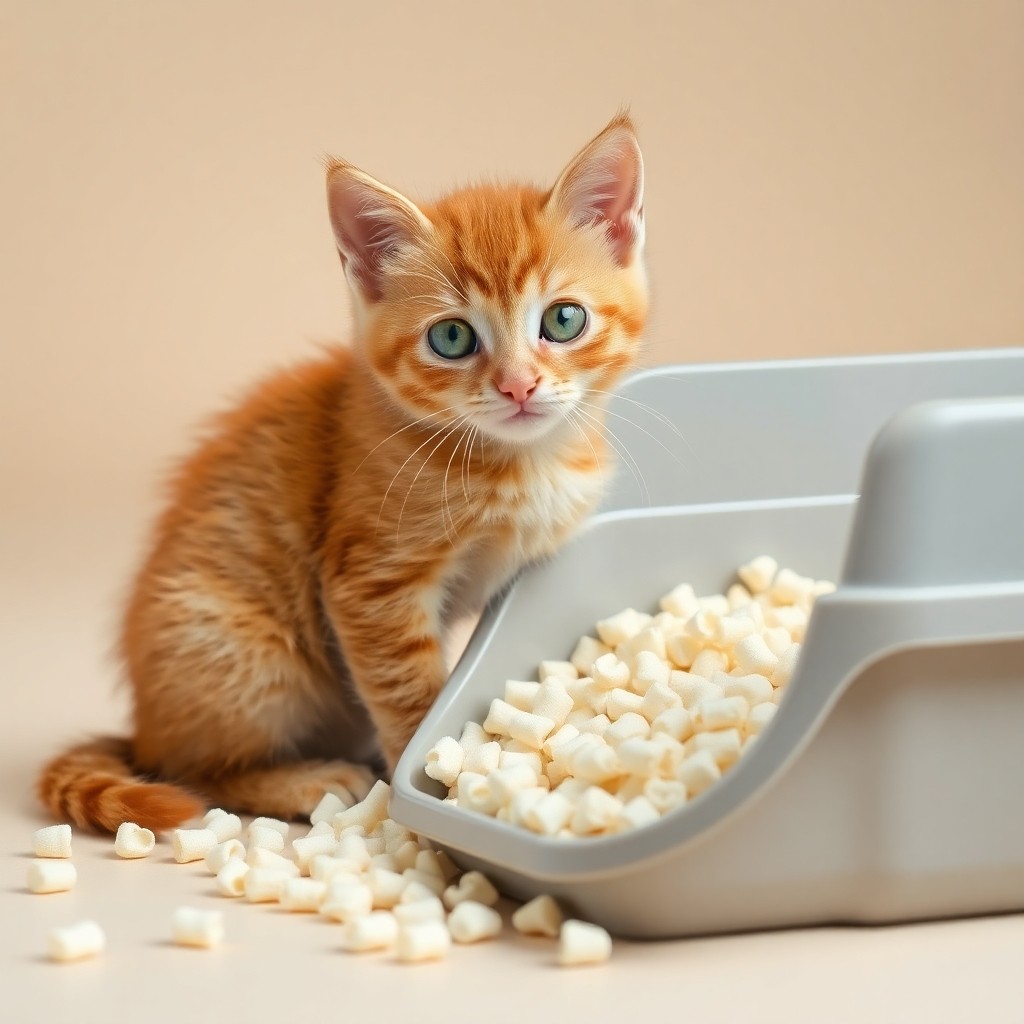
Kittens explore the world entirely through their paws and mouths, which turns the simple sandbox in the corner into a surprisingly high-stakes environment. While adult cats easily handle standard clumping clay, curious babies are prone to tasting or inhaling whatever is beneath them, turning everyday litter into a potential hazard for blocked intestines or irritated lungs. Because a tiny cat’s developing respiratory and digestive systems need gentle care, veterinarians advise putting safety, natural digestibility, and low dust levels far above convenience and odor control during those crucial first few months.
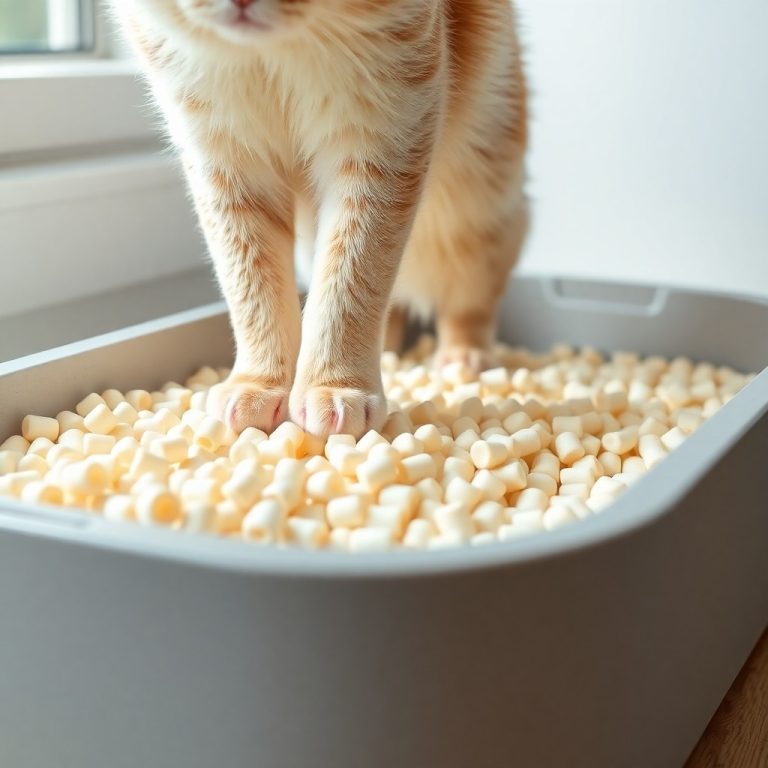
The safest cat litter for kittens under four months of age is a non-clumping, fragrance-free paper pellet or natural pine pellet litter. These materials are highly digestible in small quantities, do not swell inside the gastrointestinal tract if accidentally ingested, and produce virtually zero dust, protecting sensitive, developing respiratory systems.
Why Standard Litter is Dangerous for Young Kittens
The primary hazard of standard cat litter lies in its ability to clump. Traditional clumping litters utilize sodium bentonite clay, a highly absorbent mineral that expands up to fifteen times its original volume when exposed to moisture. If a young kitten ingests these clay particles while grooming their paws or testing objects out of curiosity, the clay can collect in the stomach or intestines. Once inside, it absorbs natural bodily fluids, swells, and creates a cement-like physical obstruction that often requires emergency surgery to resolve.
Additionally, kittens have delicate, developing immune systems and lungs. Fine clay dust can irritate their nasal passages and lungs, triggering chronic sneezing or early-onset respiratory issues. Kittens also have highly sensitive skin; perfume additives and chemical deodorizers found in standard litters can trigger allergic dermatitis or cause the kitten to avoid the litter box altogether.
Kitten-Safe Litter Types Compared
To help you weigh your options, the table below compares the most common litter types suitable for kittens under four months of age based on safety, dust levels, and everyday usability.
| Litter Material | Safety Rating | Dust Level | Odor Control | Best For |
|---|---|---|---|---|
| Paper Pellets | Excellent | Virtually Zero | Moderate | Post-surgical use & very young kittens (under 8 weeks) |
| Wood / Pine Pellets | Excellent | Low | High (Natural) | Eco-conscious owners seeking natural odor control |
| Non-Clumping Clay | Moderate | Moderate to High | High | Budget-friendly transition option for older kittens |
| Tofu / Corn Granules | Good | Low | High | Easy cleanup and low-tracking preference |
A Deep Dive into Kitten-Safe Materials
Paper Pellets
Made from recycled newspapers, paper pellet litter is widely regarded by veterinary professionals as the gold standard for kittens and cats recovering from surgeries. Because the pellets are large and heavy, they do not cling to paws, reducing tracking around the home. If a kitten swallows a pellet, the paper simply breaks down naturally in the digestive tract without swelling.
- Pros: Zero dust, highly digestible, completely non-toxic, and comfortable for sensitive paws.
- Cons: Poor liquid absorption compared to clay, requiring more frequent complete cleanings. It does not neutralize odors as effectively as alternative materials.
Wood and Pine Pellets
Pine pellet litters are compressed sawdust cylinders that dissolve into fine wood shavings when exposed to moisture. The natural phenols in pine provide excellent odor control without the need for artificial perfumes. It is an environmentally friendly option that is safe for kittens, provided the wood is heat-treated to remove aromatic oils that can irritate feline livers.
- Pros: Exceptional natural scent control, highly biodegradable, and cost-effective.
- Cons: Requires a sifting litter box to manage the sawdust buildup effectively. Some kittens dislike the firm texture under their paws.
Non-Clumping Clay
This is the traditional option that many shelters utilize. Unlike clumping clay, non-clumping clay absorbs moisture without binding together into hard lumps. This eliminates the risk of swelling inside the stomach, though it can still cause mild digestive upset if consumed in large quantities.
- Pros: Affordable, widely available, and highly absorbent of liquids.
- Cons: Can be quite dusty. It requires complete replacement of the entire litter box content at least once a week as liquid pools at the bottom.
Tofu and Grass-Based Litters
Tofu litter, derived from food-grade soy pulp, is biodegradable, low-dust, and flushable in some areas. Because it consists of natural organic materials, it is safe if a kitten accidentally nibbles a piece. It offers a soft texture that appeals to younger cats.
- Pros: Minimal tracking, gentle on paws, and natural composition.
- Cons: Organic materials can grow mold if left damp for too long. They also tend to carry a higher price tag.
Essential Features to Look For
When shopping for your kitten’s first litter, look beyond the marketing claims on the packaging. Keep these three core features in mind:
- Fragrance-Free: Always choose unscented options. A kitten’s sense of smell is far more acute than a human’s. Strong perfumes can overwhelm their senses, causing respiratory distress or litter box avoidance.
- Low Tracking: Heavy pellets are less likely to stick to a kitten’s furry paws or belly. This prevents them from licking litter off their bodies during self-grooming.
- Soft Textures: Kittens have delicate paw pads. Avoid sharp, silica-based crystal litters, which can cause physical pain and micro-cuts on tender paws.
How and When to Transition to Standard Litter
Most veterinarians agree that kittens can safely transition to standard clumping clay litter or alternative clumping materials once they reach four months of age. By this stage, their curious teething phase has passed, and they are highly unlikely to eat the litter. Their digestive tracts are also more robust, and they have developed better grooming habits.
To transition successfully, introduce the new clumping litter gradually over a period of seven to ten days. Start by mixing a small handful of the new clumping litter into the non-clumping kitten litter. Every two days, slightly increase the ratio of clumping litter while reducing the old litter. This slow change protects your kitten from stress and prevents sudden litter box aversion.
Frequently Asked Questions
What should I do if my kitten eats cat litter?
If you notice your kitten consuming litter, immediately remove them from the box and swap the litter for a paper pellet alternative. Offer them fresh water or wet food to help flush their system. If the litter consumed was a clumping clay type, monitor them closely for signs of lethargy, vomiting, loss of appetite, or straining to defecate, and contact your veterinarian immediately.
How often should I clean a non-clumping litter box?
Because non-clumping litter does not form scoopable solid balls from urine, the liquid sinks to the bottom. Scoop solid waste daily. You should empty, sanitize, and completely refill the entire litter box at least once a week to prevent ammonia buildup and bacteria growth.
Can I use crystal litter for my kitten?
It is best to avoid silica gel crystal litter for kittens under four months. The sharp edges of the crystals can hurt soft paws, and the intense moisture-absorbing properties of silica present a severe dehydration and obstruction risk if swallowed.