
Your cat walks up to a full bowl, sniffs the kibble, and backs away with a frustrated meow. Or perhaps they scoop food onto the kitchen floor with a paw before eating a single bite. What looks like picky eating is frequently physical discomfort caused by standard pet dishes.
Whisker fatigue happens when a cat’s sensitive whisker receptors suffer continuous tactile overstimulation against the steep walls of narrow bowls. Replacing deep dishes with wide, shallow bowls or flat elevated plates eliminates this pressure, allowing cats to eat peacefully.
Understanding Whisker Sensitivity and Overstimulation
A cat’s whiskers (vibrissae) are not ordinary hairs. They are deeply rooted tactile sensors packed with nerve endings that detect micro-vibrations, airflow, and spatial boundaries. These natural radar antennae help cats move in total darkness and gauge tight spaces.
When a cat dips its snout into a narrow, deep bowl, its whiskers bend backward repeatedly against the high sides. Every touch triggers a flood of nerve impulses directly to the brain. During a five-minute meal, hundreds of repeated impacts create intense sensory discomfort, turning dinner into a stressful ordeal.
Recognizing the Symptoms of Whisker Stress
Cats rarely stop eating entirely when experiencing whisker stress, but their eating mechanics change noticeably. Watch for these red flags at mealtime:
- Paw-Scooping Food: Dragging kibble or wet food out of the bowl onto the floor to eat off a flat surface.
- Leaving Food Around the Edges: Eating only the center pile where whiskers do not touch the walls, leaving a ring of food untouched.
- Mealtime Hesitation and Pacing: Pacing near the dish, vocalizing before eating, or repeatedly approaching and retreating.
- Aggressive Messiness: Tipping the entire dish over to spread food across the floor.
- Guarded Posture: Standing tense with ears turned back while trying to minimize whisker contact.
Choosing the Best Bowl to Prevent Whisker Fatigue
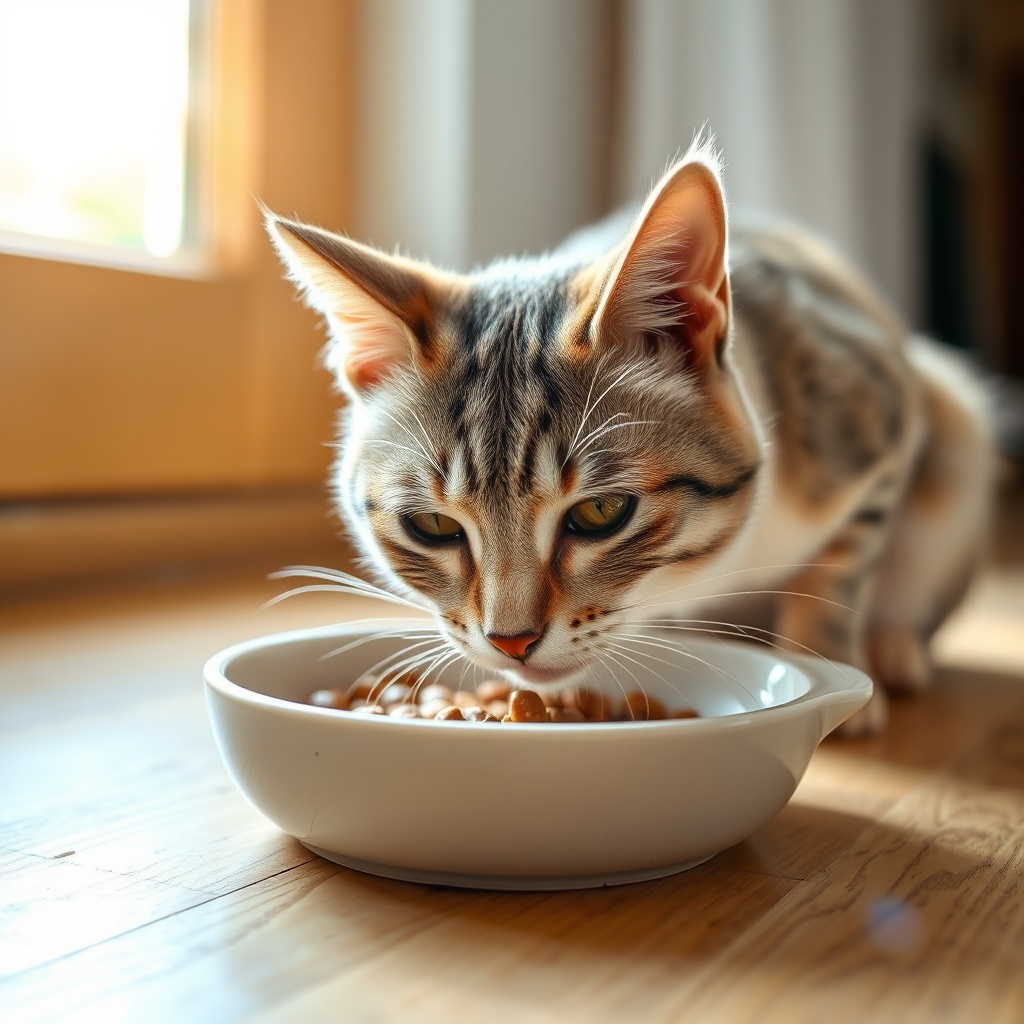
Resolving whisker overload is simple: replace narrow pet dishes with wide, shallow options designed around natural feline anatomy.
1. Dimensions and Shape
Look for dishes at least six inches wide with sides lower than one inch. The interior bottom should be slightly curved or completely flat so food does not collect in sharp corners where whiskers get trapped.
2. Material Selection
Select non-porous materials that maintain hygiene and do not trap bacteria:
- Stainless Steel: Durable, dishwasher-safe, and non-reactive. Excellent for both food and water.
- Glazed Ceramic or Porcelain: Heavy enough to prevent sliding and easy to clean, provided the glaze is lead-free and uncracked.
- Tempered Glass: Non-porous and smooth, ideal for sensitive skin.
- Avoid Plastic: Plastic scratches easily, harboring chin-acne-causing bacteria and absorbing odors that repel cats.
3. Depth and Elevation
Combining a shallow dish design with slight elevation (two to four inches off the ground) reduces neck strain alongside whisker pressure, promoting better posture and smoother digestion.
Comparing Mealtime Dishes for Cats
| Feature | Standard Deep Bowl | Wide Shallow Dish |
|---|---|---|
| Whisker Clearance | Poor (Constant friction) | Excellent (Zero contact) |
| Eating Behavior | Messy, pawing food out | Calm, direct feeding |
| Food Left Behind | High (Edges untouched) | Minimal (Easy access) |
| Sensory Stress | High tactile overload | Relaxed sensory state |
Frequently Asked Questions
Does whisker fatigue affect water bowls too?
Yes. Cats often splash water out of deep cups with their paws or hesitate to drink because their whiskers press against the rim. Switching to a broad water fountain or shallow wide water tray encourages better hydration.
How can I test if my cat has whisker fatigue at home?
Offer your cat’s usual meal on a completely flat dinner plate or cutting board for three days. If paw-scooping, pacing, or messy eating stops instantly, your cat was experiencing whisker fatigue from their old dish.
Is whisker fatigue a recognized medical diagnosis?
Whisker fatigue is a behavioral and sensory stress reaction rather than a systemic disease. Veterinary behaviorists recognize that tactile overstimulation impacts appetite and stress levels, making dish design a practical part of feline home care.