
A cat hunches low to the floor, neck stretched straight out, drawing in sharp, shallow breaths. Many owners mistake this dry, hacking cough for an unproductive hairball episode, but it is often the first visible sign of feline asthma. This chronic inflammatory lung disease affects up to five percent of cats, causing the airways to spasm, swell, and fill with mucus.
Feline asthma is managed by eliminating airborne household triggers—such as dusty litter, aerosol sprays, and cigarette smoke—while administering veterinarian-prescribed inhaled corticosteroids and bronchodilators to reduce airway inflammation.
Recognizing Feline Asthma Symptoms
Feline asthma is an allergic respiratory condition. When a cat inhales an allergen, their immune system overreacts, causing the smooth muscles surrounding the airways to constrict. Recognizing the difference between a mild flare-up and a life-threatening respiratory crisis can save a cat’s life.
Veterinary guidelines from the American Animal Hospital Association (AAHA) emphasize monitoring breathing patterns at rest. A healthy cat should take between 15 and 30 breaths per minute while sleeping or resting quietly. Rates consistently above 30 to 40 breaths per minute warrant professional evaluation.
| Severity Level | Clinical Signs | Required Action |
|---|---|---|
| Mild to Moderate | Occasional coughing, wheezing, slight abdominal effort while breathing, throat clearing sounds. | Schedule a veterinary consult for diagnostic imaging and a baseline management plan. |
| Severe / Emergency | Open-mouth breathing, blue or pale gums, panting, flared nostrils, chest pumping heavily. | Immediate emergency veterinary intervention. Minimize stress during transport. |
Common Household Asthma Triggers
The feline respiratory tract is highly sensitive. Everyday household items that humans barely notice can trigger a severe asthma attack in a sensitive cat. Reducing exposure to these triggers is the first step in environmental management.
1. Dusty Clay Litter
Traditional clay cat litter releases fine crystalline silica dust when poured or scooped. This dust enters the cat\’s respiratory tract, causing immediate mechanical irritation and airway constriction. Switching to low-dust, unscented alternative litters made from paper, pine, or grass can dramatically reduce coughing episodes.
2. Aerosol Sprays and Perfumes
Air fresheners, body sprays, hairsprays, and cleaning chemicals release volatile organic compounds (VOCs) into the air. These chemical particles hang in the air at the exact height where cats live and breathe, irritating their sensitive lung linings.
3. Tobacco and Wood Smoke
Secondhand smoke is highly toxic to pets. Tobacco smoke, incense, and even wood-burning fireplaces release microscopic soot particles that lodge deep within a cat\’s lungs, causing permanent airway scarring over time.
4. Mold, Mildew, and Dust Mites
Damp basements, dusty carpets, and old bedding harbor biological allergens. Regular vacuuming with a HEPA-filter vacuum and maintaining indoor humidity levels below 50 percent can help control these invisible microscopic triggers.
How Veterinarians Diagnose Feline Asthma
There is no single, definitive test for feline asthma. Diagnosing the condition requires ruling out other respiratory diseases, such as heartworm, lungworms, chronic bronchitis, and feline infectious peritonitis (FIP).
A typical veterinary workup includes chest radiographs (X-rays) to look for a characteristic ‘doughnut’ or ‘tram-line’ appearance in the lungs, which indicates thickened bronchial walls. In some cases, a veterinarian may perform a bronchoalveolar lavage (BAL) to collect fluid samples from the lungs for cellular analysis, helping to confirm the presence of eosinophils—white blood cells associated with allergic reactions.
Long-Term Medical Management
Environmental control alone is rarely enough for moderate to severe cases. Medical management relies on two primary classes of medication: anti-inflammatories and bronchodilators.
- Corticosteroids: These medications reduce inflammation in the airways. While oral steroids are sometimes used for short-term control, inhaled corticosteroids (such as fluticasone) are preferred for long-term therapy because they deliver medicine directly to the lungs, minimizing systemic side effects.
- Bronchodilators: Medications like albuterol relax the muscles around the airways during an active asthma attack. These are rescue medications and should not be used as the sole treatment, as they do not address the underlying inflammation.
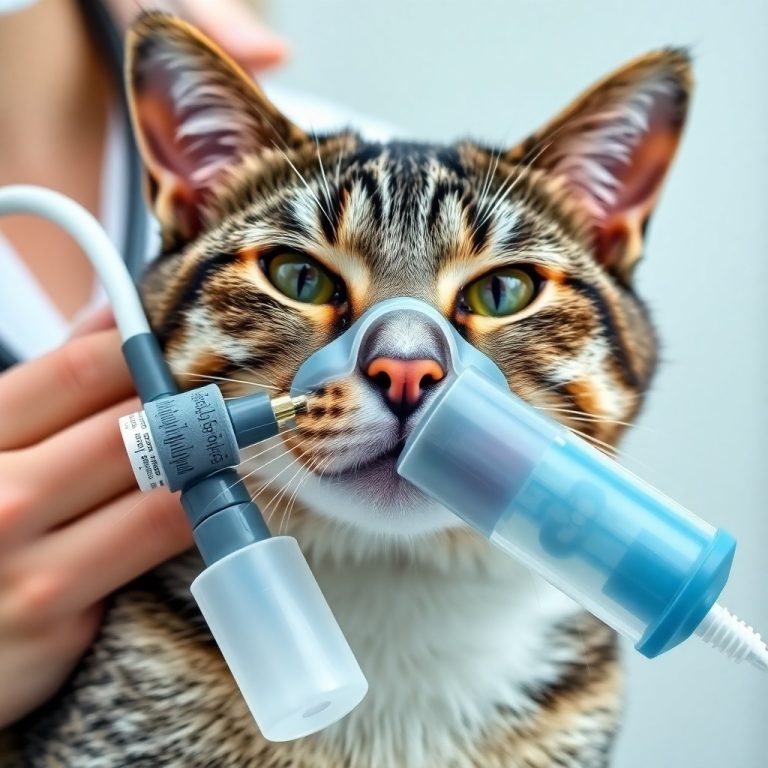
Administering inhaled medications to a cat is highly effective when using a specially designed feline aerosol chamber (spacer) paired with a pediatric face mask. With patient, positive-reinforcement training using high-value treats, most cats learn to tolerate the mask for the required 10 to 15 seconds per dose.
Frequently Asked Questions
Can a cat die from an asthma attack?
Yes. A severe asthma attack can cause complete airway closure, leading to oxygen deprivation, respiratory failure, and death if not treated immediately with emergency oxygen and fast-acting bronchodilators.
Is feline asthma the same as a hairball?
No. While the physical posture (coughing with an extended neck) looks similar, a cat passing a hairball will eventually swallow or retch up a physical mass of fur. An asthmatic cough produces no hairball and is often accompanied by wheezing or rapid breathing afterward.
Can I use a human asthma inhaler on my cat?
You must never use human medications without direct veterinary supervision. While cats use the same active ingredients (like albuterol or fluticasone), the dosage, administration technique, and delivery systems must be calibrated specifically for feline physiology to avoid life-threatening toxicity.