
Watching your cat struggle through a sudden coughing fit or heavy-chested wheeze is enough to test any owner’s nerves. Feline asthma and chronic bronchitis are daunting diagnoses, but managing them doesn’t have to mean subjecting your pet to the heavy side effects of traditional oral steroids. Instead, modern veterinary care offers a way to deliver relief directly to where it’s needed most, keeping your cat breathing comfortably without the systemic risks.
Targeted corticosteroid delivery using a metered-dose inhaler (MDI) with an AeroKat chamber is a veterinary-approved method of delivering aerosolized anti-inflammatory medication directly into a cat’s lower airways. This localized therapy treats feline asthma and chronic bronchitis at the source, dramatically reducing the systemic side effects typically associated with oral steroid tablets.
Why Targeted Inhaled Steroids Outperform Oral Medications
Historically, veterinarians relied heavily on oral prednisolone to manage feline airway inflammation. While highly effective at reducing swelling, oral corticosteroids circulate through the cat’s entire bloodstream. Over time, this systemic exposure significantly increases the risk of serious side effects, including weight gain, muscle wasting, fluid retention, iatrogenic Cushing’s disease, and the development of feline diabetes mellitus.
For owners, this means that while oral steroids might quiet your cat’s cough, they simultaneously place a heavy metabolic burden on other vital organs. Inhaled therapy bypasses this systemic route entirely. By utilizing a specialized aerosol chamber, micro-particles of the medication travel directly into the bronchioles, reducing local inflammation with minimal systemic absorption.
The Mechanics of the AeroKat Valved Holding Chamber
Cats cannot use human metered-dose inhalers (MDIs) directly. When a human presses an inhaler, they coordinate a deep breath with the actuation of the device. Cats obviously cannot cooperate with this technique. Furthermore, the high velocity of the aerosol spray directly from an MDI would startle the cat and cause the medication to pool in the back of the throat rather than reaching the lungs.
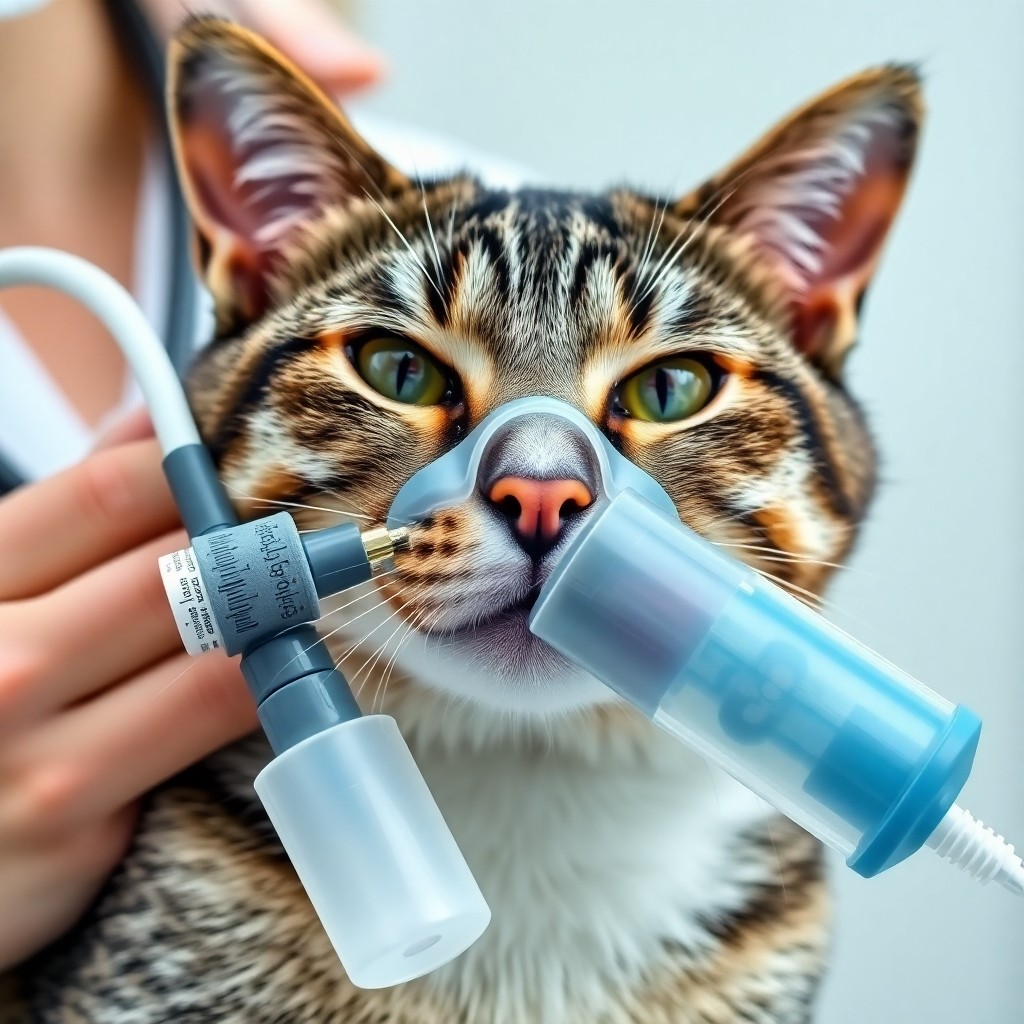
The AeroKat chamber solves this clinical challenge by acting as a valved holding chamber. When the inhaler is depressed, the aerosolized medication is suspended inside a lightweight, anti-static plastic cylinder. The cat then breathes normally through a soft, non-stick silicone face mask. A highly sensitive, low-resistance valve opens only when the cat inhales, allowing the medication to enter the airways while blocking exhaled breath from entering the chamber. The built-in Flow-Vu visual indicator moves with the cat’s breathing, allowing owners to easily count the necessary number of inhalations.
Standard Veterinary Inhalation Protocols
To ensure safety and efficacy, inhaled therapy must be tailored to the severity of your cat’s respiratory disease. According to consensus guidelines from the American College of Veterinary Internal Medicine (ACVIM), specific dosing ranges apply based on the chosen corticosteroid. The table below outlines typical veterinary protocols for feline airway management:
| Medication | Standard Strength | Starting Frequency | Clinical Indication |
|---|---|---|---|
| Fluticasone Propionate (Inhaled) | 110 mcg or 220 mcg | 1 puff every 12 hours | Long-term maintenance for feline asthma |
| Albuterol (Salbutamol) | 90 mcg | 1 puff as needed (PRN) | Emergency bronchodilation during acute attacks |
| Prednisolone (Oral) | 1 – 2 mg/kg/day | Once daily (tapering) | Short-term bridge therapy during transition to inhaler |
Because inhaled corticosteroids can take up to 10 to 14 days to reach peak therapeutic efficacy in the pulmonary tissue, veterinarians often prescribe a temporary course of oral prednisolone as a transition bridge (ACVIM). This ensures the cat’s airways remain open while the inhaled fluticasone builds up localized therapeutic levels.
Step-by-Step AeroKat Administration Protocol
Using the AeroKat chamber effectively requires patience and correct technique. Follow these clinical steps to ensure maximum medication delivery:
- Prepare the Inhaler: Remove the cap from the metered-dose inhaler and shake it vigorously for 5 to 10 seconds. This ensures the propellant and the active medication are properly mixed.
- Insert the MDI: Insert the nozzle of the inhaler into the soft rubber backpiece of the AeroKat chamber. Make sure it fits snugly to prevent medication leakage.
- Position the Mask: Gently place the silicone mask over your cat’s nose and mouth. Ensure a complete, airtight seal. If air leaks around the edges of the mask, the cat will not inhale the suspended medication.
- Depress the Inhaler: Press down on the MDI canister once to release a single puff of medication into the chamber. Do this while the mask is already resting securely on the cat’s face to prevent them from being startled by the sound.
- Monitor the Flow-Vu Indicator: Watch the bright green Flow-Vu flap inside the chamber. Every time your cat inhales, the flap will flutter or bend toward the cat. Count 5 to 10 complete breaths to guarantee the full dose has been successfully cleared from the cylinder.
- Post-Dose Wipe: Gently wipe your cat’s muzzle with a damp cloth after administration. This simple step removes any residual steroid dust from their fur, preventing them from ingesting the drug during grooming and reducing the risk of localized skin irritation.
Acclimating a Hesitant Cat to Inhaler Therapy
Forcing a mask onto an anxious cat can trigger stress-induced bronchoconstriction, defeating the purpose of the treatment. To avoid this, a slow desensitization protocol is highly recommended by feline behavior experts (ISFM).
Begin by leaving the AeroKat chamber on the floor near your cat’s favorite resting spot, allowing them to investigate it voluntarily. Pair the presence of the device with high-value treats or wet food. Next, hold only the silicone mask up to your cat’s face without the chamber attached, rewarding them immediately if they sniff or touch it. Gradually transition to holding the assembled chamber and mask to their face for just one or two seconds without releasing any medication. Once they are entirely comfortable with the physical sensation of the mask, actuate the inhaler away from them first to get them used to the popping sound, before combining all steps for their first real dose.
Potential Side Effects and Veterinary Monitoring
While targeted corticosteroid delivery is incredibly safe compared to systemic options, minor localized side effects can occur. These typically manifest as mild chin acne, localized hair loss around the muzzle, or very rarely, oral thrush (candidiasis) due to localized immune suppression in the oral cavity. Regularly cleaning the mask with warm, soapy water and wiping your cat’s face after each session mitigates these risks.
Routine veterinary monitoring is essential to track your cat’s response to therapy. Your veterinarian may recommend periodic chest radiographs and airway evaluations to confirm that the inflammation is well-controlled and to determine if the steroid dosage can be safely adjusted (AAHA).
References
- American College of Veterinary Internal Medicine (ACVIM) Consensus Statement on Feline Airway Disease.
- International Society of Feline Medicine (ISFM) Environmental Needs and Feline-Friendly Handling Guidelines.
- American Animal Hospital Association (AAHA) Veterinary Therapeutics and Chronic Disease Management Guidelines.
- Journal of Feline Medicine and Surgery: Efficacy of inhaled fluticasone propionate in asthmatic cats.