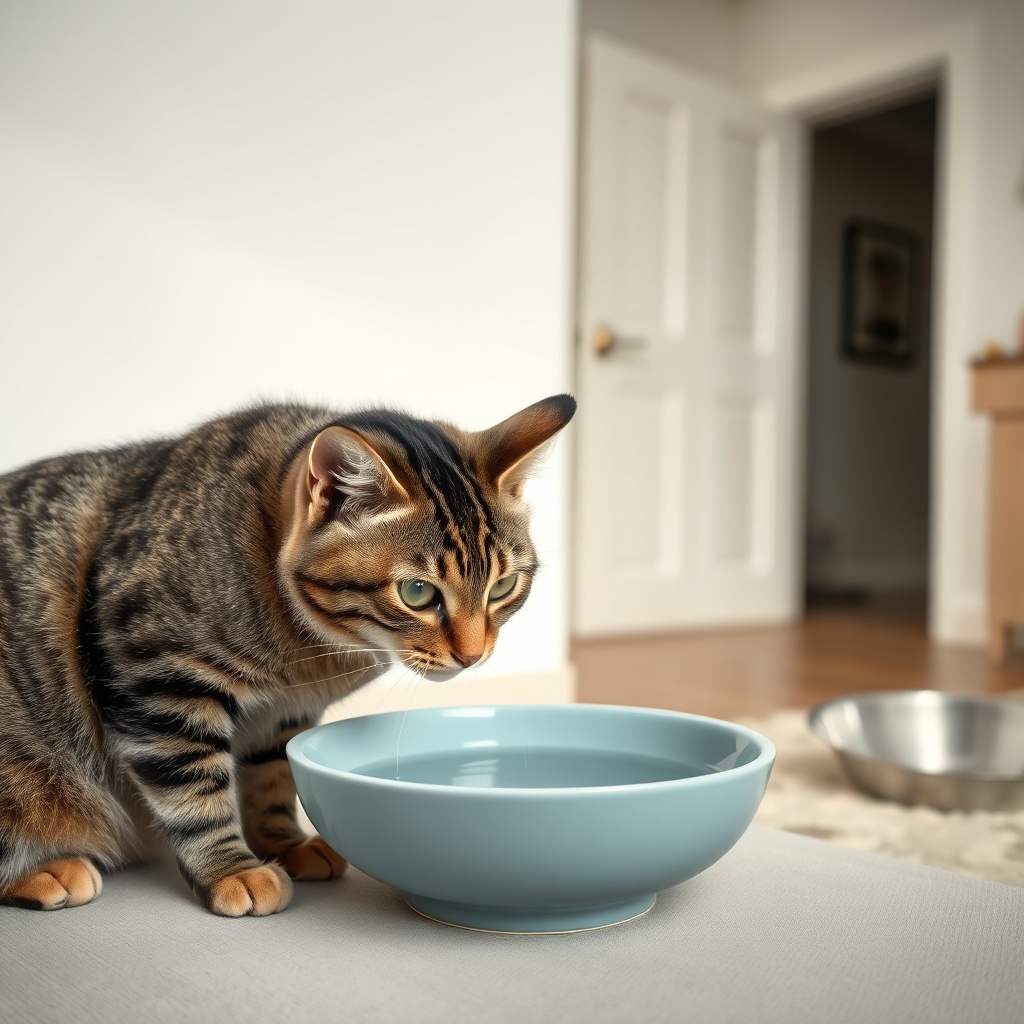
Placing your cat’s water bowl right next to their food dish might seem like the neatest way to set up their feeding station, but it actually goes against their deepest natural instincts. In the wild, cats prefer to keep their drinking sources away from their kills to avoid water contamination. Replicating this setup at home is often the hidden reason behind chronic low-level dehydration in domestic felines.
Yes, you should place your cat’s water bowl away from their food bowl. In the wild, felines avoid water sources near their fresh prey to prevent bacterial contamination, and keeping them together in your home can trigger this instinctual avoidance, causing your cat to drink less water than they need.
The Evolutionary Reason: Why Cats Prefer Separate Bowls
To understand your cat’s drinking preferences, it helps to look at their wild ancestors, the African wildcat. As obligate carnivores, wild cats hunt and consume prey. In nature, a carcass next to a water source usually means the water is contaminated with blood, tissue, and harmful bacteria. Consequently, wild cats evolved a strong instinctual drive to seek water far away from their hunting and feeding grounds.
Even though modern domestic cats have been living with humans for thousands of years, these survival instincts remain highly active. When kibble or wet food sits right next to a water bowl, your cat’s brain flags that water source as potentially unsafe. The strong scent of meat from the food bowl can overpower the clean smell of the water, triggering their natural defense mechanism to avoid drinking.
How Close Placement Affects Your Cat’s Health and Behavior
When forced to use a joined food and water station, many cats choose to drink the bare minimum required for survival, living in a state of mild, chronic dehydration. Because cats naturally have a low thirst drive, any obstacle to drinking can have serious health consequences over time.
Low water intake is a primary contributor to feline lower urinary tract diseases (FLUTD), including urinary tract infections, painful bladder stones, and life-threatening urethral blockages. Furthermore, long-term dehydration places significant strain on a cat’s kidneys, accelerating the onset of chronic kidney disease (CKD), which is one of the leading causes of illness in aging cats.
Physical contamination also plays a role. When cats eat, small pieces of kibble, wet food residue, or saliva can easily splash into a neighboring water bowl. Cats are incredibly fastidious animals with highly sensitive noses. Once the water smells like decaying food or has an oily film on the surface, your cat will likely reject it entirely and seek out alternative water sources, such as leaking faucets, puddles, or even the toilet bowl.
Step-by-Step Action Plan: Optimizing Your Cat’s Hydration
Creating a hydration-friendly home environment is simple once you understand feline behavioral patterns. Follow this step-by-step plan to optimize your cat’s water setup:
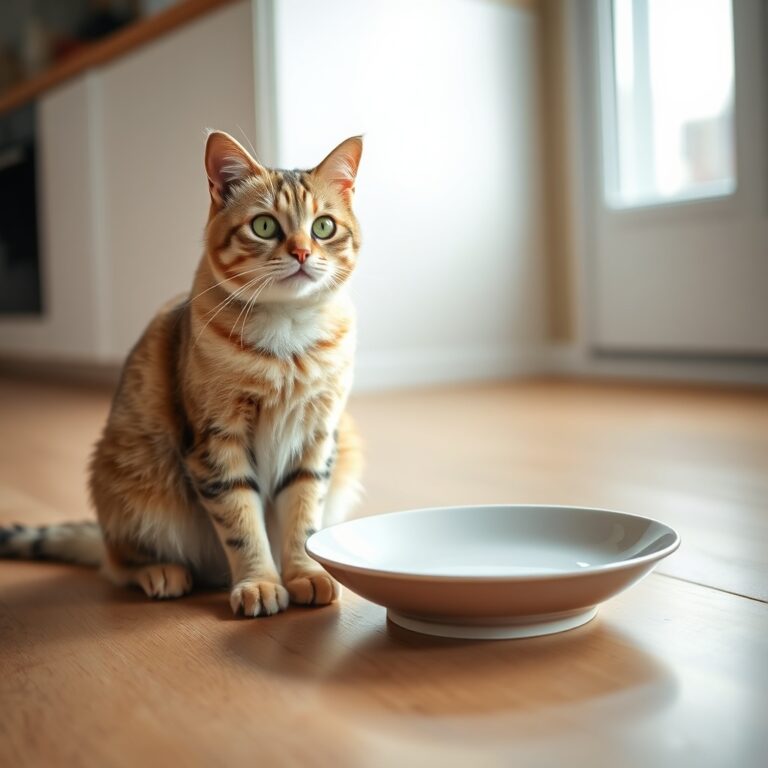
- Step 1: Separate the stations. Move the water bowl at least three to five feet away from the food bowl. If your home layout allows, place the water bowl in an entirely different room or on a different level of the house.
- Step 2: Provide multiple stations. Cats like options. Place two or three water bowls in different quiet locations throughout your home. This prevents other pets from guarding the water and ensures a drink is always within easy reach.
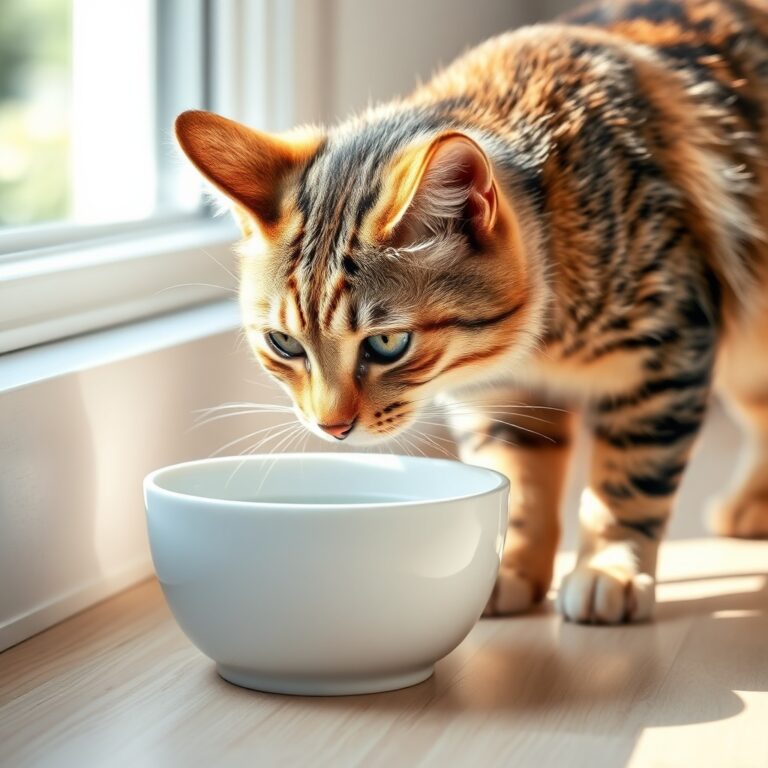
- Step 3: Choose the right bowls. Avoid deep, narrow bowls that cause ‘whisker fatigue’—a painful sensation that occurs when a cat’s sensitive whiskers touch the sides of a dish. Opt for wide, shallow bowls made of stainless steel, ceramic, or glass. Avoid plastic, which scratches easily and harbors bacteria.
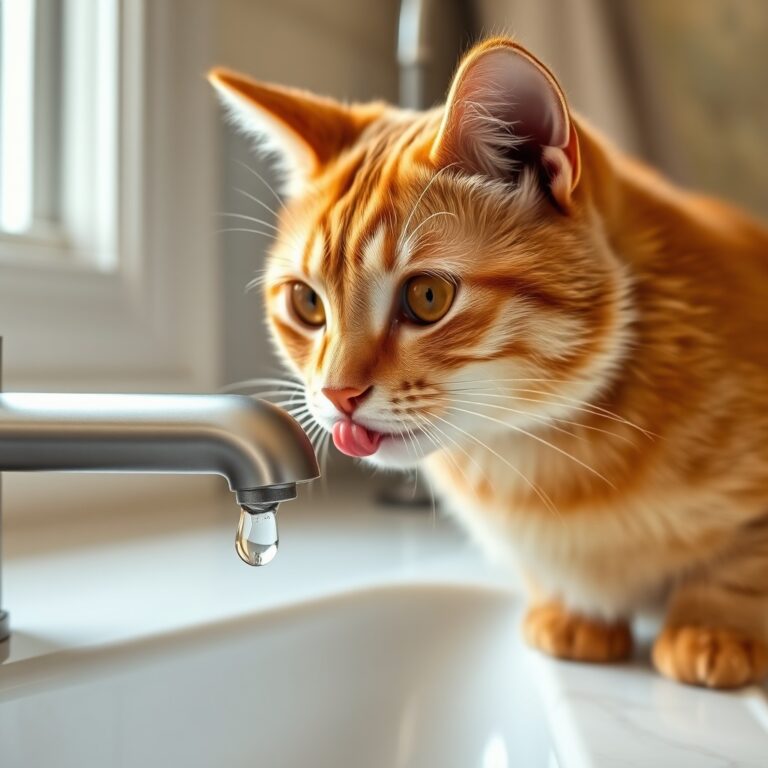
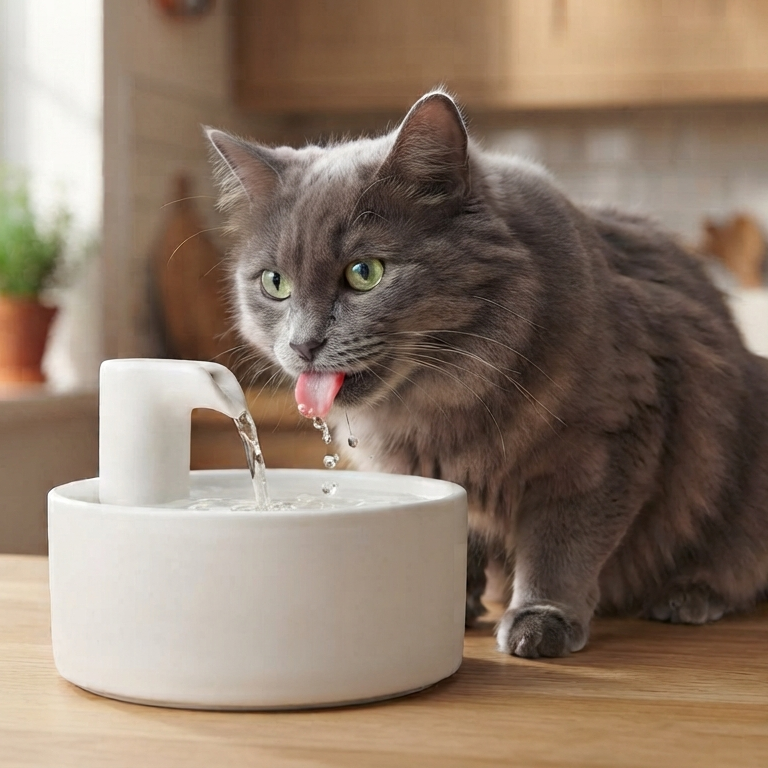
- Step 4: Keep the water moving. Cats associate running water with safety and freshness. Consider adding a pet water fountain. The continuous filtration and movement keep the water highly oxygenated, cool, and appealing.
- Step 5: Refresh daily. Wash water bowls with mild soap and hot water daily to remove biofilm, a slimy layer of bacteria that naturally builds up from your cat’s mouth.
Common Water Placement Mistakes to Avoid
When rearranging your cat’s environment, keep these critical placement mistakes in mind to ensure your pet feels completely safe and comfortable while drinking:
- Placing water near the litter box: Just as cats do not want to drink near their prey, they absolutely refuse to drink near their waste elimination areas. Keep water bowls in completely different rooms from litter boxes to prevent contamination anxiety.
- Blocking visual escape routes: In a multi-pet household, a cat feels vulnerable while drinking. Avoid placing water bowls in tight corners where another cat or dog can corner them. Place bowls in areas where the cat has a clear line of sight and can easily escape if they feel threatened.
- Placing water near loud appliances: Setting up a water bowl next to a noisy refrigerator, washing machine, or dishwasher can startle your cat. If a loud appliance cycle begins while your cat is drinking, they may associate that water station with fear and avoid it in the future.
Frequently Asked Questions
How far away should cat water be from food?
Ideally, you should place water bowls at least three to five feet away from food dishes. Placing them in entirely different rooms is even better, as it completely separates the sensory experiences of eating and drinking.
Why does my cat splash water out of the bowl before drinking?
Cats have poor close-up vision and struggle to see the still surface of water inside a bowl. Your cat may paw at the surface or splash the water to create ripples, helping them gauge the water level before they lower their sensitive face into the dish.
Can multiple cats share a single water bowl?
While some socialized cats do not mind sharing, it is highly recommended to follow the ‘number of cats plus one’ rule for water bowls. Having multiple stations prevents resource guarding and ensures that timid cats can drink peacefully without conflict.