
Choosing a dog bed based solely on weight usually leads to flattened cushions and a cramped pup who looks less than thrilled with their nap spot. To find a size that actually works for your dog, the best approach is to measure them from nose to tail while factoring in their favorite sleeping positions.
As a general rule, your dog’s bed should be 6 to 12 inches longer and wider than their physical measurements from the nose to the base of the tail. This ensures they have ample room to stretch out completely without hanging off the edge, supporting healthy joints and deeper sleep cycles.
How to Measure Your Dog for the Perfect Bed Fit
Before browsing online listings, grab a soft measuring tape. Measuring your dog while they are relaxed is the most reliable way to prevent the hassle of return shipping. Follow these three simple steps:
- Measure the Length: Wait until your dog is standing. Measure from the tip of the nose to the base of the tail (where the tail meets the body). Do not include the full length of the tail itself, as this will result in an oversized bed.
- Measure the Width: Measure from the widest part of your dog’s shoulders to the floor. This represents the minimum width needed if your dog sleeps on their side with legs extended.
- Add the Buffer: Add 6 inches to the final number for toy and small breeds, and 8 to 12 inches for medium, large, and giant breeds. This final number is your target bed length.
Dog Bed Sizing Chart: From Toy to Giant Breeds
While physical measurements are the gold standard, this comparative sizing chart serves as an excellent starting point based on typical breed profiles and weight categories.
| Bed Size | Dimensions (Inches) | Weight Capacity | Typical Breeds |
|---|---|---|---|
| Small / Toy | 24 x 18 inches | Up to 20 lbs | Chihuahua, Pomeranian, Yorkie, Pug |
| Medium | 30 x 20 inches | 20 to 45 lbs | French Bulldog, Beagle, Cocker Spaniel |
| Large | 36 x 28 inches | 45 to 70 lbs | Border Collie, Boxer, Standard Poodle |
| Extra Large (XL) | 44 x 34 inches | 70 to 90 lbs | Golden Retriever, German Shepherd, Lab |
| Giant (XXL) | 52 x 40+ inches | Over 90 lbs | Great Dane, Mastiff, Newfoundland |
How Sleeping Style Dictates Bed Shape
Two dogs of the exact same breed and weight may require completely different beds depending on how they prefer to rest. Observe your dog’s favorite sleeping posture before finalizing your purchase.
The Curler (Donut Sleeper)
Dogs that sleep curled into a tight ball are conserving heat and protecting their vital organs. They feel safest when they can feel physical boundaries against their back.
- Best Bed Type: Round or oval bolster beds with raised edges.
- Sizing Tip: You can stick to the lower end of the buffer zone (adding only 6 inches to their length) since they compress their body while sleeping.
The Sprawler (Side or Belly Sleeper)
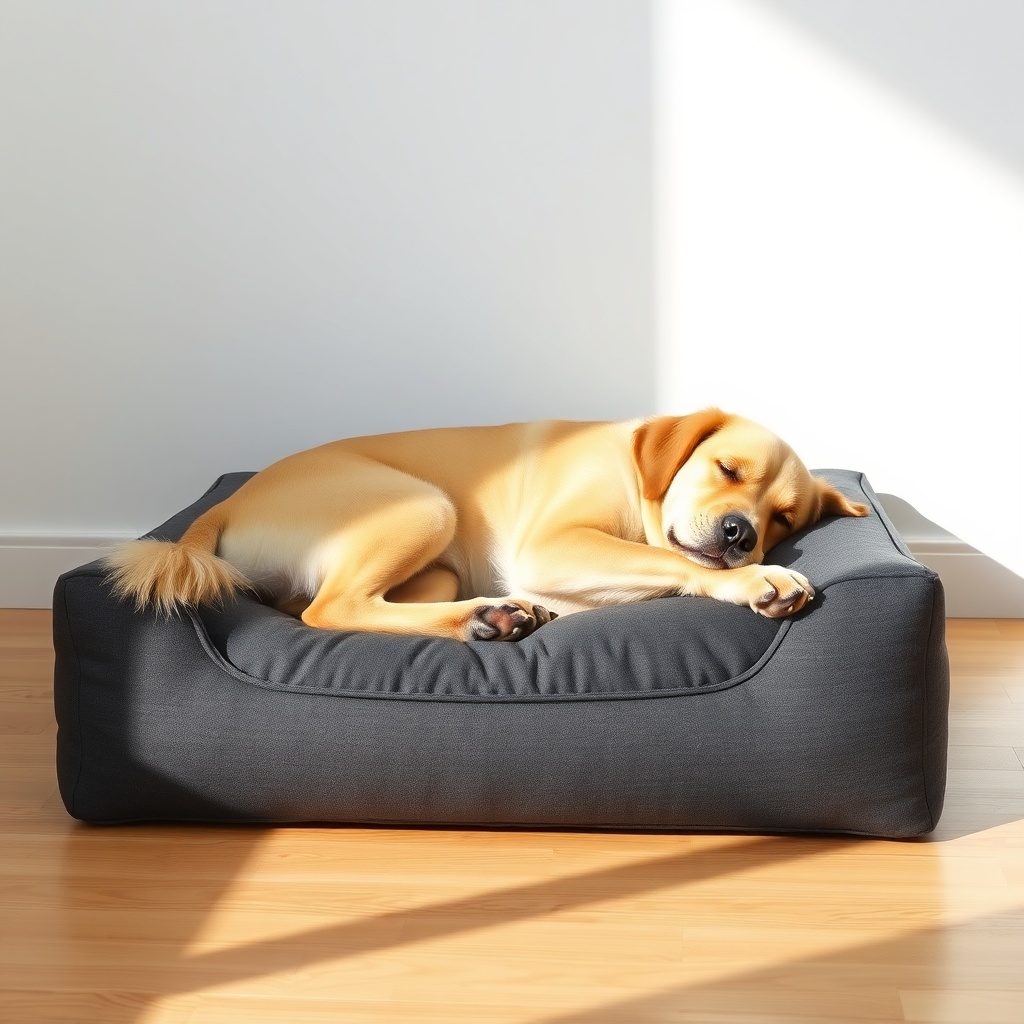
These dogs love to stretch their legs out straight, often sleeping on their sides or flat on their bellies in a ‘superman’ pose. They require maximum surface area.
- Best Bed Type: Flat mattress-style orthopedic beds or open pillow beds.
- Sizing Tip: Choose the upper end of the buffer zone (add 10 to 12 inches) to ensure their paws do not dangle onto cold floors.
The Burrower (Nester)
Burrowers like to dig, nestle under blankets, or slip under covers. They seek warmth and complete sensory isolation.
- Best Bed Type: Hooded beds, cave beds, or deep snuggle sack designs.
- Sizing Tip: Ensure the internal canopy height is tall enough for them to turn around comfortably.
Pros and Cons of Oversizing Your Dog’s Bed
If you are caught between two sizes, it is usually safer to size up. However, there are distinct advantages and disadvantages to choosing an oversized sleeping setup.
Pros:
- Provides unlimited freedom of movement and accommodates shifting sleeping positions.
- Reduces the risk of joint strain caused by limbs hanging off the edge of the bed.
- Allows room for favorite toys or extra security blankets.
Cons:
- Takes up significant floor space in smaller rooms.
- Can feel less secure or drafts can make the dog feel cold if the bed is too vast.
- Significantly harder to wash and dry due to bulky foam inserts.
Frequently Asked Questions
Should a puppy get a full-sized adult bed?
While it is tempting to buy a large bed for a growing puppy to save money, it is often counterproductive. Puppies find comfort in smaller, secure spaces, and a large bed may leave them feeling anxious. Additionally, puppies are prone to accidents, so starting with a smaller, highly washable, and inexpensive bed is ideal until they are fully house-trained.
What if my dog is exactly between two bed sizes?
Always size up. A bed that is slightly too large is easily remedied with an extra blanket, whereas a bed that is too small cannot be expanded and will likely go unused by your dog.
How do I know if my dog’s current bed is too small?
Look for physical cues: if their head, paws, or hips consistently rest on the floor rather than the cushion, or if they avoid the bed entirely in favor of the rug, the bed is likely too small or has lost its structural support.