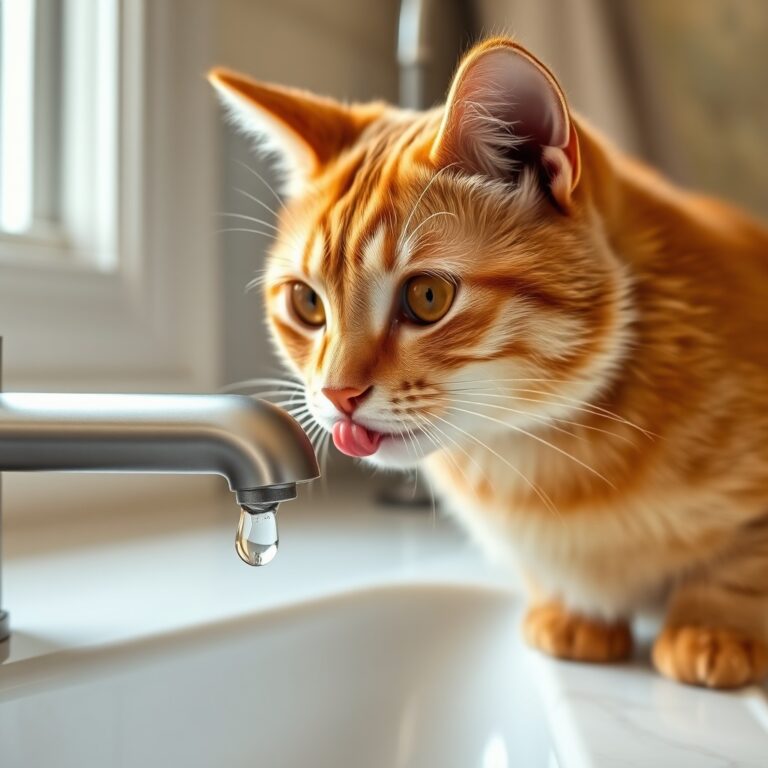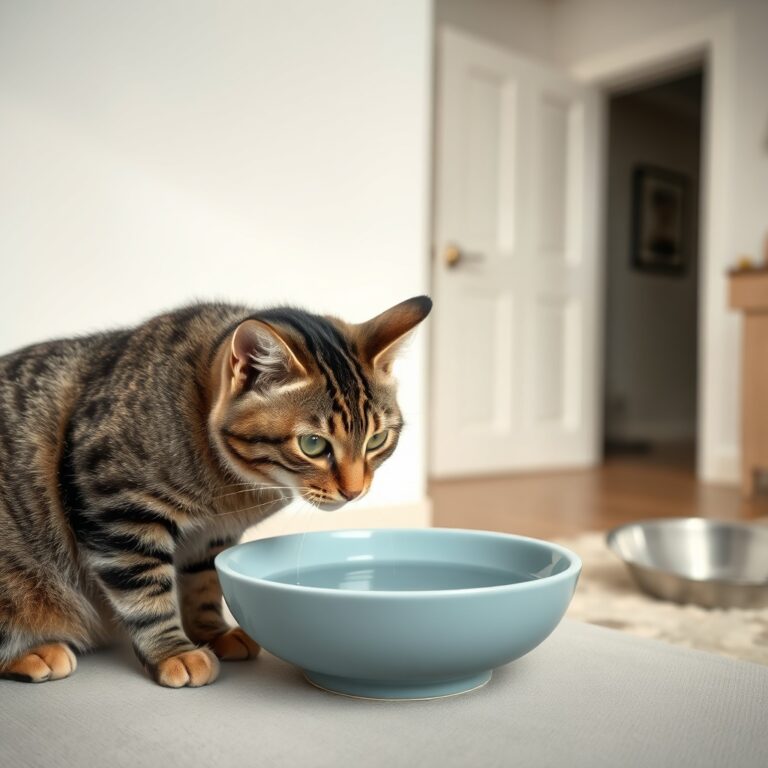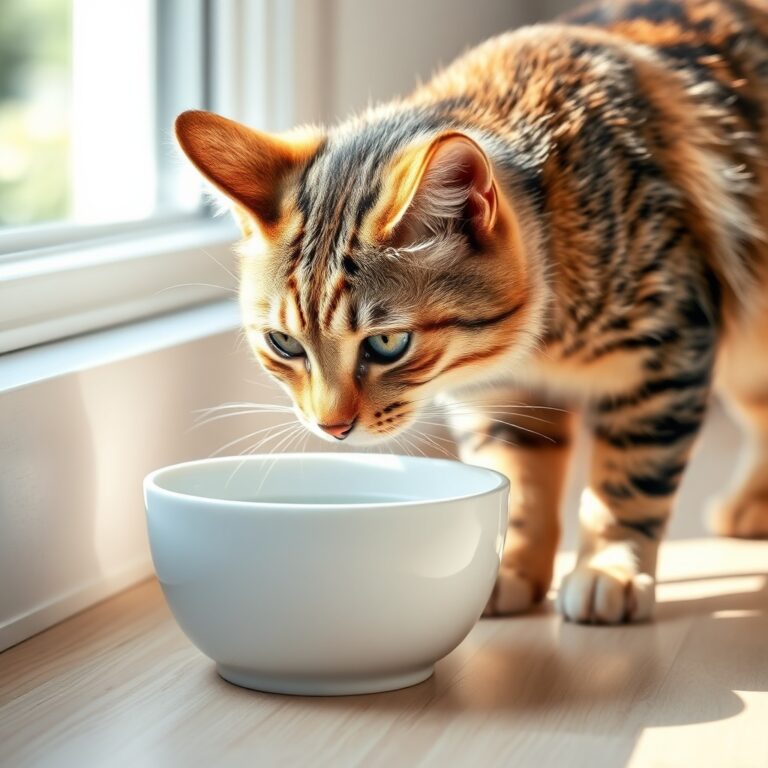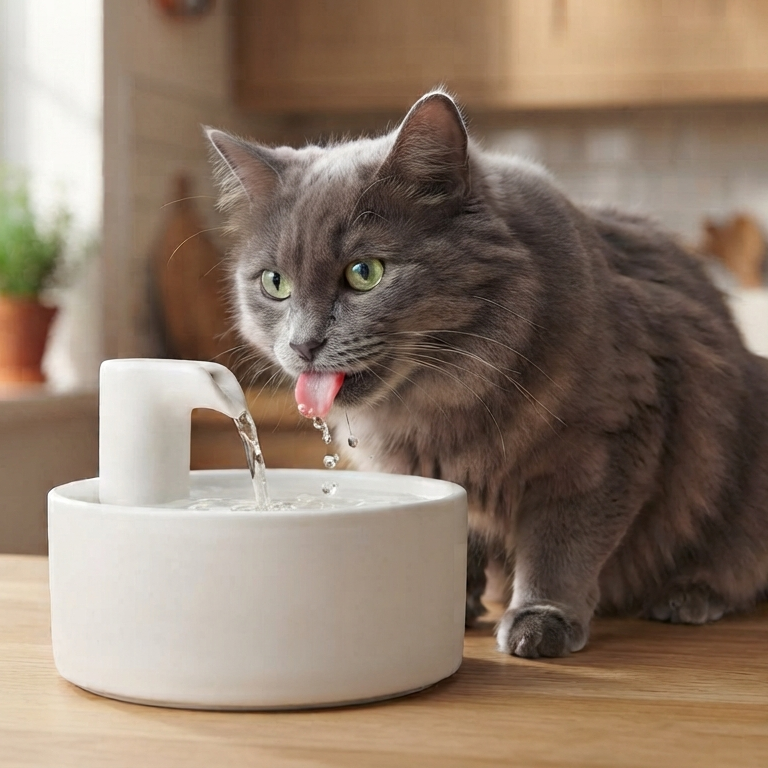

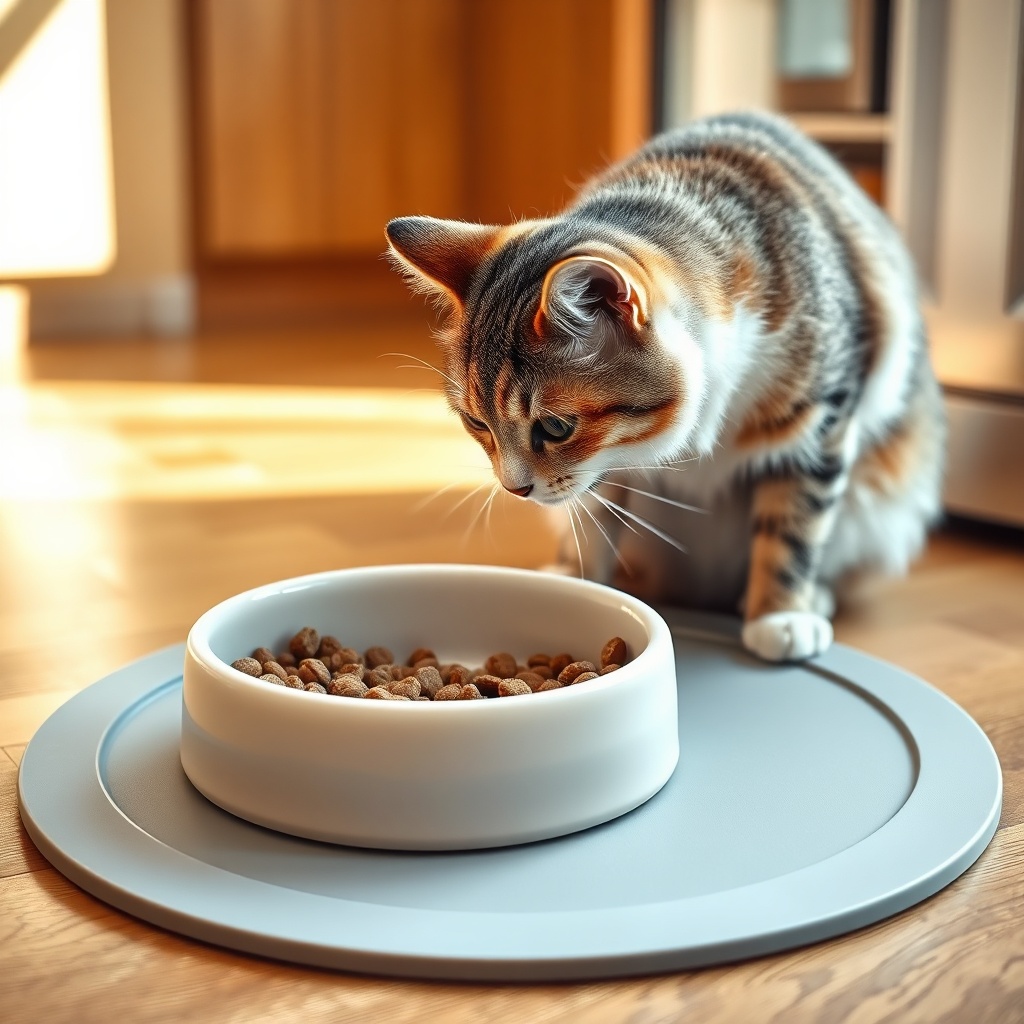
If you have ever stepped barefoot into a puddle of stray water near your cat’s food bowls or scraped dried gravy off the hardwood floor, you already know the mess a simple meal can create. Placing a feeding mat beneath your cat’s bowls solves this daily chore instantly, acting as a barrier against water damage, keeping sliding dishes in place, and stopping rogue kibble from scattering across the kitchen. It is one of the easiest upgrades you can make to keep your floors pristine and your cat’s dining area clean.
Why Do Cats Make Such a Mess When Eating?
To understand why a feeding mat is so beneficial, it helps to look at natural feline behavior. Cats are not inherently tidy eaters. In the wild, felines pull pieces of meat away from the carcass to consume them on clean ground. In a home environment, this often translates to your cat scooping wet food out of the bowl with their paw or dragging chunks of meat onto your expensive rug.
Additionally, many cats experience ‘whisker fatigue’ if their bowls are too deep or narrow. When their sensitive whiskers touch the sides of the bowl, it causes sensory overload. To avoid this discomfort, cats will deliberately pull food out of the bowl onto the surrounding floor to eat it comfortably.
Key Benefits of Using a Cat Feeding Mat
- Superior Floor Protection: Water spills from drinking bowls can warp hardwood, discolor laminate, and degrade grout lines on tile floors over time. A waterproof mat keeps moisture off your flooring.
- Improved Hygiene and Pest Control: Kibble crumbs and wet food residue left on bare floors quickly attract ants, roaches, and bacteria. A mat consolidates the mess, making it incredibly easy to clean.
- Bowl Stability: Many cats get frustrated when their bowls slide across the floor as they try to eat. A non-slip mat anchors the bowls in place, providing a much more comfortable dining experience.
- Quiet Feeding Times: Metal or ceramic bowls clattering against tile or hardwood floors can be noisy, especially during late-night or early-morning feedings. A soft silicone or fabric mat dampens this sound.
Choosing the Right Material: Pros and Cons
Not all feeding mats are created equal. The best option for your home depends on your cat’s eating habits and your lifestyle preferences.
1. Silicone Mats (The Overall Winner)
Silicone is widely considered the gold standard for pet feeding mats. It is naturally non-slip, completely waterproof, and highly durable.
- Pros: Easy to wipe down, dishwasher safe, flexible for easy storage, and usually features a raised outer lip to contain liquid spills.
- Cons: Can attract static and hair, requiring frequent rinsing.
2. Microfiber and Fabric Mats
These mats are designed to absorb moisture and are often preferred by owners who only feed dry kibble.
- Pros: Highly absorbent, soft under a cat’s paws, and machine washable.
- Cons: Not ideal for wet food spills, which can stain the fabric and cause unpleasant odors if not washed immediately.
3. Plastic and Hard PVC Mats
Rigid or semi-rigid plastic mats are affordable and widely available in many designs.
- Pros: Very inexpensive, lightweight, and easy to rinse under a faucet.
- Cons: Can slide around if they lack rubber backing, and cheap plastics can scratch easily, harboring bacteria in the grooves.
Important Features to Look For
When shopping for a cat feeding mat, keep these essential features in mind to ensure maximum utility:
- Raised Outer Edge (The Lip): Look for a mat with a raised border of at least 0.2 inches. This acts as a dam to contain spilled water and prevents rolling kibble from scattering across the room.
- Food-Grade Material: Since cats often eat food directly off the mat, choose non-toxic, BPA-free, food-grade silicone to ensure their health and safety.
- Sizing: Measure your cat’s bowls before buying. The mat should extend at least 2 to 3 inches beyond the edges of the bowls on all sides to catch stray splatters.
Frequently Asked Questions
Are silicone feeding mats safe for cats?
Yes, high-quality, food-grade silicone mats are completely safe and non-toxic for cats. They do not leach chemicals and are naturally resistant to mold, mildew, and bacteria.
How often should you wash a cat food mat?
For optimal hygiene, you should wipe down the mat daily to remove stray food particles. Give the mat a thorough wash with warm soapy water or run it through the dishwasher at least once a week.
Can a feeding mat stop ants from getting into cat food?
A standard mat will not stop ants on its own, but it makes pest management much easier. Some owners put a thin layer of food-safe diatomaceous earth around the border of the mat or buy raised mats with water-filled moats to prevent pests from reaching the bowls.