
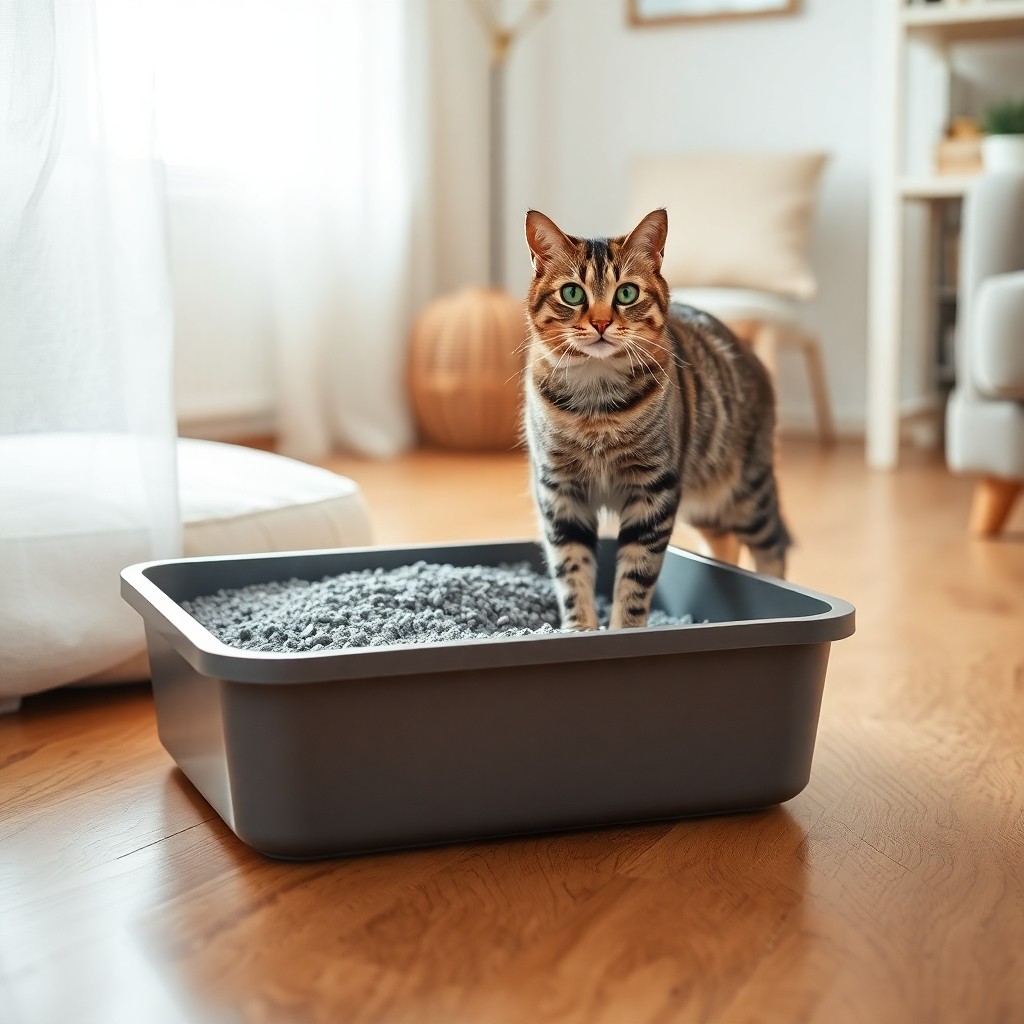
Pouring half a bag of litter into the box might seem like a shortcut to fewer chores, but it usually results in frantic digging, flying granules, and an offended cat doing its business on the bathmat. Striking the right balance in the box comes down to understanding what your cat’s paws actually prefer underfoot.
As a general rule, cat litter should be exactly 2 to 3 inches (5 to 7.5 cm) deep. This depth provides enough material for your cat to satisfy their natural instinct to dig and bury their waste without causing litter box aversion or excessive tracking.
Why Litter Depth Matters to Your Cat
In the wild, felines are both predators and prey. To protect themselves from larger predators and avoid alerting potential prey, they naturally bury their waste to mask their scent. Your domestic cat retains this strong evolutionary drive. If the litter is too shallow, they cannot bury their waste properly, which causes stress. Conversely, if it is too deep, they feel like they are walking on quicksand, which makes them feel vulnerable and unstable.
What Happens If the Litter Is Too Shallow?
When you skimp on litter, you create a host of hygiene and behavioral challenges. Here is what happens when the layer is under 2 inches:
- Stubborn Odors: Without enough material to absorb moisture, urine pools at the bottom of the plastic pan, leading to strong ammonia smells that are incredibly difficult to wash out.
- Scraping and Stress: Your cat will scrape their claws against the plastic box in a futile attempt to cover their waste, leading to frustration and potential box rejection.
- Caking and Scraping: Wet clay litter will cement itself to the bottom of the pan, making daily scooping a grueling chore.
What Happens If the Litter Is Too Deep?
While some owners think ‘more is better’ to delay cleaning day, overfilling the box creates its own set of problems:
- Unstable Ground: Cats prefer a firm surface beneath their paws. Deep litter shifts under their weight, which can frighten kittens, elderly cats, or cats with joint issues like arthritis.
- The Desert Storm Effect: When a cat digs in deep litter, they naturally fling much more of it over the edges of the box, leading to a messy floor and heavy tracking throughout your home.
- Wasted Money: Pouring too much litter means you end up throwing away perfectly clean, unused litter during your regular deep cleans.
Adjusting Depth Based on Litter Type
While the 2-to-3-inch rule is a fantastic baseline, different materials have unique properties that might require subtle adjustments. Here is a quick reference guide:
- Standard Clumping Clay: Stick strictly to 2 to 3 inches. Clay forms tight clumps that are easy to scoop, requiring this exact depth to prevent sticking to the bottom.
- Non-Clumping Clay or Crystal Litter: Aim for a slightly shallower depth of 1 to 2 inches. Because crystal litter works by absorbing urine and allowing moisture to evaporate, a thinner layer ensures better airflow and maximum absorption.
- Natural Pellets (Pine, Wheat, or Paper): These can be maintained at a depth of 2 inches. As pine pellets absorb moisture, they break down into sawdust, so starting with too deep a layer can make sifting difficult.
How to Maintain the Perfect Level
Keeping the litter at the sweet spot requires consistent daily habits. Every time you scoop out clumps and solid waste, you are removing volume from the box. To maintain the ideal environment, keep a small scoop or cup nearby and add a fresh handful of litter every few days to top it back up to the 3-inch mark. Do not wait until the box is nearly empty to dump in a massive fresh batch.
Frequently Asked Questions
How do I easily measure the litter depth?
You do not need a ruler. A simple trick is to insert your finger straight down into the litter until it touches the bottom of the pan. Mark where the top of the litter hits your finger, and compare it. For most adults, the second knuckle represents roughly 2 to 2.5 inches.
Why is my cat suddenly digging all the litter out of the box?
If your cat is aggressively kicking litter out, it is often a sign of frustration. They may be trying to find a clean spot if the box has not been scooped, or they might be struggling with a layer of litter that is either too deep (causing unstable footing) or too shallow (preventing proper burying).
Does the litter depth change for kittens?
Yes, young kittens have shorter legs and are still developing their balance. For kittens under four months old, keep the litter depth at a shallow 1 to 1.5 inches to ensure they can easily step in, do their business, and exit without sinking or struggling.