
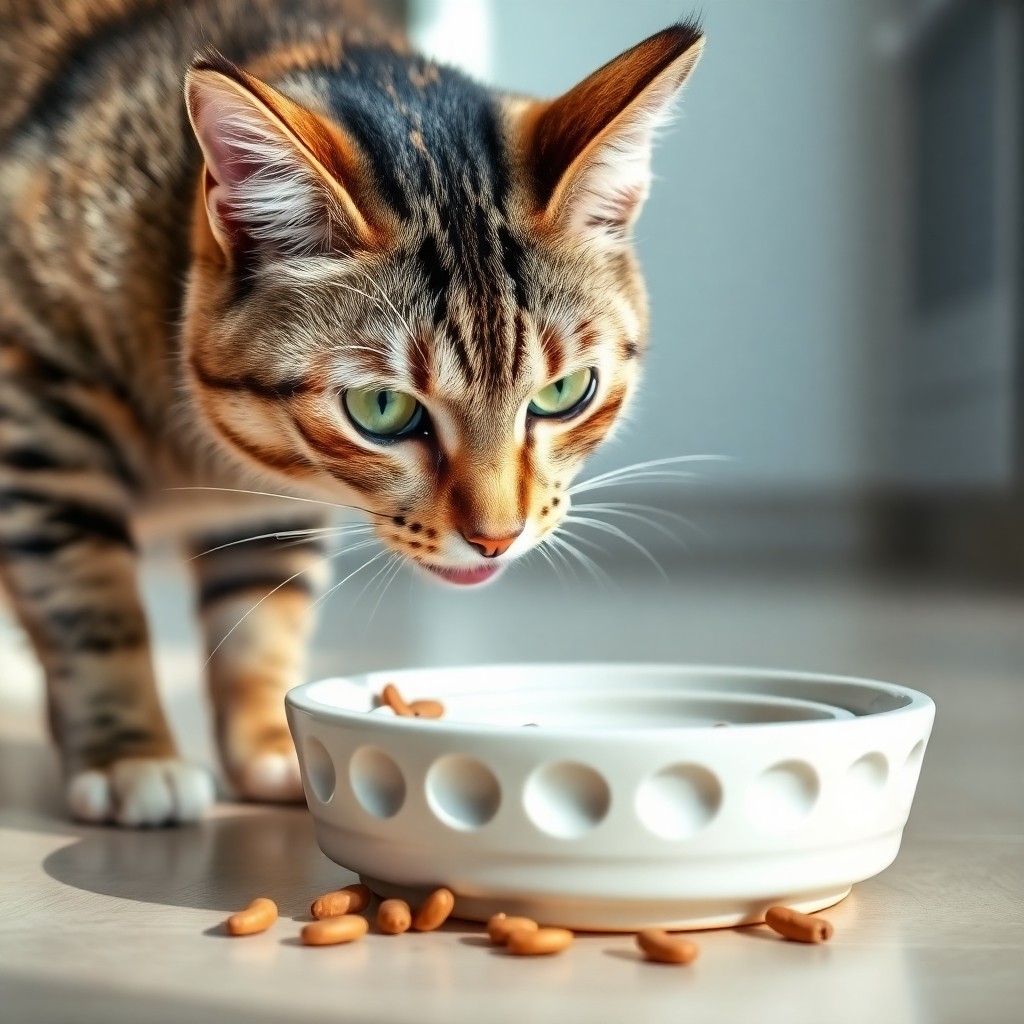
If your cat clears their dish in seconds, they are not just enthusiastic about mealtime—that lightning-fast eating habit often leads straight to regurgitated kibble on the rug, painful bloating, and long-term digestive strain.
Yes, cats should eat from a slow feeder bowl if they habitually gulp their food too quickly, vomit immediately after meals, or need help managing their weight and mental stimulation. These specialized puzzle dishes naturally pace ingestion rates and mimic wild foraging behaviors, leading to a healthier, happier cat.
Why Do Cats Eat So Fast?
To understand why a slow feeder is beneficial, it helps to look at domestic cat ancestry. In the wild, felines are solitary hunters who must consume their small prey quickly to prevent other predators from stealing it. This instinctual drive remains strong in many household cats, even when they are the only pet in a peaceful home.
For multi-cat households, competition plays an even bigger role. Cats often feel quiet pressure to finish their meals before a companion can push them away. This leads to the infamous ‘scarf and barf’ cycle: gulping food, swallowing excess air, and experiencing immediate stomach expansion that triggers the vomiting reflex.
Key Benefits of Using a Slow Feeder Bowl
- Eliminates the ‘Scarf and Barf’ Cycle: By forcing your cat to navigate ridges, humps, or puzzles, they can only grab a few kibbles at a time. This naturally spaces out swallows and prevents post-meal regurgitation.
- Supports Weight Management: Eating slowly gives the cat’s brain enough time to register satiety signals. This prevents overeating and is an excellent tool for feline weight-loss programs.
- Provides Vital Mental Enrichment: Indoor cats often suffer from a lack of daily cognitive challenges. Working for food keeps their minds active and reduces stress-induced behaviors like excessive grooming or nighttime vocalizations.
- Reduces Bloat and Gas: Swallowing large volumes of air along with dry kibble leads to painful gas. Paced feeding keeps the digestive tract running smoothly.
Potential Challenges and When to Avoid Slow Feeders
While these bowls offer major health benefits, they are not universally perfect for every cat. Consider these factors before switching:
- Whisker Fatigue: Cats have highly sensitive tactile hairs on their faces. If the puzzles or ridges are too deep and narrow, their whiskers will constantly rub against the plastic or ceramic, causing stress and irritation.
- Frustration and Stress: If a puzzle is too complex, a hungry cat may become anxious, angry, or refuse to eat altogether.
- Inappropriate Materials: Cheap plastic slow feeders easily collect tiny scratches where bacteria thrive, leading to painful feline chin acne. Stick to food-grade silicone, ceramic, or stainless steel options.
How to Transition Your Cat to a Slow Feeder: A Step-by-Step Guide
Introducing a puzzle feeder incorrectly can cause your cat to reject it. Use this simple, gradual method to ensure success:
- Step 1: Start with high-value treats. Place a few of your cat’s favorite treats inside the slow feeder while leaving their normal food bowl untouched nearby. This creates a positive association with the new object.
- Step 2: Do a half-and-half transition. Place half of their regular meal in their old bowl and the other half in the slow feeder. This ensures they still get fed even if they are initially confused by the puzzle.
- Step 3: Remove the old bowl. Once you observe your cat comfortably navigating the slow feeder to get the treats and food, remove the standard dish entirely.
- Step 4: Monitor their mood. Watch for signs of frustration, such as pawing aggressively at the bowl or walking away crying. If they struggle, opt for a simpler maze pattern first.
Common Mistakes to Avoid
- Buying a dog slow feeder: Dog puzzles are too deep and wide for smaller feline muzzles, rendering them useless or causing severe whisker discomfort.
- Neglecting daily cleaning: Wet food or kibble oils easily get trapped in the tight corners of a slow feeder, quickly turning into a breeding ground for bacteria.
- Using it for highly anxious or sick cats: If your cat is recovering from surgery or suffers from chronic stress, mealtime should be as easy and comforting as possible. Avoid slow feeders during recovery periods.
Frequently Asked Questions
Can you put wet food in a cat slow feeder?
Yes. Many slow feeders are designed with flat, textured patterns specifically for wet food or licking treats. These are excellent for cooling down overexcited eaters and keeping them occupied.
How can I tell if my cat’s bowl is causing whisker fatigue?
If your cat paws food out of the bowl to eat it off the floor, hesitates before taking a bite, or acts restless around the food dish, they may be experiencing discomfort from whisker fatigue.
What is the safest material for a cat slow feeder?
Ceramic and food-grade silicone are the safest materials. They are non-porous, easy to sanitize, and highly resistant to bacterial buildup, unlike plastic.