The moment a soggy tennis ball lands squarely on your lap, you probably reach for it assuming your dog is begging for a game of fetch. But that familiar furry offering is actually part of a much richer conversation, revealing a surprising mix of instincts, emotions, and canine diplomacy that goes far beyond a simple desire for playtime.
Yes, it is completely normal for dogs to bring you toys. This common behavior is a healthy sign of trust, affection, attention-seeking, or genetic retrieving instincts inherited from their ancestors. It serves as a primary way for your dog to bond, show respect, and communicate their emotional state with you.
Why Does My Dog Bring Me Toys? 5 Surprising Reasons
Canine behaviorists point to several distinct motivations behind this daily ritual. Understanding these reasons helps you read your dog’s emotional state more accurately.
1. The Gift-Giving Instinct
Dogs are social pack animals. Bringing you a prized possession is often a sign of deep trust and respect. They are sharing their high-value resources with you, which is the ultimate canine compliment.
2. Genetic Retrieving Drive
Breeds like Golden Retrievers, Labradors, and Spaniels have been selectively bred for centuries to retrieve objects. For these dogs, carrying a toy is a self-soothing mechanism, a task to be completed, and a natural expression of their working heritage.
3. Attention-Seeking and Boredom
Your dog knows that carrying a toy is a guaranteed way to get your eyes on them. Even if you react by saying ‘not now,’ you are still acknowledging them, which reinforces the behavior and teaches them that toys equal human interaction.
4. A Welcome Home Ritual
If your dog grabs a toy the moment you walk through the door, they are likely using it to channel their excitement. Holding something in their mouth helps them self-regulate their adrenaline, quiet their vocalizations, and prevents destructive behaviors like nipping or jumping.
5. An Invitation to Play
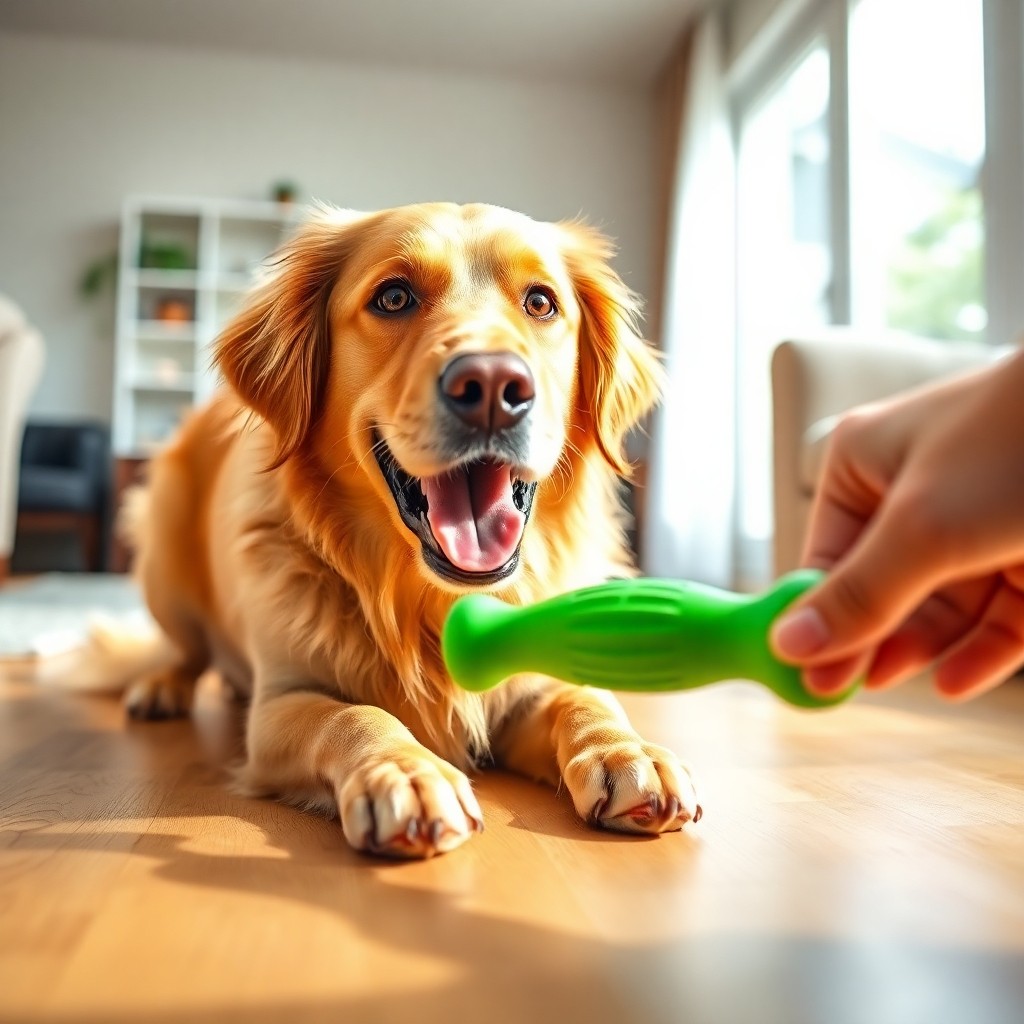
This is the most obvious reason. Your dog wants to interact. However, pay attention to their body language: if they hold onto the toy and pull back when you reach for it, they might actually want a game of tug-of-war rather than fetch.
How to Respond to Your Dog’s Toy-Presenting Behavior
How you react shapes your dog’s future habits. Follow this practical, coach-approved strategy to keep this behavior positive and structured.
- Assess the context: Look at your dog’s body language. A relaxed tail and soft eyes mean a friendly offering; a stiff posture or intense staring might mean they are demanding your attention too aggressively.
- Establish boundaries: If you are busy, ignore the toy completely. Do not look, talk, or touch the dog. Once they calm down and drop the toy, reward their calm behavior with attention.
- Initiate structured play: Only play when you decide it is time, not when your dog demands it. This keeps you in control of the household dynamic.
- Rotate their toy selection: To prevent boredom and obsessive behavior, keep only two or three toys accessible at a time, swapping them out weekly.
Common Mistakes Owners Make with Toy Presenting
Even well-meaning owners can accidentally turn this adorable habit into a behavioral headache. Avoid these common pitfalls:
- Always giving in: Chasing after your dog or throwing the toy every single time teaches them that demand-play or pushy behavior always wins.
- Forcing them to let go: If your dog is presenting a toy as a ‘gift’ or self-soothing tool, grabbing it aggressively can cause resource guarding or confusion. Let them hold it if they just want to show it off.
- Chasing the dog: Running after your dog to get the toy back turns the interaction into a game of keep-away, which can encourage running away from you in safety-critical situations.
Frequently Asked Questions
What does it mean when my dog brings me a toy but won’t let me take it?
This is often a request for a game of ‘keep-away’ or tug-of-war rather than fetch. Your dog is using the toy as a social bridge to engage you in a fun, interactive challenge rather than simply handing it over.
Why does my dog howl or whine while holding a toy in their mouth?
This behavior is usually driven by extreme excitement or a strong maternal instinct (often seen in intact females or those experiencing a false pregnancy). The toy acts as a comfort object, and the whining is a vocal expression of high emotional arousal.
Should I be worried if my dog brings me toys constantly?
Constant toy-bringing is rarely a medical issue, but it can indicate mild separation anxiety, boredom, or obsessive-compulsive tendencies. If your dog cannot relax without a toy in their mouth, focus on increasing their physical exercise and mental enrichment.