
Wire or plastic? Standing in the pet store aisle, the sheer number of crate options can make your head spin long before you actually bring a puppy home. Getting this single piece of equipment right dictates whether housebreaking feels like an uphill battle or a smooth routine. Behind every calm, crate-trained dog is an enclosure that matches their specific chewing habits, size, and temperament—turning a simple metal or plastic box into their personal sanctuary rather than a source of daily stress.
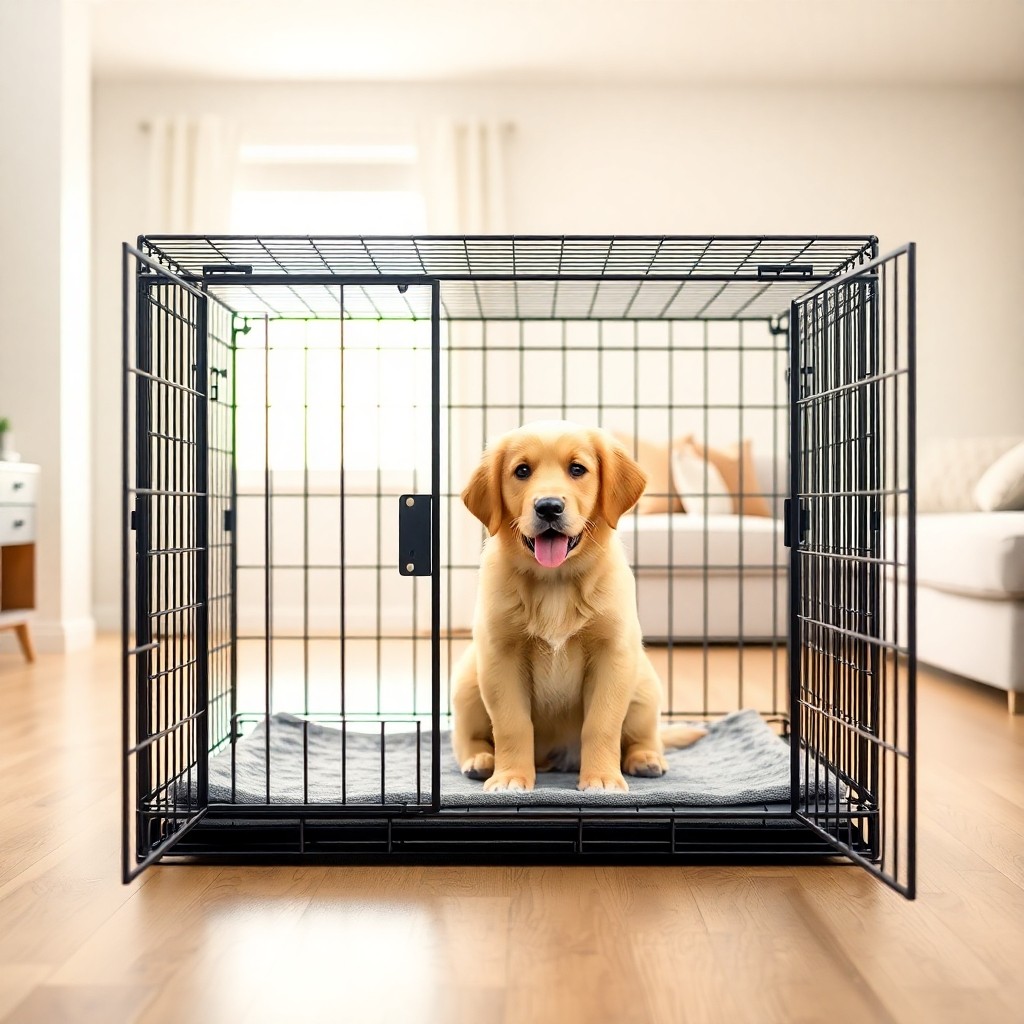
The best dog crate for training is a heavy-duty, double-door wire crate equipped with an adjustable divider panel. This specific design allows the crate to grow with your puppy, prevents bathroom accidents by limiting excess sleeping space, and offers optimal ventilation and visibility to reduce separation anxiety during the acclimation phase.
Key Factors in Selecting a Training Crate
When selecting a training crate, security and size control are your top priorities. A crate that is too large allows a puppy to eliminate in one corner and sleep in the other, defeating the biological basis of housebreaking. Conversely, a crate that is too small causes physical discomfort and negative associations.
- Divider Panels: These metal grates allow you to adjust the internal living space as your puppy grows, saving you from buying multiple crates over time.
- Security Latches: Clever dogs can easily manipulate simple sliding latches. Look for dual-latching systems or paw-proof locks.
- Removable Trays: Accidents will happen. A leak-proof plastic or composite pan that slides out from the bottom simplifies clean-ups without disturbing the crate setup.
- Portability: Folding designs with carrying handles are essential if you plan to move the crate between rooms or travel.
Comparison of Training Crate Types
Different materials serve distinct training purposes. This comparative analysis helps you choose the right material based on your dog’s specific behavioral needs.
| Crate Type | Best For | Pros | Cons |
|---|---|---|---|
| Folding Wire | Puppy housebreaking, maximum visibility | Excellent airflow, includes divider, easy to clean, folds flat | Noisy, easier for persistent chewers to damage if low quality |
| Plastic (Airline) | Anxious dogs, frequent travelers | Den-like security, dark interior calms dogs, very sturdy | Poor visibility, no divider panel included, bulky to store |
| Heavy-Duty Escape-Proof | High-anxiety dogs, extreme chewers | Indestructible steel bars, high-security dual locks | Extremely heavy, expensive, industrial aesthetic |
| Soft-Sided Fabric | Fully trained dogs, temporary travel | Ultra-lightweight, highly portable, quiet | Easily shredded by puppies, impossible to sanitize fully |
How to Size a Training Crate Correctly
Never buy a crate based solely on your dog’s weight. Physical dimensions are much more critical for comfort and safety. To get the perfect fit, measure your dog from the tip of the nose to the base of the tail, and from the top of the head to the floor while standing.
Add two to four inches to both measurements. This provides the minimum length and height your dog needs. The dog must be able to stand up comfortably, turn around in a complete circle, and lie flat on their side without being cramped against the walls. If you are training a puppy, purchase the size corresponding to their estimated adult dimensions and use the divider panel to restrict the space initially.
Common Training Pitfalls to Avoid
Even the highest-quality crate will fail to produce results if used incorrectly. Avoid these common mistakes during the training process:
- Using the crate for punishment: Sending your dog to the crate when they misbehave ruins their positive association with their safe space, leading to whining, resistance, and stress.
- Leaving them inside too long: Puppies can physically hold their bladders for only a limited time (typically their age in months plus one hour). Exceeding this limit forces them to soil their bedding.
- Ignoring whining: While you should not reward demand-whining with attention, immediate distress vocalization could indicate a genuine bathroom emergency or extreme isolation distress. Always assess the context before ignoring the sound.
- Leaving collars or harnesses on: Metal tags and fabric straps can easily snag on wire crate bars, presenting a severe strangulation hazard when unsupervised.
Frequently Asked Questions
Can I use a soft-sided crate for puppy training?
No. Soft-sided fabric crates are not recommended for early training. Puppies can easily chew through the mesh panels, bite through the zippers, or soil the fabric, which absorbs odors and is incredibly difficult to sanitize thoroughly.
How do I stop my dog from crying in the crate at night?
Place the crate in your bedroom initially so the dog can hear and smell you. Ensure they have had ample physical exercise and a bathroom break right before bed. Use a breathable sheet to cover the crate if visual stimuli are keeping them awake.
Should I put food and water bowls inside the training crate?
Generally, no. Food and water bowls can be easily spilled, creating a wet, uncomfortable sleeping area. Feed your dog their meals inside the crate to build positive associations, but remove the bowls immediately once they finish eating.