
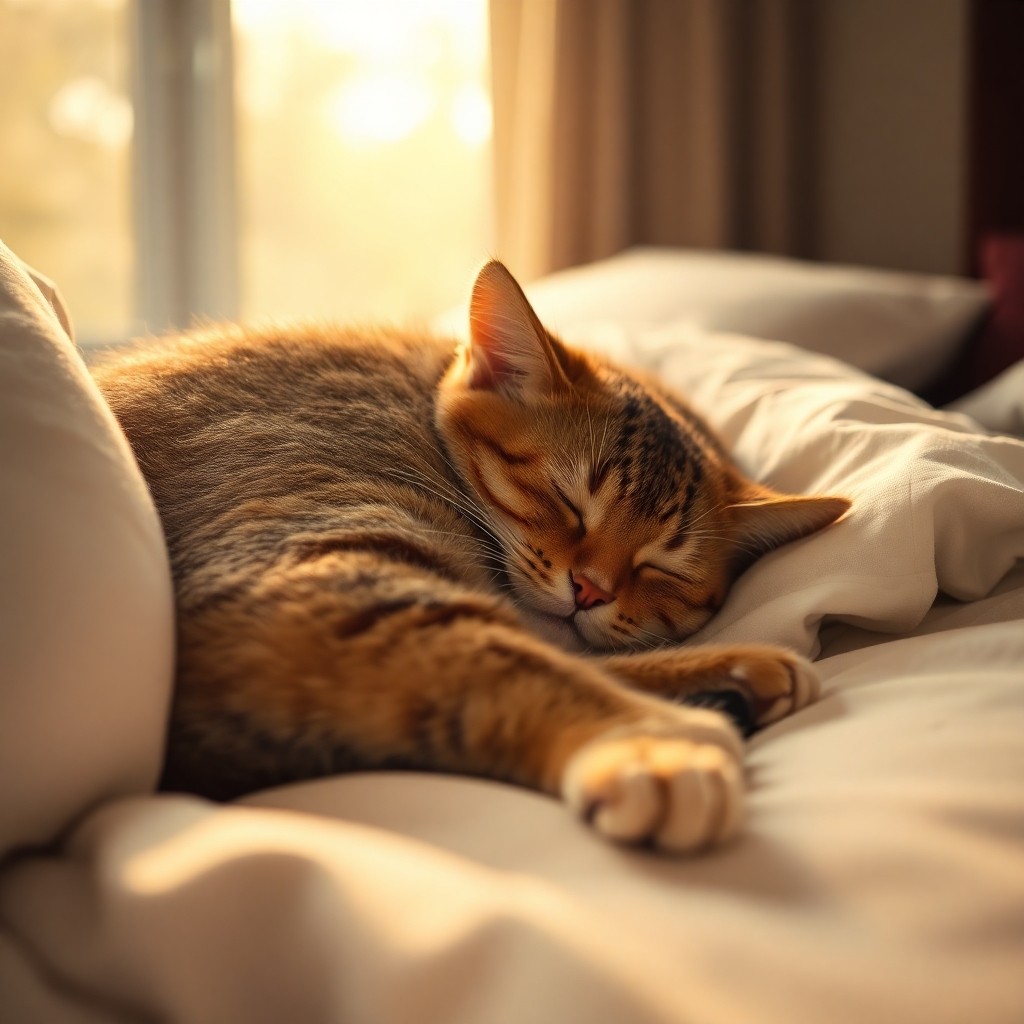
Waking up with your cat curled tightly across your pillow isn’t just an adorable way to start the day. That heavy, purring weight resting right against your forehead actually stems from a mix of temperature-seeking behavior, a deep-seated need for safety, and the ultimate expression of feline trust.
Why Does My Cat Sleep on Your Head?
Cats sleep on your head because it is the warmest, most secure part of the body, and it carries your unique scent, which makes them feel safe. Additionally, your head moves far less than your arms or legs during the night, protecting your cat from being accidentally bumped or disturbed.
1. Maximizing Body Heat
A cat’s normal body temperature ranges from 100.5 to 102.5 degrees Fahrenheit. Because they have a higher baseline temperature than humans, they constantly seek out external heat sources to conserve energy. Since a significant amount of human body heat escapes through the head, your pillow becomes the ultimate heating pad.
2. Security and High Ground
In the wild, cats are both predators and prey. This dual nature means they are highly vulnerable while sleeping. Your head is positioned at the top of the mattress, offering a slightly elevated vantage point. Sleeping near your head gives them a sense of security, knowing they are safe from ground-level threats.
3. Scent and Mutual Bonding
Your head and hair carry the strongest concentration of your personal scent. For a cat, smelling your scent is incredibly comforting and acts as a natural stress reliever. By mixing their scent with yours, they are claiming you as part of their family group.
4. Avoiding Restless Limbs
Many people toss and turn, kick their legs, or adjust their arms throughout the night. Your head, however, remains relatively still. Cats are light sleepers and dislike being disrupted, so sleeping near your head guarantees a more peaceful, uninterrupted rest.
How to Gently Stop Your Cat from Sleeping on Your Head
If this cozy habit is disrupting your sleep quality, you can redirect your cat’s behavior without damaging your bond. Here is a step-by-step action plan to reclaim your pillow:
- Provide a dedicated warm alternative: Set up a plush, heated cat bed on a sturdy bedside table or at the foot of your bed to offer an equally tempting spot.
- Use scent transfer: Place an unwashed t-shirt you have worn inside the new cat bed to make it smell familiar and comforting.
- Set firm boundaries: Calmly and consistently move your cat to the foot of the bed or their own bed every time they step onto your pillow. Avoid petting or talking to them during this transition, as any attention acts as a reward.
- Establish a pre-bedtime play routine: Engage your cat in a vigorous play session followed by a meal right before bed. This aligns with their natural ‘hunt, eat, groom, sleep’ cycle.
Common Mistakes to Avoid
- Pushing or shouting: Startling your cat can create anxiety and damage your relationship, which may actually cause them to seek your physical closeness even more.
- Accidentally rewarding wake-up calls: If you pet, talk to, or feed your cat when they sit on your face at 4:00 AM, you are reinforcing the behavior.
- Sudden bedroom lockouts: Completely locking your cat out of the room without providing alternative sleeping spaces often leads to vocal protest and scratching at the door.
Frequently Asked Questions
Is it a sign of dominance when my cat sleeps on my head?
No, this is a myth. Cats do not sleep on your head to show dominance. Instead, it is a sign of deep trust, affection, and a search for warmth and safety.
Should I be worried if my cat suddenly starts sleeping on my head?
If this is a sudden change in behavior accompanied by lethargy, changes in appetite, or hiding during the day, consult a veterinarian to rule out any underlying health issues.