
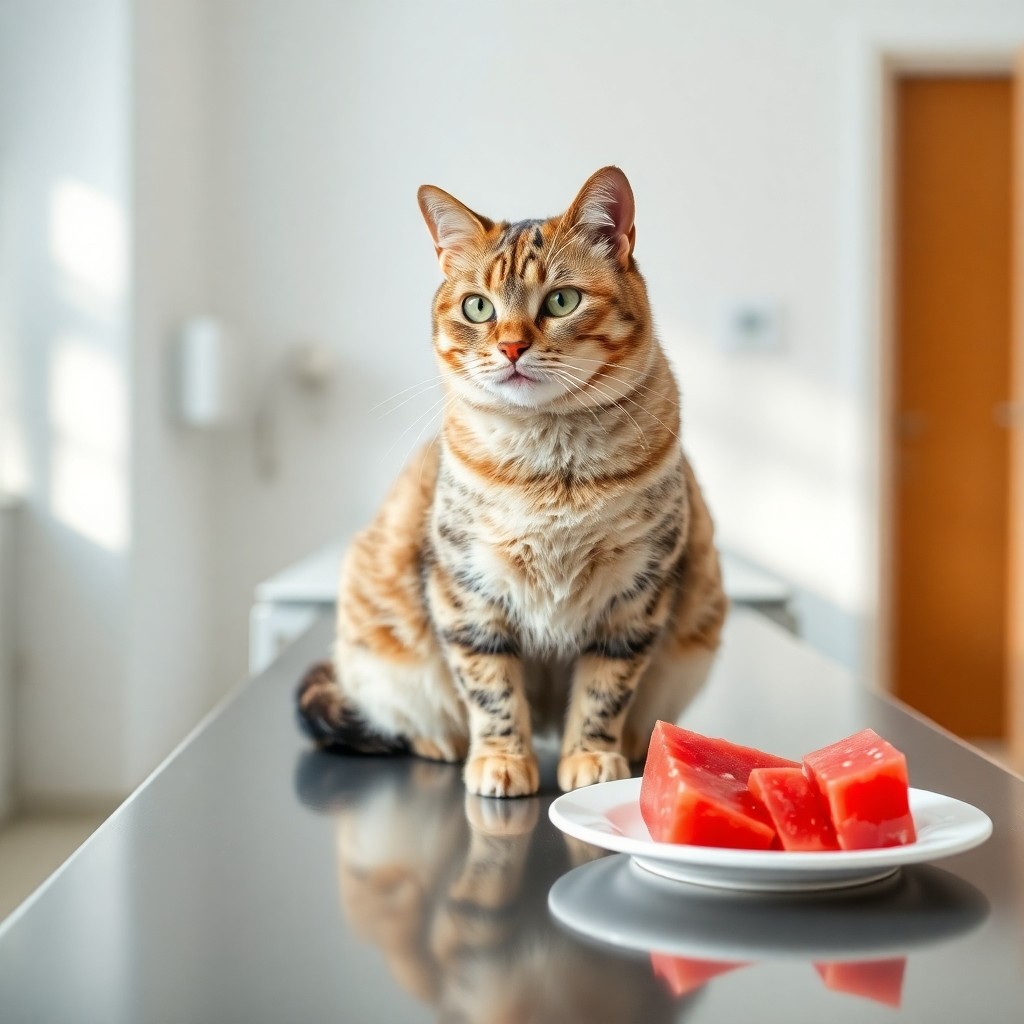
Juicy, pink, and endlessly refreshing on a hot summer afternoon, watermelon is a staple of picnic season—and it’s no wonder your cat is suddenly very interested in what you’re eating. While watching your feline companion curiously sniff at a slice is adorable, figuring out what’s safe to share from your plate is a constant puzzle for any pet parent.
Yes, cats can eat watermelon flesh safely in very small quantities. The fruit is non-toxic to felines, but the seeds, black pips, and tough green rind must be completely removed to prevent severe choking hazards and intestinal blockages.
Is Watermelon Safe for Cats?
From a toxicological standpoint, watermelon is classified as non-toxic to cats by the American Society for the Prevention of Cruelty to Animals (ASPCA). However, safe does not mean beneficial. Cats are obligate carnivores, meaning their biological systems are designed to process animal-based proteins and fats, not plant matter or sugars.
Felines lack the specific taste receptors (specifically the TAS1R2 and TAS1R3 genes) required to perceive sweetness. When a cat eats watermelon, they do not experience the sweet flavor that humans enjoy. Instead, they are typically drawn to the texture, moisture content, or temperature of the cool fruit. While the flesh of the watermelon poses no chemical danger, it must only be treated as an occasional novelty rather than a dietary staple.
Nutritional Breakdown of Watermelon for Felines
Evaluating the nutritional composition of watermelon helps clarify its role in a cat’s diet. While rich in hydration, its macro profile is not optimized for feline biology.
| Nutrient (per 100g of raw watermelon) | Value | Clinical Context for Cats |
|---|---|---|
| Moisture / Water | 91.45 g | Supports hydration, particularly beneficial for cats with low thirst drives. |
| Total Sugars (Fructose, Glucose) | 6.2 g | High simple sugar content; can cause insulin spikes or digestive upset. |
| Dietary Fiber | 0.4 g | Minimal; high quantities can disrupt delicate feline digestion. |
| Potassium | 112 mg | Electrolyte that supports muscular and nervous system function. |
| Vitamin C | 8.1 mg | Cats synthesize their own Vitamin C; dietary supplementation is unnecessary. |
For owners, this nutritional breakdown means that while watermelon can provide a small boost of hydration on hot summer days, it also delivers simple sugars that a cat’s digestive tract is not equipped to process in large volumes.
The Hidden Dangers of Watermelon: Seeds and Rinds
While the red flesh is harmless in moderation, other parts of the watermelon present significant health risks that require careful management.
The Choking and Obstruction Risk of Seeds
Both black seeds and immature white seeds pose physical hazards. A cat’s esophagus and intestinal tract are narrow. Swallowing seeds can lead to choking or physical blockages in the gastrointestinal tract. Additionally, watermelon seeds contain organic compounds that can cause mild toxicity and digestive irritation if chewed and swallowed in large numbers.
The Indigestibility of the Rind
The green outer rind of the watermelon is extremely tough and fibrous. A cat’s digestive system lacks the enzymes required to break down dense plant cellulose. If a cat consumes the rind, it will likely pass through the stomach intact, posing a high risk of a gastrointestinal blockage (obstruction). Gastrointestinal obstructions are life-threatening emergencies that often require immediate surgical intervention.
How to Safely Feed Watermelon to Your Cat
If you choose to offer watermelon to your cat as a treat, strict preparation guidelines must be followed to ensure their safety.
- Step 1: Select and Wash: Choose a fresh, organic watermelon. Thoroughly wash the exterior to remove any pesticide residues or bacteria before cutting.
- Step 2: Isolate the Flesh: Cut a small section of the red flesh from the center of the fruit. Ensure there is absolutely no green or white rind attached.
- Step 3: De-seed Completely: Manually inspect the piece of fruit. Remove every single seed, both black and white.
- Step 4: Portion Control: Dice the flesh into tiny, kibble-sized cubes (no larger than a quarter-inch). Offer only one or two small cubes.
- Step 5: Monitor the Reaction: After feeding, observe your cat for 24 hours for any signs of gastrointestinal distress, such as vomiting, diarrhea, or lethargy.
When to Avoid Giving Watermelon to Cats
Certain cats should never be fed watermelon due to underlying health conditions. Clinical guidelines recommend strictly avoiding sugary fruits in the following scenarios:
- Diabetic Cats: Felines diagnosed with diabetes mellitus require strict glycemic control. The simple sugars in watermelon can cause dangerous spikes in blood glucose levels.
- Obese or Overweight Cats: Excess calories from non-protein sources contribute to weight gain. Treats of any kind should make up less than 10% of a cat’s daily caloric intake.
- Cats with Sensitive Stomachs: Felines prone to inflammatory bowel disease (IBD) or general dietary sensitivities may experience acute diarrhea or vomiting from the high water and sugar content of fruit.
Frequently Asked Questions
Can cats drink watermelon juice?
It is not recommended to give cats commercial watermelon juice, as it often contains added sugars, preservatives, or artificial sweeteners like xylitol, which is highly toxic to pets. Freshly squeezed, pure watermelon juice is non-toxic, but the concentrated sugars can easily upset a cat’s stomach.
How much watermelon can a cat have?
A safe portion is limited to one or two tiny, bite-sized cubes (about the size of a standard playing die) once or twice a week. Watermelon should never replace formulated commercial cat food, which contains essential amino acids like taurine.
Can kittens eat watermelon?
Kittens have highly sensitive digestive systems and precise nutritional requirements for growth. It is best to avoid feeding watermelon to kittens, as it can easily trigger diarrhea, leading to rapid dehydration.
References
Feline nutritional safety guidelines supported by the American Society for the Prevention of Cruelty to Animals (ASPCA) Toxic Plants Database and the World Small Animal Veterinary Association (WSAVA) Global Nutrition Guidelines.