
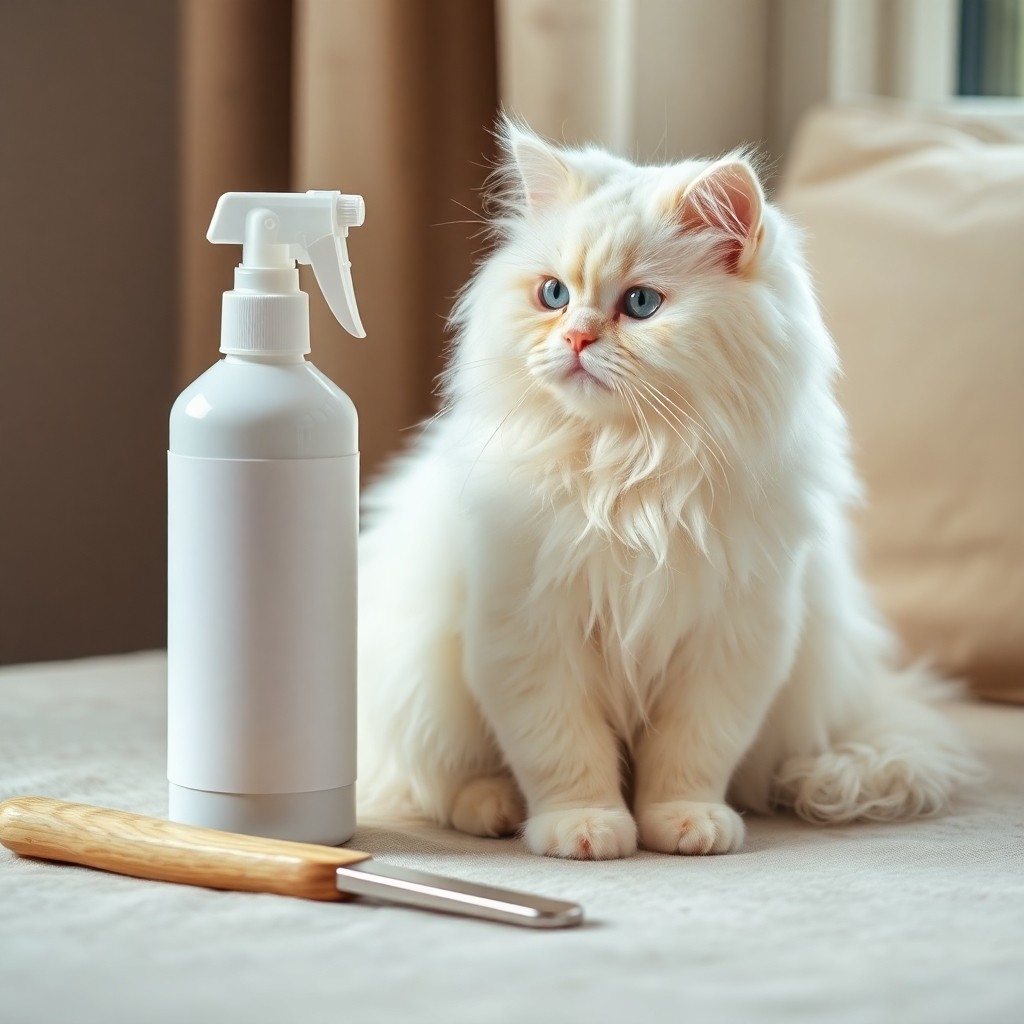
Reaching for the kitchen scissors to snip out a stubborn Persian cat mat is a knee-jerk reaction that all too often ends in a panicked trip to the emergency vet. That ultra-fine, double-layer coat packs together so tightly that a pair of household shears can catch delicate skin in a heartbeat. Clearing out those dense tangles safely takes a bit of patience, the right detangling spray, and an undercoat rake designed to glide through the fur without painfully pulling your cat’s skin.
To safely remove severe Persian cat mats, saturate the felted area with a professional silicone-based detangling spray, let it sit to reduce friction, and then use a specialized de-matting undercoat rake with curved, safety-guarded blades to gently slice through the mat in tiny, outward flicking motions while holding the hair roots taut to protect the skin. This dual-action approach prevents the blade from pulling on the cat’s paper-thin skin while chemically softening the dense dander bonds holding the knot together.
The Persian Coat Dilemma: Why Severe Mats Occur
The Persian cat possesses a unique, luxurious double coat consisting of a dense, cottony undercoat and a long, fine outer guard coat. Without daily maintenance, these two hair types twist around each other, traps shedding hair, and eventually creates dense felted sheets close to the skin. Oils, dander, and dynamic movement accelerate this process, particularly in high-friction zones like the armpits, behind the ears, and around the hindquarters.
Unlike some breeds, a Persian’s skin is incredibly thin, loose, and easily pulled up into the center of a mat. This structural vulnerability means that simply pulling or yanking at a knot can tear the skin or cause severe pain, leading to groom-aggression or deep anxiety.
The Essential Grooming Toolkit
Using the wrong brush on a severe mat is worse than doing nothing at all. Standard slicker brushes or fine-toothed combs will only snag on the surface, causing pain and tightening the knot further. Successful de-matting relies on two key tools working in synergy.
| Tool Type | Primary Grooming Role | Key Safety Mechanism |
|---|---|---|
| Detangling Spray | Saturates the hair shaft, coat-lubricates the fibers, and loosens trapped dirt and dead skin cells. | Creates a slippery barrier that lets hairs slide apart instead of snapping. |
| De-matting Undercoat Rake | Splits thick, felted mats into manageable, thin strips that can be combed out. | Features curved, razor-sharp interior blades shielded by rounded, dull outer tips. |
Step-by-Step Protocol: Shaving and Untangling Severe Mats
Step 1: Prep and Saturate
Never attempt to rake a dry mat. Dry hair is prone to static and structural breakage, which makes future matting even worse. Spray the target mat thoroughly with a professional detangling spray. Massage the formula deep into the core of the mat with your fingers. Let it penetrate for two to three minutes to allow the conditioning agents to relax the hair shaft.
Step 2: Isolate and Secure the Skin
Locate the base of the mat. Slide your fingers between the bottom of the knot and the cat’s skin. Hold the skin firmly down at the root of the hair. This ensures that when you apply any pressure with the grooming rake, the tension is absorbed by your fingers and not by the cat’s sensitive skin follicles.
Step 3: Work the Undercoat Rake
Hold the de-matting rake at a comfortable angle. Start at the outer edges of the mat (furthest from the skin) rather than trying to cut through the center. Using short, gentle, outward-flicking motions, let the curved blades slice through the outer layers. Avoid long, dragging pulls. Slowly work your way inward, splitting the large mat into several smaller, loose strands.
Step 4: Gentle Comb Out
Once the severe mat has been split into loose sections, switch to a wide-toothed metal greyhound comb. Gently comb through the separated strands to remove the dead hair. Finish with a fine-toothed comb to extract any remaining undercoat debris.
Safety Warnings and Professional Escalation
While minor to moderate matting can be safely handled at home, severe, whole-body pelting requires professional intervention. If you cannot see skin beneath the mat, or if the felted hair is hard and tight against the abdomen or neck, do not use a de-matting rake. In these situations, the risk of slicing the skin is incredibly high.
Look out for red, inflamed skin or an unpleasant odor radiating from the matted areas. This often indicates wet eczema, hot spots, or bacterial infections trapped beneath the hair. If these signs are present, schedule a visit to a veterinary professional or a certified master cat groomer who can safely shave the mats away using specialized clippers with a safety blade.
Preventative Care to Keep Mats from Returning
After successfully clearing the mats, maintain a preventative routine to keep the coat healthy. Spritzing your Persian with a light, leave-in detangling spray once or twice a week prior to regular brushing keeps the hair fibers slick and highly resistant to interlocking. Incorporate a daily routine using a metal comb and a high-quality slicker brush, paying special attention to friction areas. Regular grooming sessions keep the luxurious Persian coat airy, healthy, and completely free of painful tangles.