
Every morning brings the same familiar routine: the rustle of the blanket, the eager tail thumping against the floor, and the classic household debate. Do you grab the leash right away, or head straight for the pantry to fill the food bowl first? Getting the timing right isn’t just about making your morning schedule run a little smoother—it actually plays a huge role in your dog’s digestion, energy levels, and overall health.
As a general rule, you should walk your dog before breakfast, or wait at least 45 minutes to two hours after they eat before starting any moderate to high-intensity exercise. This waiting period significantly reduces the risk of Gastric Dilatation-Volvulus (GDV), a life-threatening stomach twist commonly known as bloat.
The Pros and Cons of Walking Before Breakfast
Walking your dog on an empty stomach mimic’s their wild ancestors’ natural rhythm: hunt first, eat later. For many households, this sequence fits seamlessly into a morning routine and offers distinct physiological advantages.
The Advantages of Pre-Breakfast Walks
- Weight Management: Exercise in a fasted state encourages the canine body to burn fat reservoirs rather than immediately accessible glucose from a recent meal. This is highly beneficial for overweight dogs on a structured weight loss plan.
- Behavioral Motivation: Breakfast can serve as an excellent reward. Dogs that are high-energy or easily distracted often focus better during their walk when they know a delicious meal is waiting for them at home.
- Reduced Gastric Risk: Because the stomach is empty, there is virtually zero risk of food-induced bloating or stomach twisting during active play or vigorous sniffing.
The Disadvantages of Pre-Breakfast Walks
- Low Energy in Certain Dogs: Senior dogs, puppies, or dogs with underlying metabolic conditions like hypoglycemia (low blood sugar) may feel weak or sluggish without a small morning snack.
- Acid Reflux issues: Some dogs develop an upset stomach or throw up yellow bile when their stomachs remain empty for too long in the morning.
The Pros and Cons of Walking After Breakfast
For some owners, letting the dog eat first feels more natural. However, this sequence requires strict timing restrictions to prevent medical emergencies.
The Advantages of Post-Breakfast Walks
- Sustained Energy: A digested breakfast provides a steady release of glucose, supplying the muscles with ample energy for long, endurance-based hikes or runs.
- Prevention of Bilious Vomiting: If your dog is prone to morning acid reflux, a small meal coats the stomach lining and prevents nausea during physical movement.
The Disadvantages of Post-Breakfast Walks
- Extreme Risk of Bloat (GDV): This is the single most critical argument against walking immediately after eating. Exercise with a heavy, full stomach can cause severe, life-threatening complications.
- Lethargy: Just like humans, dogs experience a shift in blood flow to the digestive system after eating. Forcing them to walk immediately can make them feel slow and uncomfortable.
The Core Medical Danger: Understanding Bloat (GDV)
To understand why timing is so crucial, you must understand Gastric Dilatation-Volvulus (GDV). GDV occurs when a dog’s stomach fills with gas, food, or fluid and subsequently twists on its axis. This traps air and cuts off blood flow to major organs, quickly leading to shock and tissue death.
For owners, this means that heavy exercise on a full stomach can act like a pendulum, causing the weighted stomach to swing and rotate. Large, deep-chested breeds (such as Great Danes, German Shepherds, Standard Poodles, and Weimaraners) are anatomically predisposed to this condition. However, GDV can happen to any dog if they run, jump, or play too soon after eating.
How Long Should You Wait? The Safe Timing Guide
If you prefer to walk your dog after they eat, implementing a strict buffer period is non-negotiable. To keep your pet safe, follow these veterinary-approved timing guidelines:
- After a standard meal: Wait a minimum of 45 minutes to 1 hour before engaging in a casual, slow-paced leash walk.
- After a large meal or for deep-chested breeds: Wait 2 full hours before any physical activity, including brisk walking, running, or playing fetch.
- Before a meal (post-walk cooling period): Avoid feeding your dog immediately after a vigorous walk. Wait 20 to 30 minutes until your dog’s breathing has fully returned to normal and their heart rate has settled. Feeding a panting dog can cause them to swallow excess air, which also increases the risk of bloat.
Tailoring the Routine to Your Dog
There is no one-size-fits-all answer, as your dog’s breed, age, and health profile dictate the safest approach. Consider these specific profiles:
The High-Risk Breed Profile
If you own a deep-chested breed, your primary focus should be minimizing GDV risk. The safest routine is a moderate walk on an empty stomach, followed by a cool-down period, and then breakfast. If you must feed them first, wait at least two hours before walking.
The Diabetic or Hypoglycemic Dog
Dogs with blood sugar issues require careful glucose management. They typically need to eat a meal to stabilize their blood sugar before doing any physical exercise. Work closely with your veterinarian to establish a precise feeding and walking schedule tailored to their medication needs.
The High-Energy Puppy
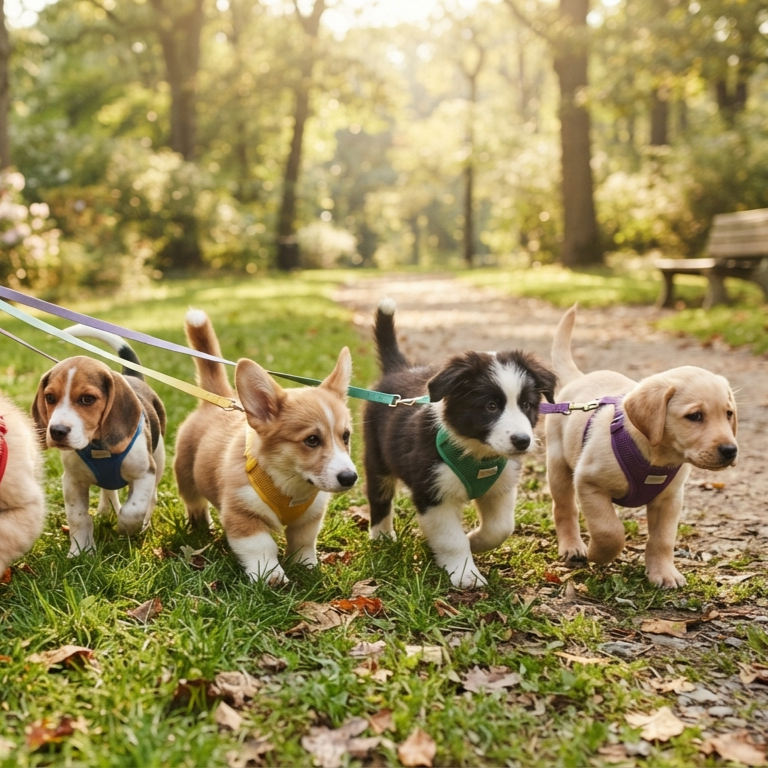
Puppies have rapid metabolisms and smaller stomachs. They benefit from a very light snack or a fraction of their breakfast before a short, gentle training walk, with the remainder of their meal given as training rewards along the way.
Frequently Asked Questions
Can I take my dog for a quick bathroom break after breakfast?
Yes. A slow, gentle five-minute leash walk solely for the purpose of sniffing and eliminating is perfectly safe after eating. The key is to avoid high-impact movements, running, tug-of-war, or fast-paced walking.
What are the warning signs of bloat (GDV)?
If your dog exercised too close to mealtime, monitor them closely. Symptoms of GDV include unproductive retching (trying to throw up but nothing comes out), excessive drooling, pacing, restlessness, a visibly swollen or hard abdomen, and signs of distress. If you observe any of these signs, transport your dog to an emergency veterinary clinic immediately.
Is it okay to use kibble as treats during a morning walk?
Yes. Using a portion of their daily breakfast kibble as training rewards during a walk is an excellent compromise. It keeps their stomach relatively empty, prevents bloat, and provides mental stimulation through positive reinforcement training.