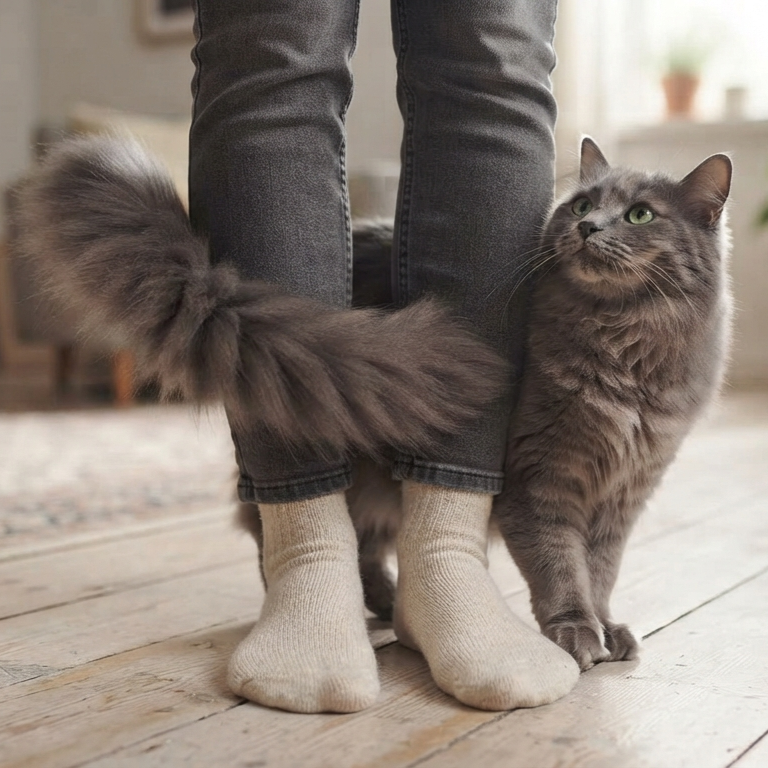
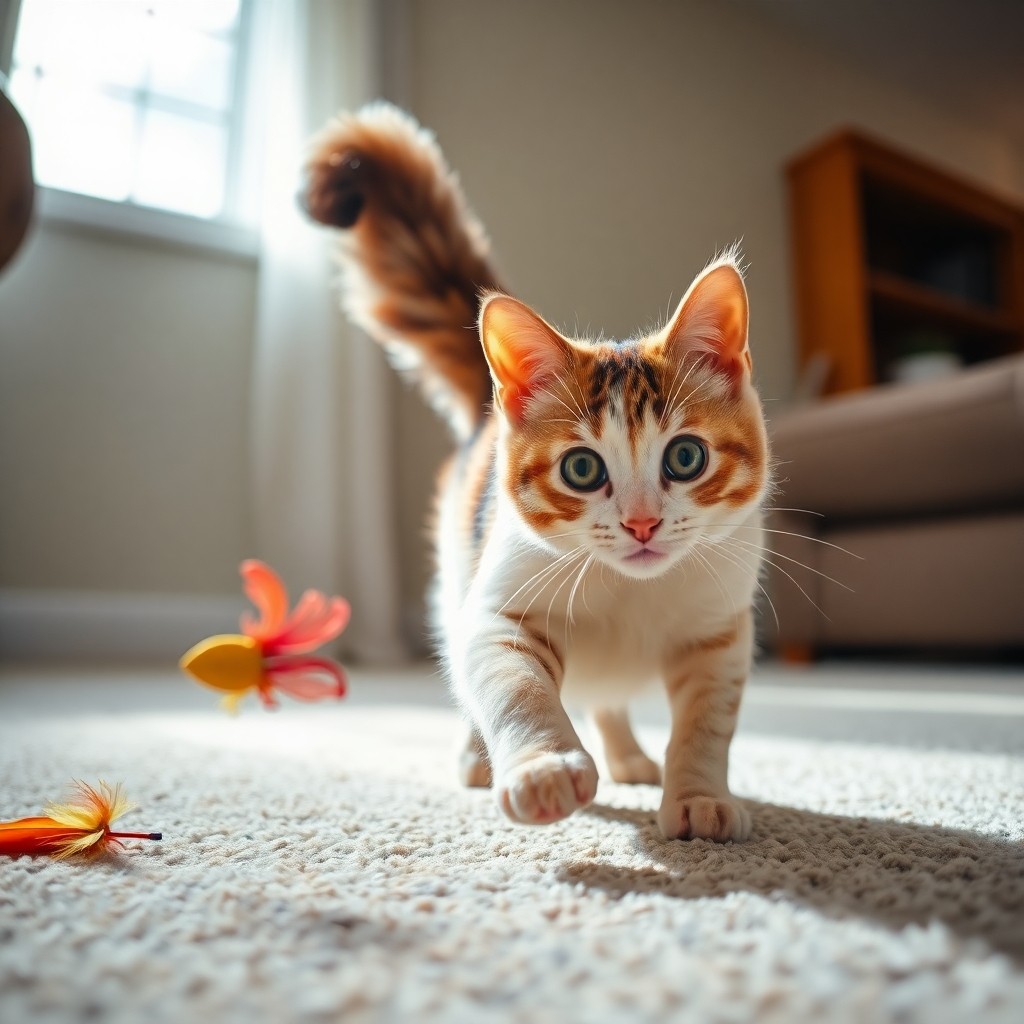
When a cat’s tail suddenly balloons to twice its normal size during a play session, it looks like something straight out of a cartoon. While that dramatic bottlebrush look is often associated with a terrified feline or a territorial dispute, seeing it mid-game is actually a fascinating and entirely normal physiological response.
A cat’s tail puffs up during play due to a physiological response called piloerection, which is triggered by a sudden rush of adrenaline. In a play context, this ‘bottle-brush’ effect typically signals high excitement, intense focus, or a harmless state of play-aggression rather than genuine fear or anger.
The Science Behind the Bottle-Brush Tail
When your cat is deeply engaged in stalking a toy or chasing a laser, their nervous system is highly stimulated. This state of arousal triggers the release of adrenaline, which automatically contracts the tiny muscles at the base of each hair follicle. This physiological reaction is known as piloerection—the exact same mechanism that causes goosebumps in humans.
In the wild, puffing up makes a cat look larger and more intimidating to potential predators. During a safe indoor play session, however, it is simply an involuntary physical manifestation of high energy and peak focus.
Excitement vs. Fear: How to Tell the Difference
Because piloerection can happen during both happy play and moments of genuine terror, it is vital to read the rest of your cat’s body language to understand their true emotional state.
- The Playful Puff: If your cat is hopping sideways, keeping their ears pointed forward or slightly to the side, and pouncing with a soft, relaxed face, the puffed tail is a sign of pure joy and high excitement.
- The Fearful Puff: If the puffed tail is accompanied by flattened ears, a low growl or hiss, dilated pupils, a hunched back, or a tucked tail, your cat is feeling threatened and is reacting out of defensive aggression.
Common Play Scenarios That Trigger Piloerection
Certain types of play are more likely to cause this dramatic physical response than others. Understanding these triggers helps you predict and manage your cat’s energy levels.
The Classic ‘Zoomies’
Late-night or post-litterbox bursts of energy often involve your cat sprinting across the room with a fully fluffed tail. This is a classic release of pent-up physical energy.
Interactive Feather Wand Sessions
High-action toys that mimic the erratic movement of birds or rodents tap directly into your cat’s predatory drive. The thrill of the hunt causes a massive adrenaline surge, resulting in the instant bottle-brush look.
Mock Fighting with Housemates
When two cats engage in friendly wrestling, they will often puff their tails and arch their backs. As long as there is no real biting, clawing, or distressed vocalizations, this is simply part of their theatrical play ritual.
How to Respond to a Puffed-Up Playful Cat
When your cat is in this highly stimulated state, your interaction style matters. Here is how to keep the game fun and safe:
- Let them finish the hunt: If you are using a wand toy, let your cat successfully catch and ‘kill’ the toy at the end of the session to help them wind down naturally.
- Avoid using your hands: Never use your bare hands or feet as play targets, especially when the tail is puffed, as this teaches the cat that human skin is an acceptable target for high-energy pounces.
- Offer a cool-down period: If your cat seems overly simulated or starts playing too rough, redirect their energy with a kick toy or simply walk away to let their adrenaline levels return to normal.
Common Mistakes Owners Make During High-Energy Play
Even well-meaning owners can accidentally turn a fun game into a stressful encounter. Avoid these common missteps:
- Forcing physical affection: Do not try to scoop up, hug, or pet a cat whose tail is puffed up from play. Their sensory system is overloaded, and sudden physical contact can startle them into a scratch or bite.
- Scolding or punishing play-aggression: Punishing a cat for a puffed tail or a sideways hop will only breed fear and confusion. Instead, ignore the behavior or redirect it to an appropriate toy.
- Ignoring signs of overstimulation: Watch for rapid tail twitching, skin rippling, or flattened ears. If you see these signs alongside the puffed tail, it is time to end the play session immediately.
Frequently Asked Questions
Is it bad if my cat’s tail puffs up every time we play?
Not at all. Some cats are simply more expressive or easily excited than others. As long as their body language remains loose, active, and free of fear indicators like hissing or hiding, it is perfectly healthy.
How long does it take for a puffed tail to go back to normal?
Once the source of excitement or play stops, it usually takes anywhere from two to ten minutes for your cat’s adrenaline levels to drop and the tail hair to lie flat again.