
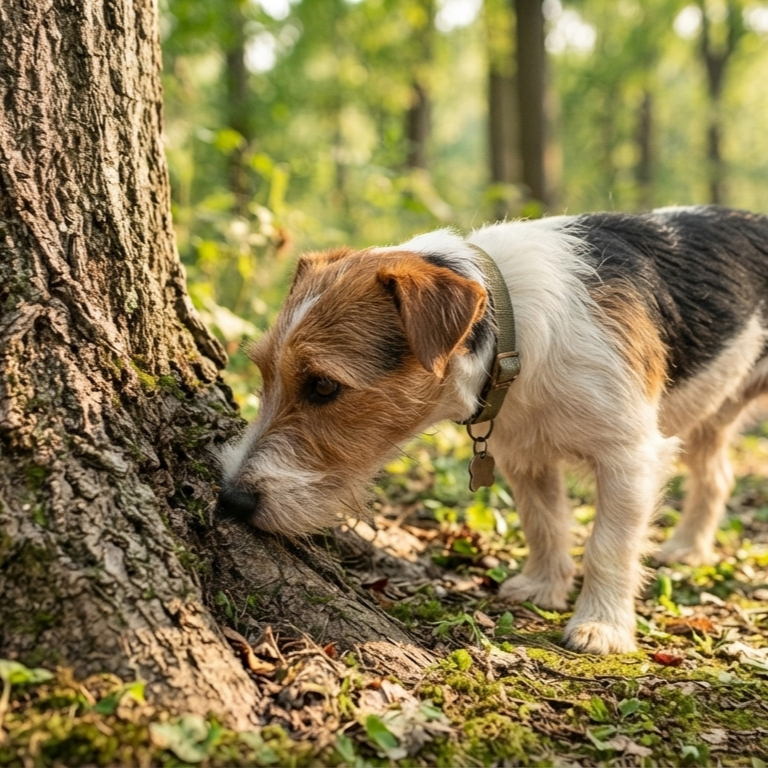
You are three blocks into your morning walk, and your dog has already stopped four times to thoroughly investigate a seemingly blank patch of pavement. It is easy to view these constant halts as a frustrating delay to your schedule, but your dog is actually engrossed in the local ‘doggie newspaper,’ using a remarkably sophisticated sensory system to decode the stories left behind by every animal that passed before them.
Dogs stop to sniff everything on walks because it is their primary way of gathering information about their environment, acting as an essential mental stimulant. This behavior, known as ‘scent walking,’ allows them to detect which other animals have been in the area, their gender, their health status, and even their current emotional state.
Understanding Your Dog’s Olfactory Superpowers
To understand why sniffing is so irresistible to your dog, it helps to look at the biology. While humans have about six million olfactory receptors in their noses, a dog possesses up to 300 million. The part of a dog’s brain devoted to analyzing smells is, proportionally, about 40 times larger than ours.
Additionally, dogs have a special sensory organ called the vomeronasal organ (or Jacobson’s organ) located in the roof of their mouth. This organ allows them to detect chemical signals, such as pheromones, that are completely undetectable to humans. When you pull your dog away from a fire hydrant or a tree trunk, you are essentially turning off their television screen in the middle of a fascinating documentary.
Allowing your dog to sniff also has a profound physiological effect. Studies show that active sniffing actually lowers a dog’s heart rate, reduces stress, and satisfies their innate exploratory instincts. A walk focused on scent can tire out a high-energy dog much faster than a brisk, structured run because of the intense mental processing required.
Common Mistakes Owners Make on Walks
Working against your dog’s biology during walks can lead to frustration on both ends of the leash. Avoid these common mistakes during your daily outings:
- Prioritizing distance over quality: Walking two miles at a fast pace is often less exhausting and satisfying for a dog than walking half a mile with plenty of time to sniff.
- Constant leash tension: Tugging on the leash whenever your dog stops creates physical tension, which can elevate your dog’s stress levels and make them more reactive to their surroundings.
- Using dangerous training gear: Using choke chains or tight slip leads to stop sniffing can damage your dog’s delicate trachea and throat structures.
- Ignoring safety hazards: While sniffing is healthy, letting your dog nose through garbage piles, animal droppings, or stagnant water can expose them to harmful bacteria, parasites, or toxins.
The ‘Sniff and Go’ Walk Strategy
You do not have to let your dog sniff every single blade of grass forever. The key is to establish a balanced routine that satisfies your dog’s mental needs while keeping your walk moving. Implement this training structure to bring harmony back to your walks:
- Establish ‘Sniffing Zones’ and ‘Walking Zones’: Teach your dog that there are times to explore and times to move. Use a standard six-foot leash. During ‘Walking Zones,’ keep your dog close and walk at a steady pace. Reward them with small treats for keeping up.
- Introduce a ‘Go Sniff’ Release Cue: When you reach a safe, grassy area, stop walking and say ‘Go sniff!’ This verbal cue gives your dog permission to explore freely until the end of the leash.
- Teach a Gentle ‘Let’s Go’ Cue: Before pulling your dog away from a spot, use a warm, upbeat cue like ‘Let’s go!’ or ‘Ready?’ Take a step forward and reward your dog with a high-value treat the moment they choose to turn away from the scent and follow you.
- Incorporate Decompression Walks: At least twice a week, take your dog to a quiet park or trail on a longer training line (10 to 15 feet) and let them lead the way. Dedicate these specific outings entirely to self-directed sniffing.
Frequently Asked Questions
Is it bad to let my dog sniff everything?
No, sniffing is a natural and highly beneficial behavior that provides essential mental enrichment. However, you should redirect your dog if they attempt to sniff hazardous objects like discarded food, chemical-treated lawns, or animal waste.
Does sniffing tire a dog out more than running?
Yes, for many dogs, sniffing is a form of intense mental workout that can be more tiring than pure physical running. It stimulates their brain, lowers their heart rate, and satisfies their natural hunting and tracking instincts.
How do I stop my dog from eating garbage while sniffing?
The best way to prevent this is to train a strong ‘leave it’ command. Always carry high-value treats on your walks to reward your dog for turning away from tempting but dangerous items on the ground.