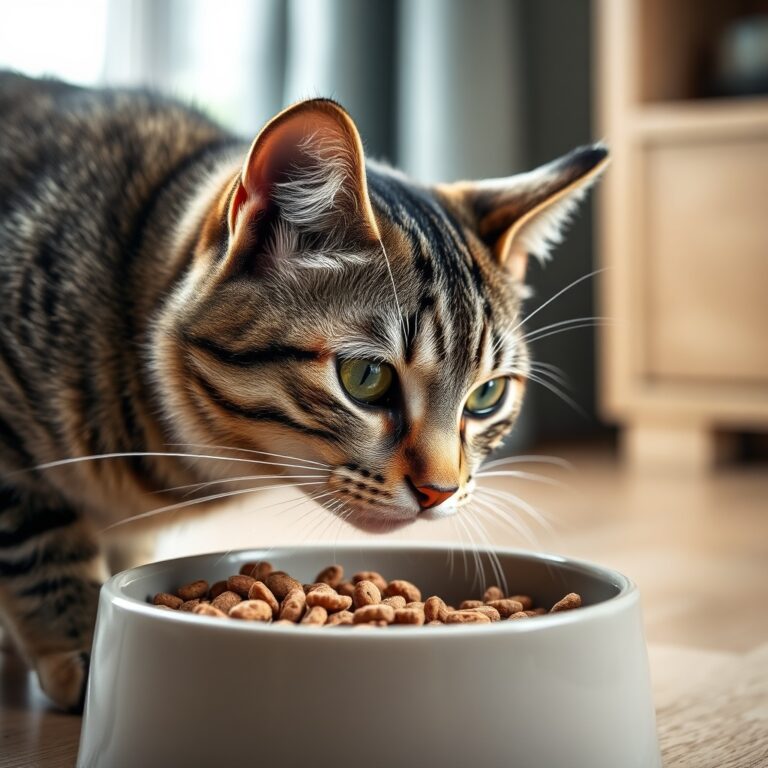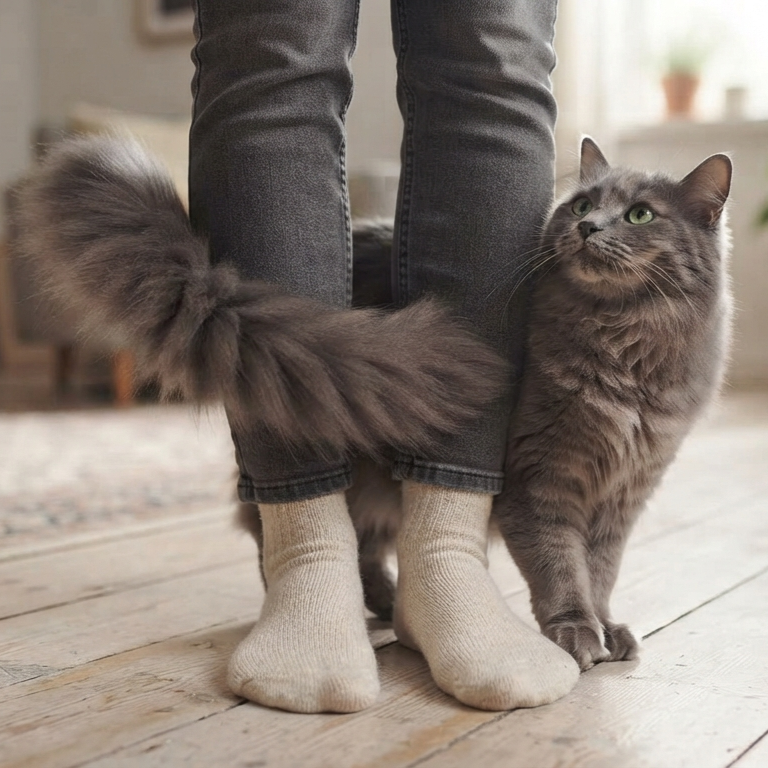

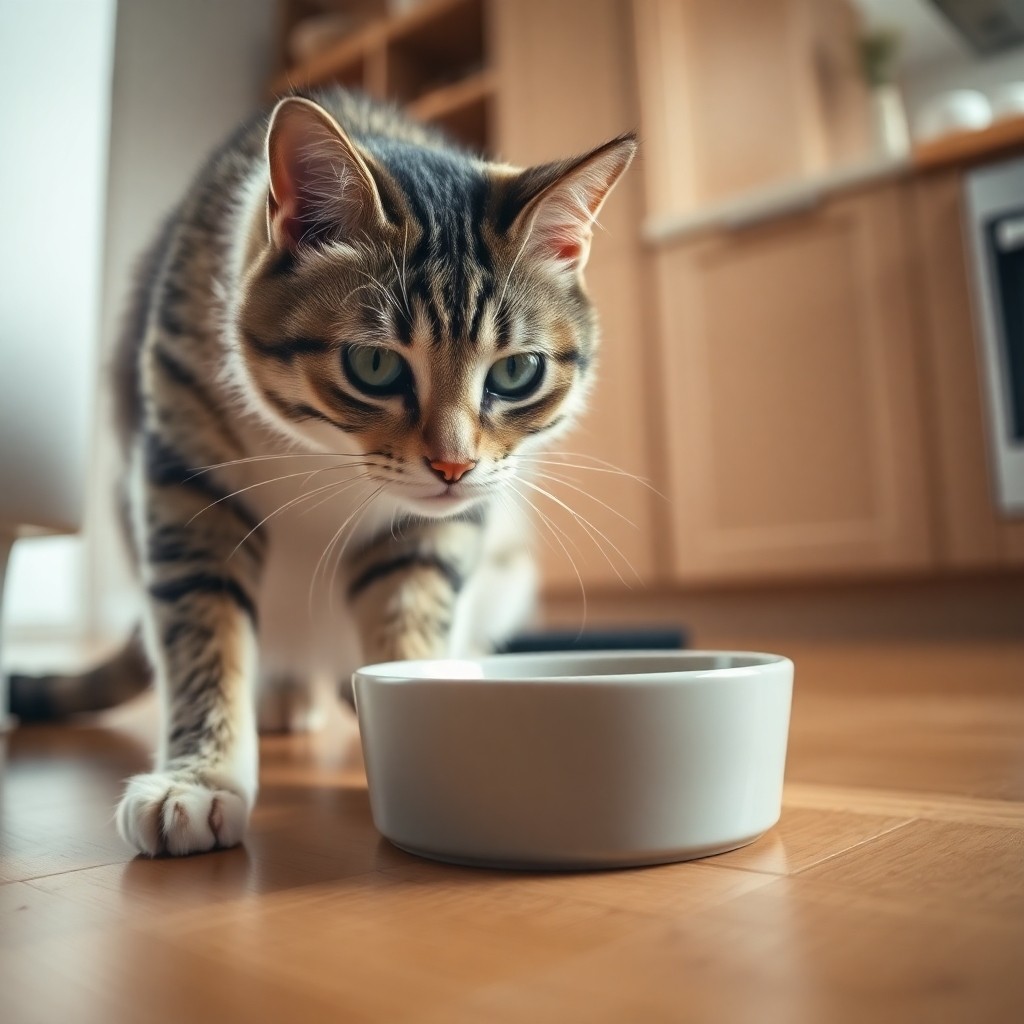
If you’ve ever watched your cat pause mid-groom, walk over to their pristine food bowl, and vigorously scratch at the floorboards as if trying to bury invisible treasure, you’re not alone. While it looks like a dramatic critique of tonight’s menu, this quirky kitchen routine is actually an ancient survival instinct left over from their wild ancestors.
Cats scratch around their food bowls because of an instinctual survival behavior known as ‘food caching’ or ‘burying,’ which they use in the wild to hide their scent from predators and preserve leftovers from competing scavengers.
The Instinctual Science: Why Cats ‘Bury’ Food
To understand why your domestic feline is trying to dig through your kitchen tile, you have to look at their wild ancestors, the African wildcat (Felis lybica). In the wild, cats are solitary hunters. They do not hunt in packs, meaning they must protect their meals from larger predators and other competitive carnivores.
When a wild cat cannot finish a meal in one sitting, they cover the carcass with dirt, leaves, or debris. This serves two vital purposes:
- Scent Camouflage: Leaving fresh meat exposed is an open invitation to predators that might threaten the cat’s safety.
- Resource Preservation: Hiding the leftover food prevents other scavengers from stealing a valuable energy source, keeping it relatively safe for later consumption.
Your domestic cat still carries these ancestral blueprints. When they scratch at your floorboards, carpets, or walls near their food dish, they are simply performing a hardwired sequence of motor patterns. Even though there is no dirt or leaf litter in your kitchen, the physical urge to cover the scent of food remains incredibly strong.
Key Triggers of Food Scratching in Domestic Cats
While the underlying drive is evolutionary, certain environmental triggers in your home can intensify this behavior. Identifying these factors will help you manage the habit more effectively.
1. Environmental Contamination Concerns
Cats are exceptionally clean animals with highly sensitive scent systems. If their feeding station is located too close to their litter box, their natural survival instinct is triggered. In the wild, cats never eat near their elimination sites to avoid illness and predator detection. Scratching around the bowl can be an anxious attempt to cover up a perceived environmental overlap.
2. Overfeeding and Leftovers
If you feed your cat large portions of wet or dry food that they cannot finish in one sitting, the presence of leftovers will trigger the urge to cache. Free-fed cats who have dry food available all day are particularly prone to this habit, as the food constantly emits a scent that the cat feels compelled to mask.
3. Whisker Fatigue and Bowl Placement
If your cat’s whiskers constantly touch the sides of their bowl while eating, they may experience sensory overload, known as whisker fatigue. A stressed cat is more likely to engage in repetitive displacement behaviors, such as scratching around the bowl, to relieve tension. Similarly, bowls placed in high-traffic hallways can cause ambient stress, pushing the cat to try and ‘hide’ their resources quickly.
How to Manage Food Scratching: A Step-by-Step Guide
You do not need to eliminate this behavior entirely, as it is a natural and harmless instinct. However, if the scratching is damaging your carpet, waking you up at night, or causing your cat obvious distress, you can easily minimize it using these practical steps:
- Switch to Scheduled Portion-Controlled Feeding: Instead of leaving food out all day, transition to feeding your cat set meals twice or thrice daily. Feed them only what they will eat in a single 15-minute sitting to eliminate leftover scent triggers.
- Relocate the Feeding Station: Ensure your cat’s food and water bowls are placed far away from their litter boxes. Choose a quiet, low-traffic area of the house where your cat feels safe from ambush.
- Use Wide, Shallow Dishes: Replace deep bowls with wide, flat ceramic plates or shallow metal saucers to prevent whisker fatigue and make mealtime more comfortable.
- Promptly Clean Up Leftovers: As soon as your cat walks away from their bowl, pick up any remaining wet food, wash the dish, and store it away. If the scent is gone, the urge to bury it vanishes.
- Provide Interactive Feeding Toys: Food puzzles and slow feeders engage your cat’s brain, shifting their hunting and nesting instincts into a playful, constructive outlet rather than a repetitive scratching habit.
Common Mistakes Owners Make
Many well-meaning owners accidentally reinforce or worsen this behavior. Avoid these common pitfalls to keep your pet stress-free:
- Punishing or Scolding: Never yell, clap, or spray your cat with water when they scratch around their bowl. They are not misbehaving; they are acting on a deep evolutionary drive. Punishment will only make them anxious, which can lead to more intense scratching.
- Ignoring Damaged Flooring: If your cat is scratching up expensive carpet or hardwood, do not just leave it. Place a large, durable silicone pet food mat under their bowls. This protects your floors while allowing your cat to perform their natural scratching motions harmlessly.
- Leaving Spoiled Wet Food Out: Wet food left out for hours becomes a breeding ground for bacteria and emits a strong odor that triggers intense burying behavior. Always remove uneaten wet food within 30 minutes.
Frequently Asked Questions
Is my cat scratching because they do not like their food?
Not necessarily. While some owners worry that scratching means the cat thinks the food is trash, it is actually more common for cats to scratch around food they enjoy but cannot finish. It is an act of preservation, not disgust. If they truly dislike the food, they will usually sniff it, walk away, and refuse to eat it at all.
Can food burying behavior damage my cat’s claws?
Generally, scratching on standard household surfaces like carpet, linoleum, or wood will not damage healthy claws. However, if your cat scratches excessively on rough or abrasive surfaces, it can cause wear. Placing a soft silicone mat under the bowl is the safest way to protect both your floors and your cat’s paws.
Does this behavior mean my cat is hungry?
No. Food caching is about storage and security, not starvation. Even a fully satiated cat will try to bury food if there is excess scent or leftovers in their dish. Focus on feed consistency and portion sizes rather than increasing food volume, which may actually worsen the behavior.