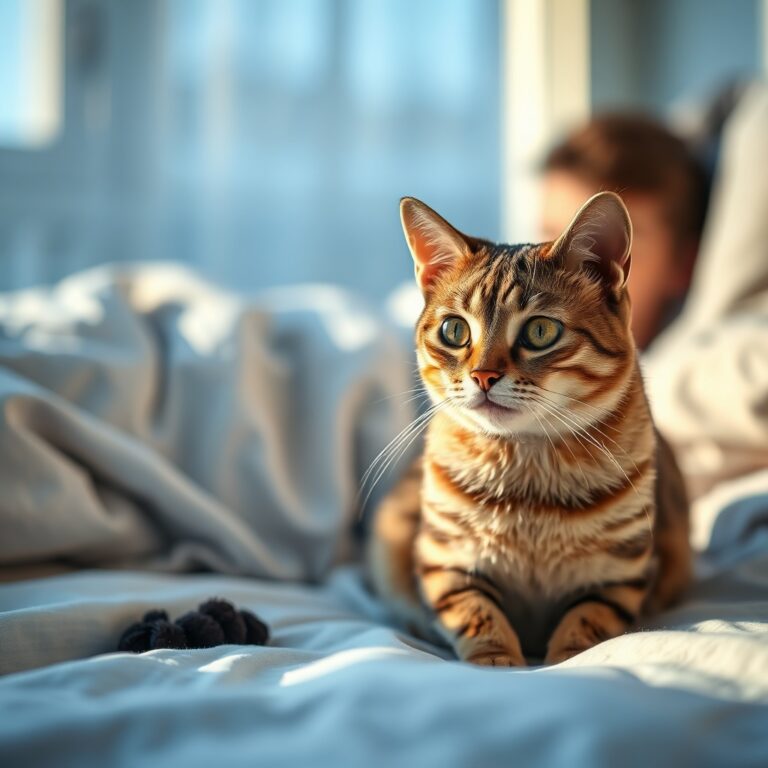

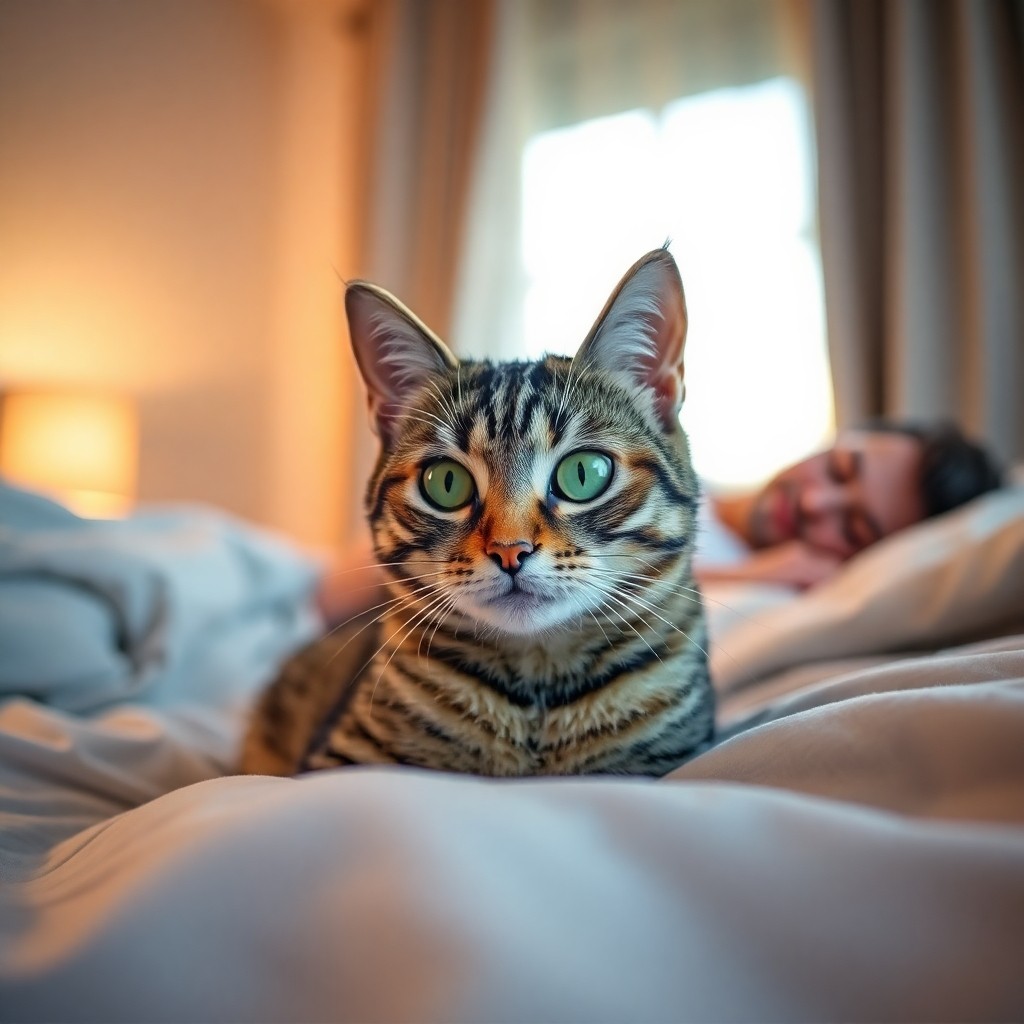
Waking up in the dead of night to find a pair of wide, unblinking eyes staring directly at your face can feel a little unsettling. Yet, that silent midnight gaze is actually a completely normal feline habit, driven much more by everyday hunting instincts and sheer curiosity than any sinister midnight motives.
Cats watch you sleep because of their hardwired survival instincts, internal biological clocks, and deep social bonds. They view you as a source of safety and warmth, and they may simply be monitoring your breathing or waiting for their morning feeding routine to begin.
The Evolutionary Science Behind Feline Nighttime Vigilance
To understand why your feline companion chooses to observe you while you are unconscious, you must look at their evolutionary history. Although domestic cats are pampered pets, they still retain the behavioral patterns of their wild ancestors. In nature, sleep is the most vulnerable state for any animal. By staying close to you and watching over you, your cat is participating in a dual survival strategy: they are seeking safety from you while also monitoring their environment for potential threats.
Cats are also crepuscular, meaning they are naturally most active during the twilight hours of dusk and dawn. While you are deep in REM sleep, your cat’s internal clock is ticking, telling them it is prime time to hunt, explore, and interact. Because you are the most interesting and important presence in their territory, your sleeping body naturally becomes the focus of their attention.
Primary Reasons Your Cat Is Staring at You Sleep
1. Seeking Security and Protection
In a multi-cat household or even a single-pet home, cats constantly evaluate security. When you sleep, you are still, quiet, and predictable. Your cat knows that you are the ultimate protector. Sitting near your head or chest and watching you allows them to enjoy a sense of safety, knowing that if any danger arises, they are right next to their primary defender.
2. Biological Clock and Feeding Cycles
Your cat is an expert tracker of your daily habits. If you usually wake up at 6:30 AM to fill the food bowl, your cat may begin their watch party around 6:00 AM. They are not just staring; they are actively waiting for the first signs of your arousal—such as a shift in breathing patterns, muscle twitches, or rolling over—to signal that breakfast time is officially here.
3. Affection and Social Bonding
Staring is not always an analytical behavior; it can also be a display of deep affection. When a cat looks at you with relaxed, soft eyes, or offers a slow blink, they are expressing trust and love. Sleeping close to your face and watching you is a feline way of maintaining social closeness with their chosen family member.
4. Curiosity and Sensory Feedback
Cats possess incredibly sharp senses. When you sleep, your body makes subtle sounds and releases scents that pique your cat’s curiosity. They can hear the steady rhythm of your heartbeat, the soft whistle of your breath, and even the tiny movements of your eyelids during dreams. To a curious cat, these sensory inputs are fascinating to observe up close.
How to Manage Unwanted Feline Nighttime Staring
While the staring itself is harmless, it can sometimes lead to disruptive behaviors like pawing at your face, meowing, or knocking items off your nightstand. If your cat’s nighttime observation is disrupting your sleep quality, you can implement a few practical behavioral adjustments to encourage better sleep boundaries.
- Establish a consistent bedtime routine: Engage your cat in a vigorous play session about an hour before bed using wand toys or laser pointers to mimic a natural hunt. Follow this play session immediately with their final meal of the day to trigger their natural ‘hunt, catch, eat, groom, sleep’ cycle.
- Use automatic feeders: If your cat stares at you to demand breakfast, decouple yourself from the food delivery process. Setting an automatic feeder to dispense a small portion of dry kibble at dawn will redirect your cat’s attention away from your bed and toward the kitchen.
- Ignore the behavior completely: If your cat stares at you and you respond by petting them, talking to them, or getting out of bed, you are reinforcing the behavior. Even negative attention, like shooing them away, tells the cat that staring successfully wakes you up. Keep your eyes closed and remain completely still until they give up.
- Create alternative sleeping zones: Provide a warm, elevated cat bed or a heated pet mat in the same room but away from your bed. Cats naturally love elevated spaces where they can survey the room, which can satisfy their need to watch you without being directly on your pillow.
Common Mistakes Owners Make When Cats Wake Them Up
Correcting nighttime staring requires consistency. Many well-meaning cat owners accidentally train their cats to become midnight alarm clocks by making these common tactical mistakes:
- Feeding them immediately upon waking: If you roll out of bed and immediately fill the bowl to stop the staring, you have just rewarded your cat for staring. Always wait at least fifteen to twenty minutes after waking up before offering food.
- Making sudden, dramatic movements: Sitting up quickly or yelling can startle your cat, transforming a peaceful observation session into an anxiety-inducing event that can cause behavioral issues.
- Inconsistent boundaries: Allowing your cat to sleep on your face during the weekends but locking them out of the room on weekdays creates confusion and distress. Stick to a single, consistent set of rules.
Frequently Asked Questions
Is my cat plotting something when they stare at me sleeping?
No. While the internet loves to joke about cats plotting mischief, staring is actually a sign of vulnerability, curiosity, and trust. A cat will only watch someone sleep if they feel completely safe in their presence.
Why does my cat sit directly on my chest while watching me sleep?
Your chest is the warmest part of your body, and it rises and falls with a soothing, rhythmic motion that mimics the heartbeat of their mother. It is the ultimate comfort zone for a cat seeking warmth and emotional security.
Should I close my bedroom door to stop my cat from staring?
You can, but prepare for initial resistance. Cats dislike closed doors because they restrict their territory. If you choose to close the door, be consistent and ignore any scratching or meowing at the threshold until your cat adapts to the new boundary.